AI search is changing how people find and compare brands online. Someone might ask ChatGPT, Gemini, or Perplexity for the best company or product, but is your brand showing up in the answer?
AI search visibility tools help you see when your brand is mentioned, which competitors are showing up instead, and what sources AI platforms are using.
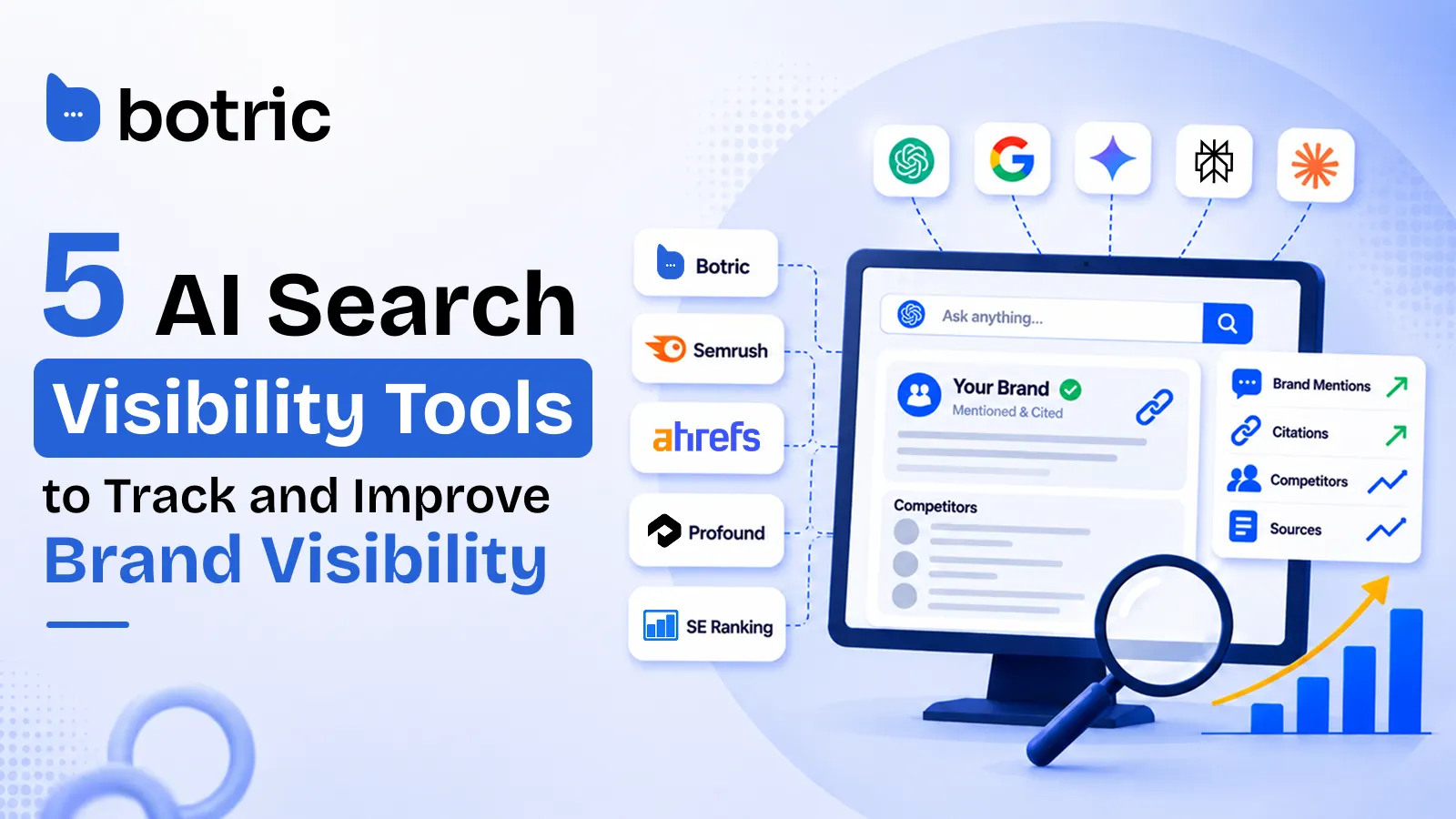
In this guide, I compare five AI search visibility tools, including Semrush, Ahrefs, Profound, and Botric, and tell you which one I'd reach for depending on your situation.
Quick Answer: AI search visibility tools
AI search visibility tools help you track how often your brand is mentioned, cited, or recommended in AI-generated answers across platforms like ChatGPT, Gemini, Perplexity, and Google AI Overviews.
AI search visibility tools can help you:
- See if your brand appears in AI-generated answers.
- Find which competitors are being recommended instead.
- Track brand mentions and citations across AI platforms.
- Understand which sources AI engines are using.
- Identify gaps that may be limiting your AI visibility.
Tools like Semrush, Botric, Profound, SE Ranking, Moz, and Ahrefs offer different ways to monitor AI visibility. In my experience the right choice comes down to three things: your budget, the AI platforms you want to track, and whether you only need monitoring or also want help improving your visibility.
Botric focuses on real-time citation tracking across six AI engines and helps identify the content and visibility gaps that may be keeping your brand out of AI-generated answers.
What does AI search visibility actually measure?
AI search visibility measures the share of AI-generated answers where your brand gets mentioned, cited, or recommended across engines like ChatGPT, Perplexity, Claude, and Google's AI Overviews. That's a different scoreboard than a rank position on a results page.
Google's AI Overview answers a query directly, often without the searcher ever clicking through to a website. A brand can hold the top organic spot for a competitive keyword and still be invisible there, because AI Overviews and chatbot answers get generated from a synthesis of sources the model trusts, not from a ranked list it displays.
Why does AI search visibility matter more than traditional rankings?
That gap shows up constantly in practice. A company can rank first on Google for "best project management software" and appear zero times when someone asks ChatGPT the same question, because the model pulled its answer from review aggregators, Reddit threads, and comparison blogs it treats as authoritative rather than the company's own landing page. That's traffic leakage in its purest form: demand exists, the buyer is asking, and the brand simply isn't part of the answer.
The stakes compound because AI-driven research increasingly happens earlier in the buying journey. If your brand is absent from the consideration-stage answer, you lose the shortlist before a human ever visits your site. Knowing what AI search visibility actually tracks, rather than assuming your SEO dashboard already covers it, is the foundation for picking the right tool.
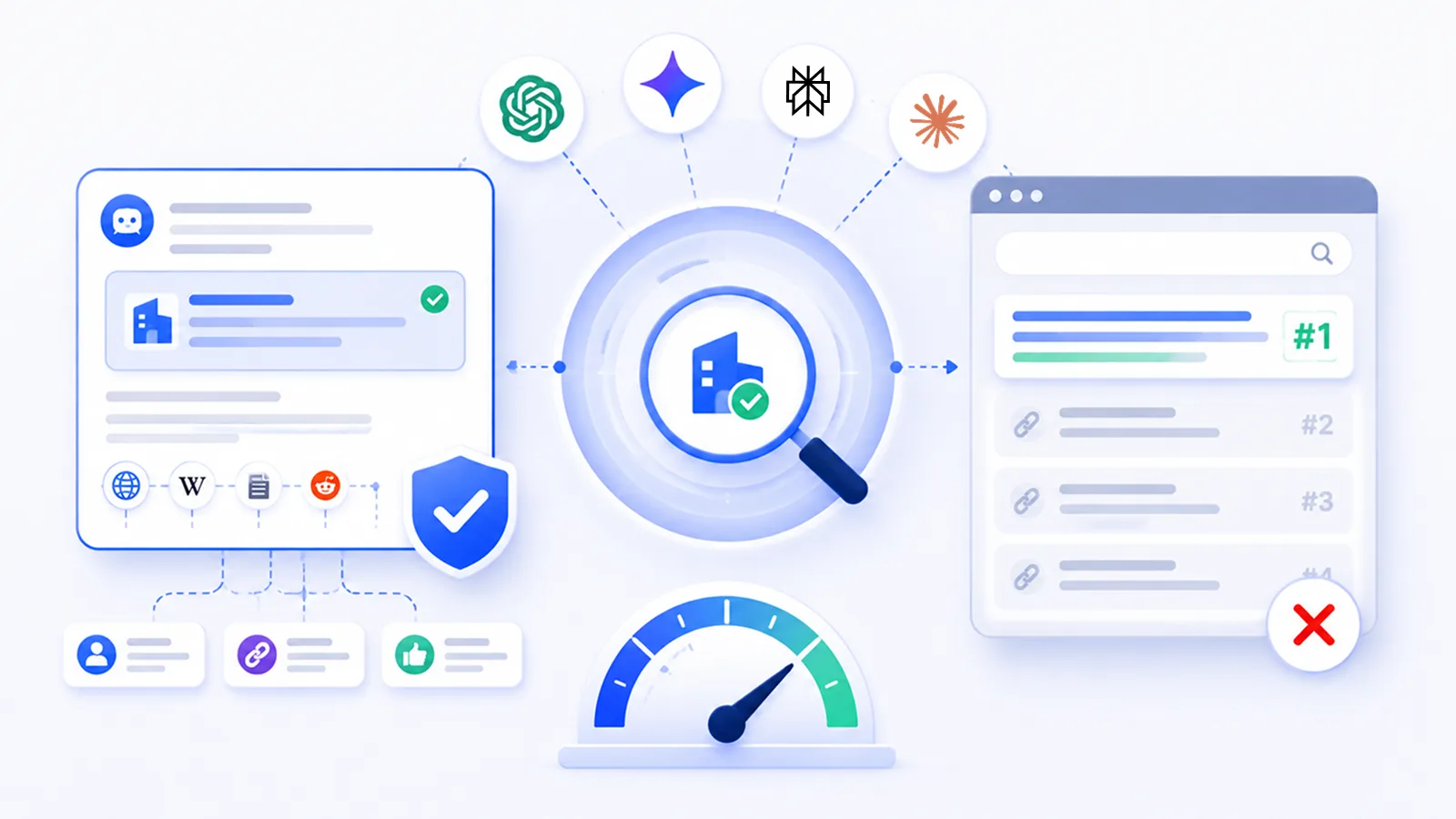
How do these five tools track AI visibility, and which metric does each one own?
AI search visibility tools all have the same basic goal: help you understand how your brand appears in AI-generated answers. But they go about it differently.
Some are traditional SEO platforms that have added AI tracking, while others are built specifically for AI search. Here's a simple breakdown of five options.
1. Botric: AI visibility tracking with actionable insights
Botric is built specifically for AI search visibility. It tracks where your brand is mentioned or cited across six major AI platforms: ChatGPT, Gemini, Perplexity, Claude, Google AI Overviews, and Google AI Mode.
Beyond tracking visibility, Botric helps you understand why competitors may be showing up instead of you. It highlights content gaps, citation opportunities, and areas of your website that can be improved to increase your chances of appearing in AI answers.
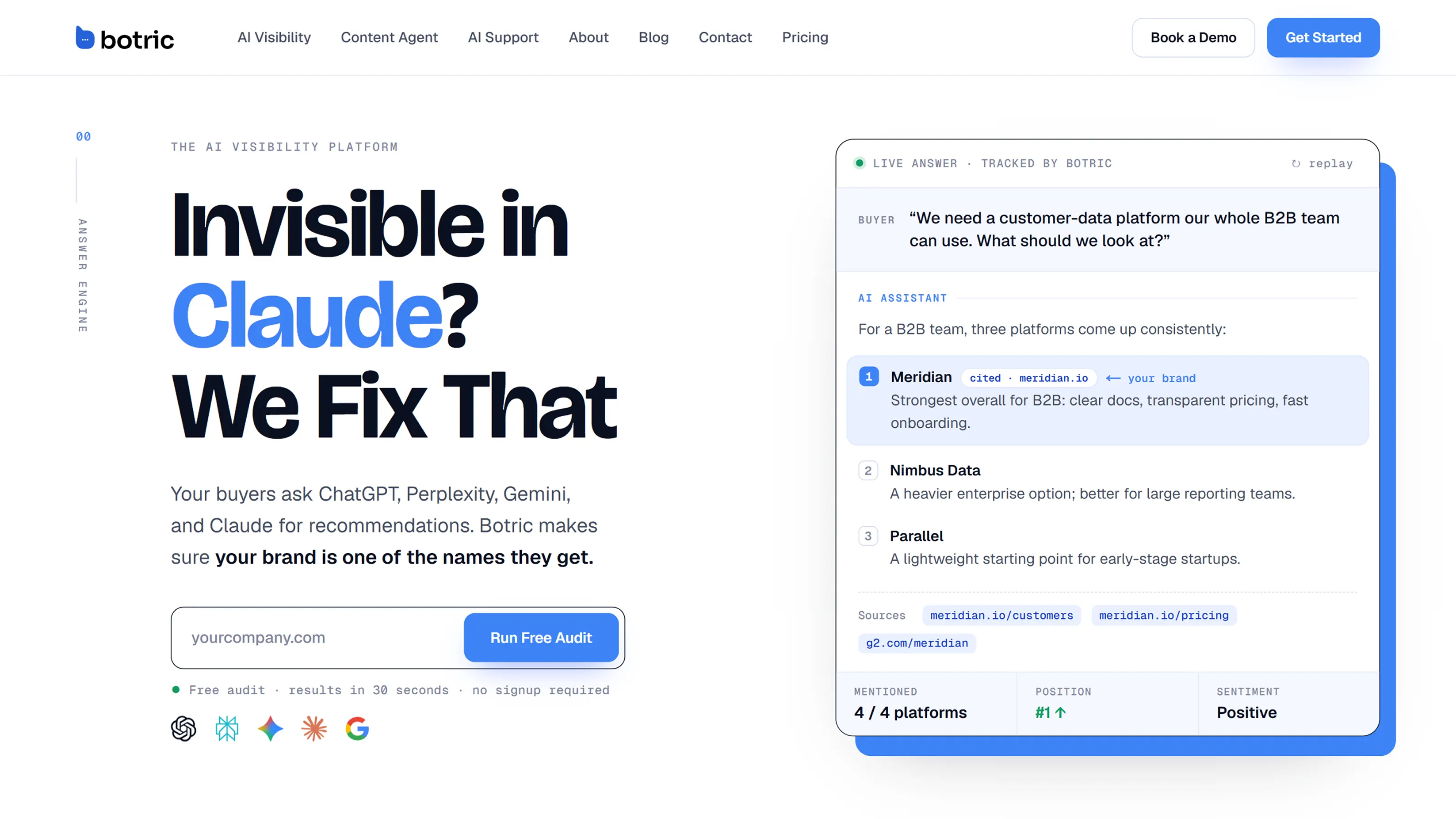
For teams that want to both track AI visibility and improve it, Botric provides a more focused approach than a traditional SEO platform.
2. Semrush: AI tracking inside a larger SEO platform
Semrush combines AI visibility tracking with its existing SEO tools.
Its SEO plan costs $139.95 per month when billed annually and includes tracking for 500 daily keywords along with Site Audit and other SEO features. For teams focused specifically on AI search, Semrush's Starter plan costs $199 per month. It tracks 50 prompts daily across Google Search, ChatGPT, Perplexity, and Gemini.
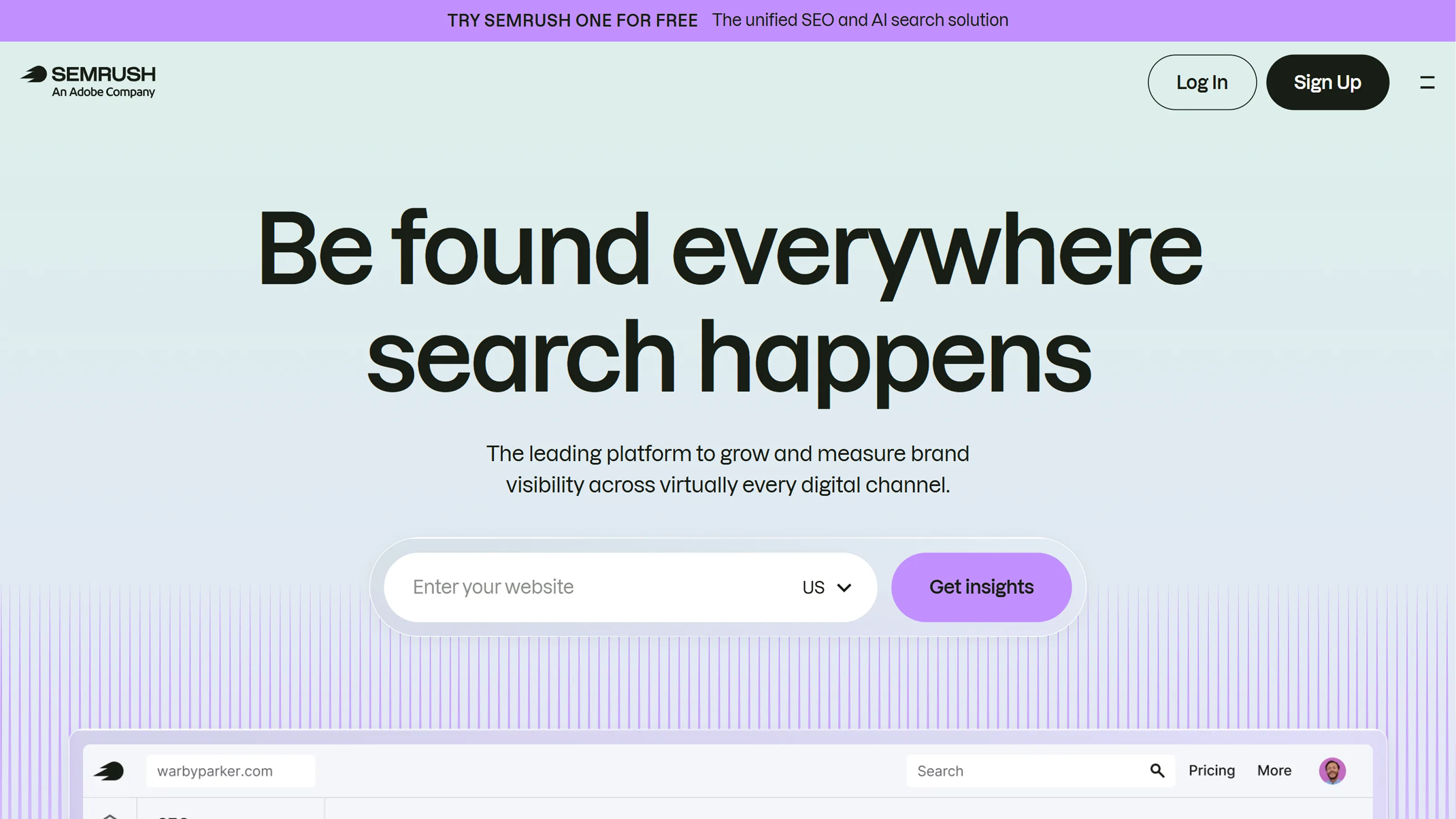
Semrush makes sense if your team already uses the platform for SEO. The tradeoff is that AI visibility is one feature within a much larger SEO platform rather than its main focus.
3. Ahrefs: strong citation and brand monitoring
Ahrefs is already widely used for backlinks, competitor research, and SEO analysis. Its Brand Radar brings that data into AI search visibility.
Brand Radar starts at $129 per month and, according to Ahrefs, can research brands across 468M+ organic prompts. That gives Ahrefs significant scale for understanding where brands and competitors appear.
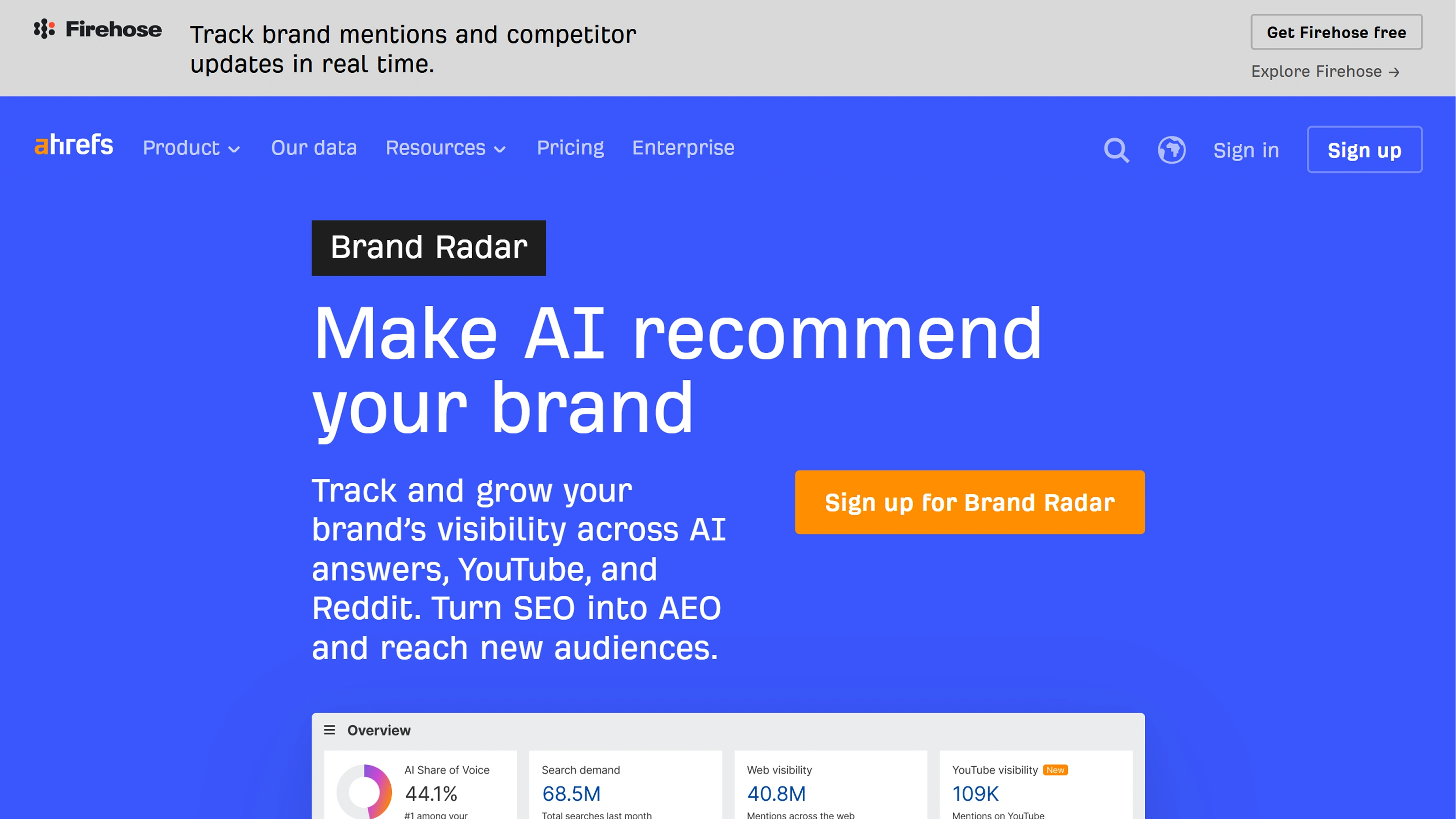
However, Brand Radar is mainly focused on monitoring. It can show you where your brand is missing, but it doesn't necessarily tell you exactly what content changes you should make to fix those gaps.
4. Profound: built for enterprise AI visibility
Profound is an AI-first visibility platform focused on helping brands understand how they appear in AI-generated answers.
Its Share of Answer approach makes it easier to compare your visibility against competitors and see which brands are getting the most attention from AI platforms.
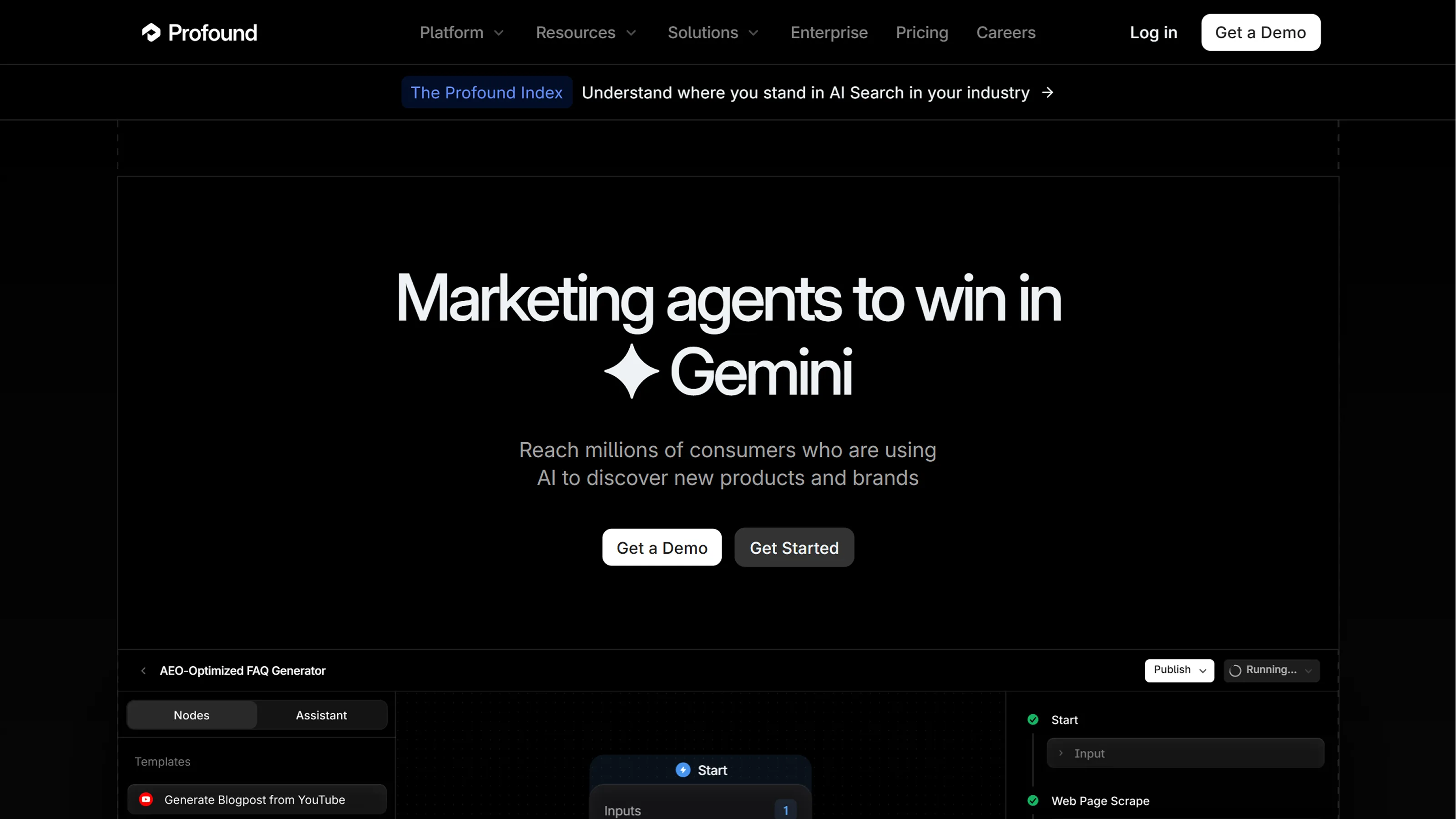
Profound is particularly suited to larger companies and marketing teams that have a dedicated budget and strategy for AI search optimization.
5. SE Ranking and Moz: useful for existing SEO users
SE Ranking and Moz have also added AI visibility features to their traditional SEO platforms.
These tools can make sense if you're already paying for their SEO products and want to add basic AI visibility monitoring without introducing another platform.
For teams that want deeper AI-specific tracking and optimization, however, a platform built specifically around AI search may offer more focused insights.
Quick comparison: AI search visibility tools
| Tool | Core metric owned | Engines tracked | Update cadence | Entry price |
|---|---|---|---|---|
| Botric | AI visibility score + live citation tracking | ChatGPT, Gemini, Perplexity, Claude, Google AI Overviews, Google AI Mode | Real-time | Free plan; paid from $12.50/mo |
| Semrush | Integrated AI visibility dashboard | Google Search, ChatGPT, Perplexity, Gemini | Periodic reports | $199/mo (Starter) |
| Ahrefs | Citation database via Brand Radar | Multiple, prompt-based | Scheduled checks | $129/mo add-on |
| Profound | Share of Answer | Up to 9 on Enterprise | Daily | $99/mo add-on |
| SE Ranking / Moz | Add-on AI tracking | Limited engine set | Periodic | $129/mo add-on |
Which tool should you pick based on your team's size, budget, and GEO priorities?
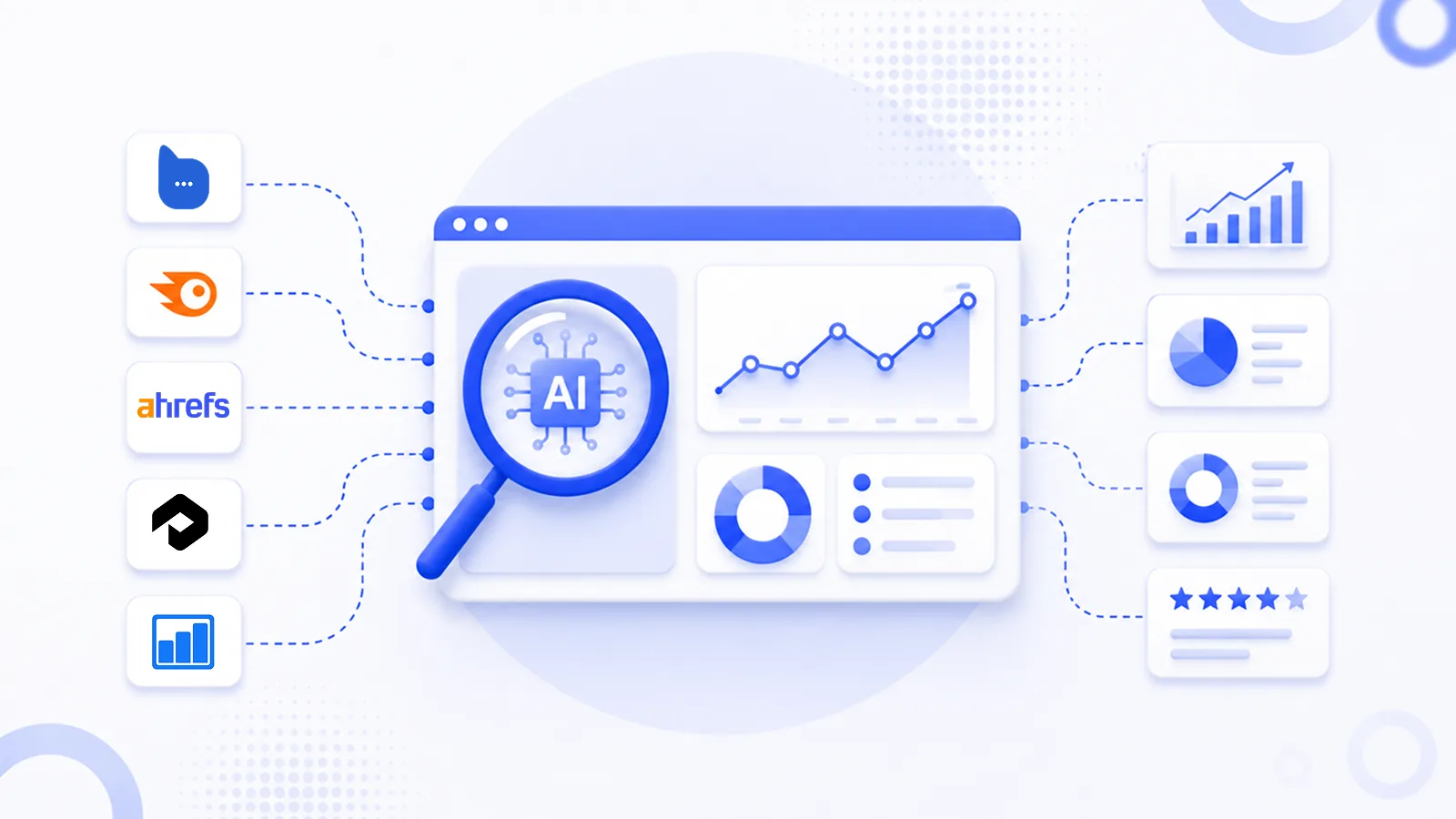
The right tool depends on which constraint binds hardest for your team: budget, existing stack, or how deep your AI strategy needs to go. A mid-market team already paying for an SEO subscription faces a different tradeoff than a company that needs live, granular tracking across every major engine, so here's how I'd split it.
-
Solo marketer, tight budget: Start with a free tier that shows a baseline score without commitment. Botric's free plan includes a site audit and tracked prompts with no credit card required, which answers the "do I even have a problem" question before any spend.
-
Mid-market team on an existing SEO stack: Semrush means no new login, but budget for the fact that AI visibility remains a secondary module here, not the product's focus.
-
SEO team transitioning into GEO: Ahrefs offers high trust among SEO professionals already comfortable with its interface, though the learning curve toward genuinely actionable GEO fixes, rather than just monitoring, is real.
-
Enterprise with dedicated AEO budget: Profound's Share of Answer metric and enterprise engine coverage fit teams that have already committed to an AI-first strategy, provided the sales process and price point match that scale.
-
Team wanting live tracking plus fix recommendations: Botric pairs its visibility score with prompt-level diagnostics and content fixes, useful if the goal is closing the gap rather than just measuring it. That sits alongside a broader GEO tool stack rather than replacing it.
Here's a scenario I see play out often. A 40-person SaaS company selling a mid-market analytics product had a marketing budget of roughly $2,000 a month for tooling, split between an existing SEO subscription and a small test budget for anything AI-specific.
The team started on Botric's free tier to get a baseline score, found it near zero on prompts they already ranked for organically, and added the paid tier once they had a specific list of missing structured data and thin comparison pages to fix.
Sixty days later, their internal tracking showed citations appearing on a meaningful share of the prompts they'd flagged as gaps. Not universal coverage, but enough movement to justify keeping the subscription rather than reverting to organic-only tracking.
Here's the tradeoff most buyers miss: the deepest backlink database doesn't automatically translate into the fastest-improving citation rate. Monitoring scale and optimization guidance are separate skills, and a lot of teams assume the first one buys you the second.
What breaks when you rely only on traditional SEO metrics?
Skip AI visibility tracking and you can hold stable organic rankings for months while your actual share of AI-generated answers quietly drops to zero, invisible to any dashboard you already use. The mechanism is straightforward: AI models retrieve from a different mix of sources than Google's ranking algorithm weighs, often favoring structured data, forum consensus, and comparison content over the exact pages that rank highest organically.
Picture a brand watching its keyword rankings hold steady quarter over quarter while a competitor, nowhere on page one of Google, becomes the name ChatGPT recommends whenever a buyer asks for a suggestion in that category. The PR and marketing world has started calling this Answer Share: the idea that visibility without trust in AI-generated answers no longer carries the weight it used to.
Worth being precise here: Botric is a dedicated AI visibility platform that tracks citations live and diagnoses the technical and content gaps behind them, distinct from a content tool with a citation feature added on. In Botric's own 2026 audit data, a typical unaudited site scores 6.5 out of 100 on GEO presence, rated Critical, measured by how consistently the brand is surfaced and cited across AI answer engines.
That figure comes from Botric's own audited customer base rather than an independent third-party study, so treat it as directional for your own site rather than a guaranteed outcome. If your team hasn't run that kind of check yet, now's the moment, before the gap widens further. Talk to Botric through its contact page about running a visibility audit before your next planning cycle.
Conclusion
AI search visibility tools make the most sense when you understand what you actually need to track. Semrush, Ahrefs, Profound, SE Ranking, and Moz can all help you understand where your brand appears in AI search, but their features, engine coverage, and level of insight vary.
For teams that want to go beyond simply monitoring mentions, Botric offers a more focused approach to AI search visibility. It tracks your brand across six AI engines and helps uncover which competitors are showing up, where your website is falling behind, and what content or visibility gaps may be keeping your brand out of AI-generated answers.
The key is choosing a tool that helps you improve visibility, not just measure it. Botric combines real-time citation tracking with actionable insights, making it a strong option for businesses that want to understand where they stand today and what they can do to improve their presence across AI search.
- Being named inside a generated answer and holding a page-one ranking are two separate outcomes, and only one of them shows up in a typical SEO dashboard.
- Semrush, Ahrefs, and Profound each bring a real strength, whether that's tight integration, citation scale, or a category-defining metric, but none pair live tracking with fix recommendations the way a purpose-built platform does.
- Budget, existing stack, or a need for deeper diagnostics should drive the choice, not a side-by-side feature checklist.
- A brand's organic rankings can sit flat for months while its AI answer share erodes underneath, and dedicated tracking is what catches that early.
- Run a baseline audit first if you're just getting started, then pick the tool that matches whatever gap that audit turns up.
See exactly where your brand stands and what a fix would cost for your team size on Botric's pricing page, where every plan starts with a free Visibility Score audit.
Want to know if your brand is actually showing up in ChatGPT, Gemini, Perplexity, and other AI search engines? Run a free AI visibility audit with Botric to see where your brand appears, which competitors are getting mentioned, and what you can improve to increase your AI visibility.
Frequently Asked Questions
Can I use multiple AI visibility tools together?
You can, and many teams run a citation-database tool like Ahrefs alongside a live-tracking platform to cross-check numbers. Duplicating spend past two tools rarely pays off, though.
How often should I check AI visibility?
Weekly works well for most brands, since AI answers shift faster than organic rankings, and a monthly check can miss a competitor gaining ground in the meantime.
Do I need to change my content strategy based on AI visibility data?
In most cases, yes. Say your visibility score shows zero citations for prompts you already rank for organically: that gap usually points to something specific and fixable, such as missing structured data, thin bottom-of-funnel content, or blocked AI crawlers.
Will AI visibility tracking replace organic rank tracking?
No. The two measure different things and both still matter, since organic rankings still drive click-through traffic that AI answers don't always replace.
Is a zero AI visibility score a sign something is broken technically?
Not necessarily broken, but it's worth investigating. A site can be fully functional and still score zero simply because AI crawlers are blocked, schema is missing, or the content format doesn't match what these models tend to cite.