For years, businesses followed a simple rule to get discovered online: rank on Google.
If your website appeared on the first page of search results, you had a chance to win traffic, leads, and customers. That strategy worked well for a long time.
But the way people discover information has changed.
Today, instead of typing keywords into search engines, people are asking questions directly to AI tools like ChatGPT, Gemini, Claude, and Perplexity. These AI assistants don’t just show links. They give direct answers, recommendations, and comparisons. In many cases, users receive what they need without ever clicking through to a website.
This shift marks a fundamental change in how information is discovered online. And it is this change that has given rise to Generative Engine Optimization (GEO), a new approach to AI-driven discovery.
Why SEO alone is no longer enough
Search Engine Optimization, or SEO, was originally built for a very specific kind of system. Traditional search engines crawl websites, index pages, and rank links based on a variety of signals. The goal has always been to help users find the most relevant pages and then let them decide what to click.
Generative AI works in a very different way.
AI systems don’t browse the web like humans. They try to understand information, summarize it, and present what they believe is most relevant and trustworthy. Instead of sending users to multiple sources, they aim to provide a single, coherent answer.
This difference creates a new challenge for many businesses.
A large portion of online content is written to persuade human visitors. It relies heavily on marketing language, visual presentation, and emotional appeal. While this approach may work well for conversion, it is not always effective for AI systems.
AI models tend to favor clarity over persuasion. They look for clear explanations, structured information, direct answers, and consistent facts. When content is vague, overly promotional, or poorly organized, it becomes harder for AI systems to understand and confidently reference it.
So a business can have great SEO and still be ignored by AI systems simply because its content lacks clarity and structure.
What is Generative Engine Optimization (GEO)?
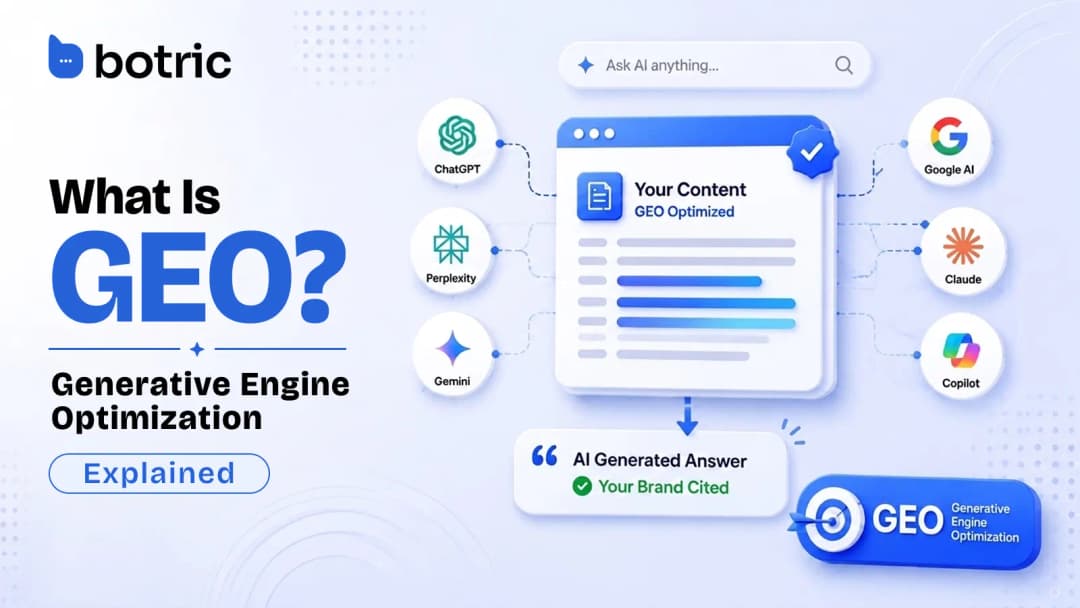
**Generative Engine Optimization (GEO) **is the practice of making your business easy for AI systems to understand, trust, and recommend, making GEO especially important for businesses.
While traditional SEO is designed around search engines, GEO is built for AI-driven discovery and modern AI discovery optimization. Instead of optimizing only for rankings and clicks, GEO focuses on how your information is interpreted and surfaced by generative AI systems.
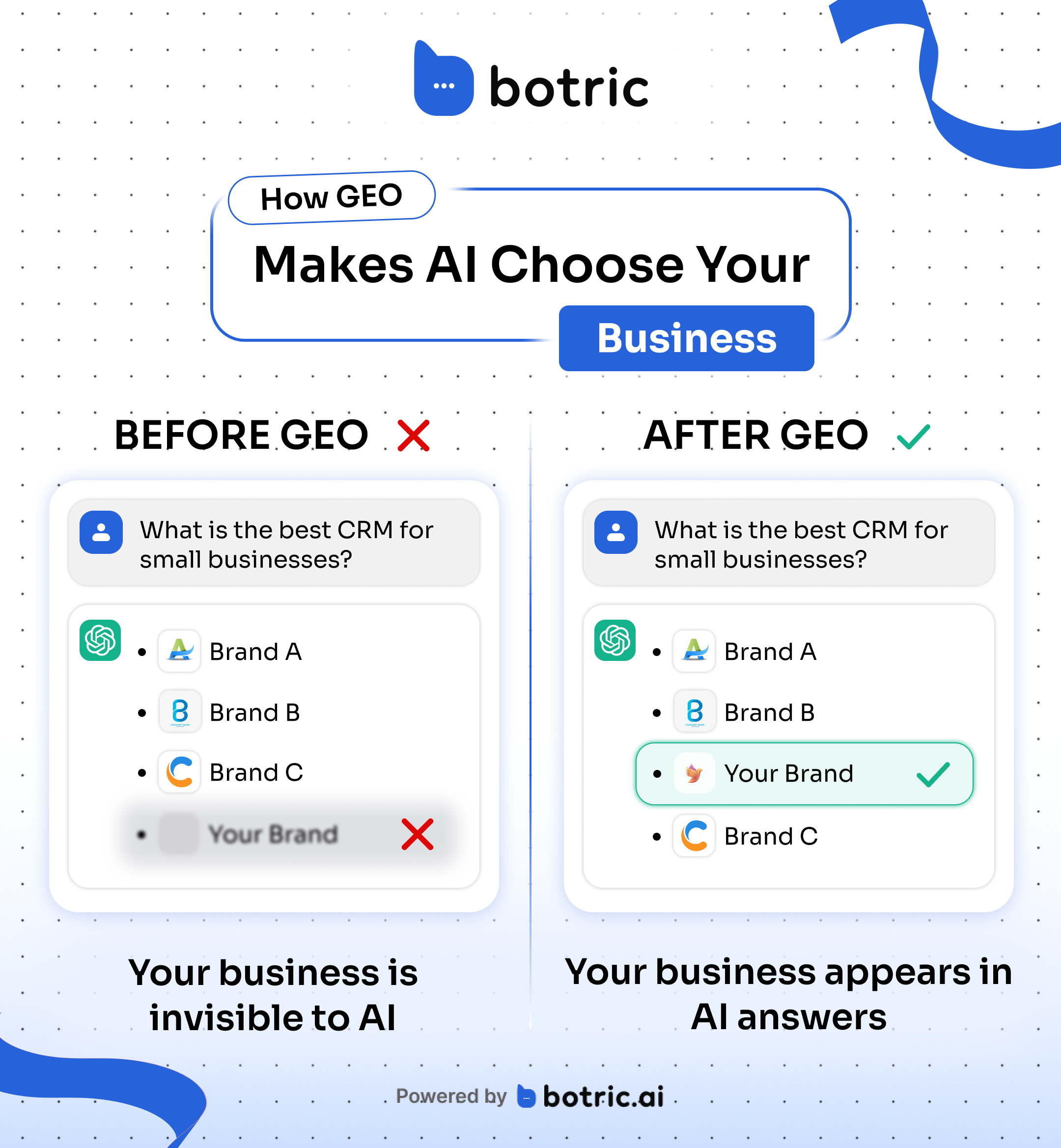
At a high level, GEO helps ensure that when someone asks an AI a question related to your industry, your business has a real chance of being mentioned.
Importantly, GEO is not about manipulating AI or chasing constantly changing algorithms. It is about alignment.
Alignment between:
-
what users ask
-
what your business actually offers
-
how AI interprets information
When these elements are in sync, AI systems are far more likely to understand your value and present your business in the right context.
Intent is the foundation of GEO
At the core of GEO is a simple but powerful idea: understanding why someone is asking a question, not just the words they type or say. Intent goes deeper than keywords. It reflects the problem a person is trying to solve, the decision they are trying to make, or the information they are looking to confirm.
- “Best digital marketing agency” → comparison intent, the user is evaluating options
- “SEO services for restaurants” → industry-specific intent, they want a specialist
- “Affordable accounting services near me” → local and budget intent, price and location matter
Traditional SEO often revolves around identifying and targeting keywords. GEO, on the other hand, focuses on questions and intent patterns.
This shift matters because AI systems are built around natural language. They prioritize meaning and context over exact keyword matches.
When your content clearly and directly answers real questions that people are actually asking, AI systems can understand it more easily. As a result, your business is far more likely to be surfaced as part of an AI-generated response.
How to Map Intent to Your Content
Mapping intent to content means writing for the reason behind a question, not just the topic itself.
- Think in questions, not topics, “What is GEO?” wants understanding; “best GEO tools” wants a comparison; each needs a different answer
- Group by intent type, informational, comparative, or action-ready. Focus each page on one primary intent
- Write in natural language, AI systems prioritize meaning and clarity over keyword repetition or polished marketing copy
- Answer directly first, state the answer at the opening of each section, then support it with detail
Why Structured Content Matters
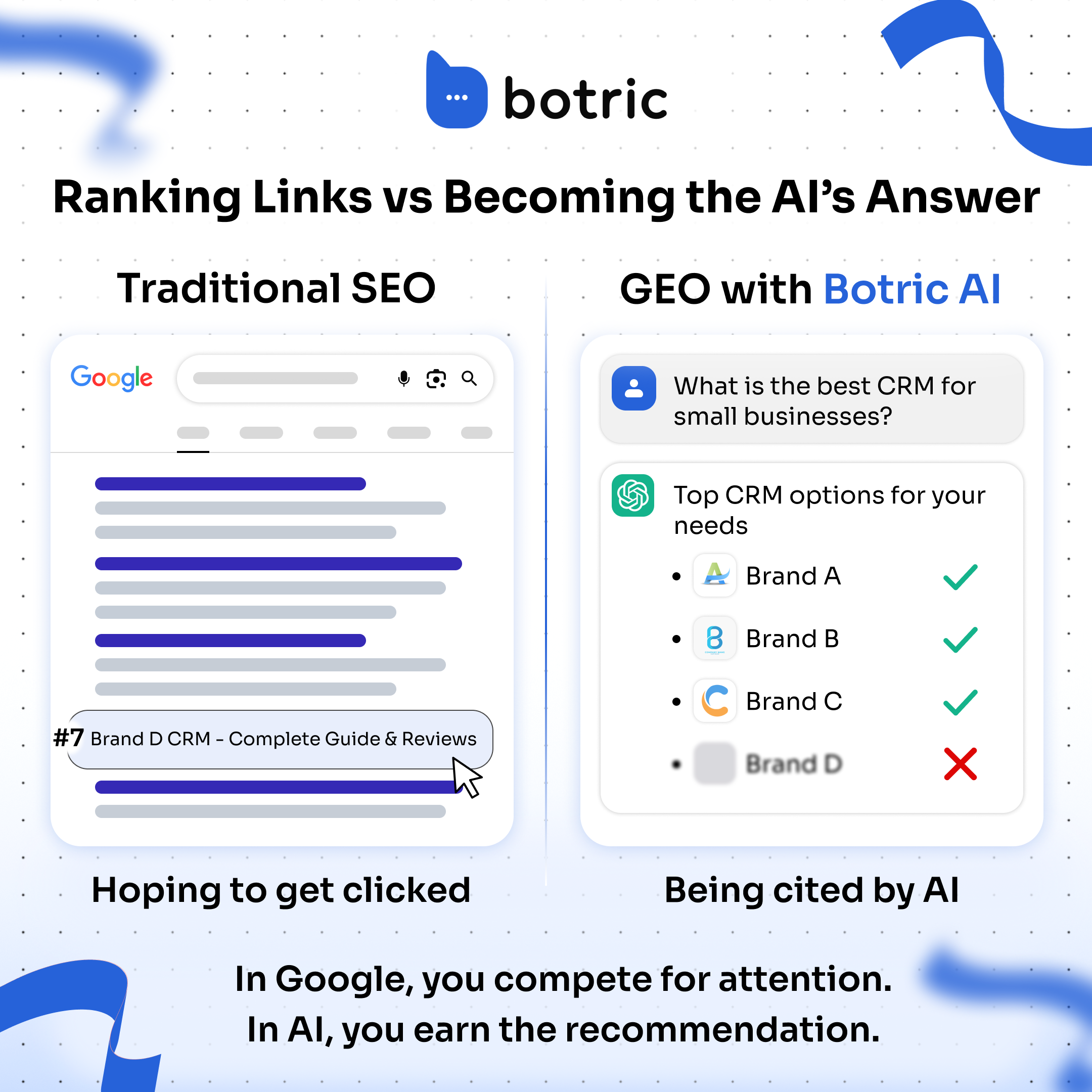
AI systems work best when information is well organized, easy to scan, and logically structured.
This is why GEO-friendly content often includes clear headings, short factual summaries, FAQ-style sections, and consistent terminology. These elements help AI quickly understand what your business does and how different pieces of information relate to each other.
Structured content does not mean your website has to feel boring or robotic. It simply means the informational layer should be clean and accessible. When AI can clearly understand your business, it is far more likely to describe it accurately.
Why Clear Messaging Wins in AI Discovery
One of the most common mistakes businesses make is choosing clever marketing over clear communication.
While buzzwords, vague claims, and over-promotional language may sound impressive to people, they often mean very little to AI systems. Phrases like “cutting-edge, next-generation solutions” or “best-in-class services for all your needs” are hard for AI to interpret because they lack concrete meaning.
Generative Engine Optimization favors clarity.
AI systems look for straightforward answers to simple questions: what you do, who you help, where you operate, how you are different, and what problems you solve. When these details are clearly stated, AI can understand your business with confidence.
The clearer your message is, the easier it becomes for AI to recognize your value and include your business in relevant responses.
How AI Evaluates Trust and Credibility
AI systems are cautious by design. They avoid making strong recommendations unless the information they rely on feels reliable and consistent.
- Consistent business details across platforms (name, description, category)
- Clear service descriptions with specific outcomes, not vague marketing language
- Transparent pricing ranges or clearly stated value propositions
- Genuine reviews and third-party references
- Regularly updated information that does not contradict itself
GEO helps reduce uncertainty for AI systems. When information is missing or unclear, AI often defaults to safer, more established brands or competitors with clearer data. The more confidence AI has in your information, the more likely it is to include your business in its responses.
GEO is not replacing SEO
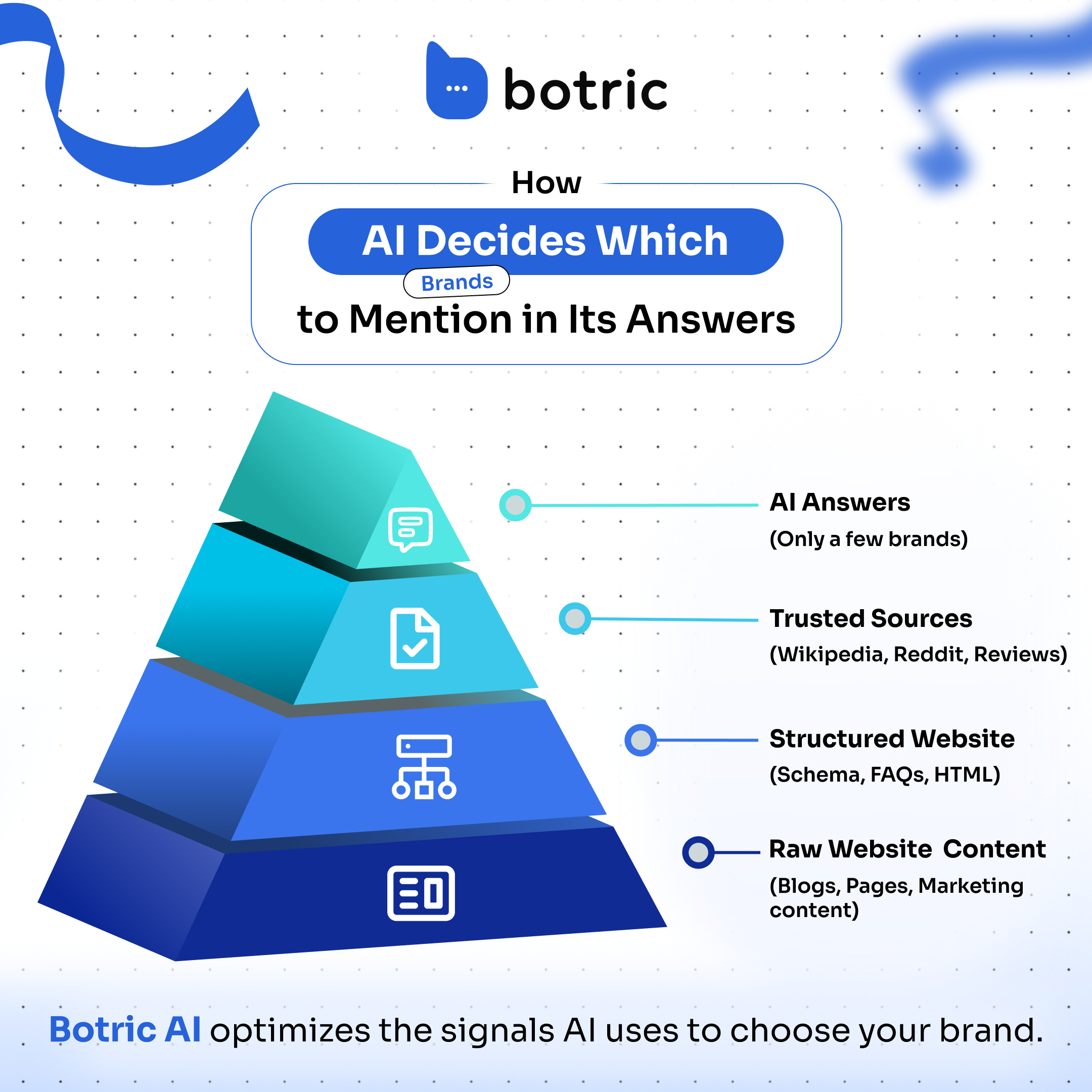
This distinction highlights the difference between SEO vs GEO.
SEO is still valuable. People still use search engines, and websites still matter. GEO is not a replacement for SEO. It is an extension of it.
- SEO focuses on visibility in search results, getting your pages ranked so users click through
- GEO focuses on visibility inside AI-generated responses, getting your brand cited in the answer itself
Businesses that rely only on SEO risk being invisible in a growing discovery channel. Those that combine SEO and GEO are better prepared for how people are finding information today.
How Botric Helps Businesses Solve the GEO Problem
Understanding Generative Engine Optimization is one thing. Putting it into practice consistently is where most businesses struggle.
The challenge is not awareness, but execution. Businesses know they need clarity and intent-driven content, yet their information is often scattered across websites, pages, and platforms. As a result, AI systems receive mixed or incomplete signals.
Botric solves this by making GEO practical. It helps businesses organize and present their information in a clear, structured way that aligns with how people actually ask questions in AI tools. This allows businesses to focus on answering real user intent in a way AI systems can confidently reference.
Botric also helps ensure this information stays accurate as services change, offerings evolve, and AI-driven discovery continues to grow. The goal is not to add complexity, but to make AI visibility manageable and sustainable.
In simple terms, Botric helps businesses move from hoping AI understands them to making sure it does.
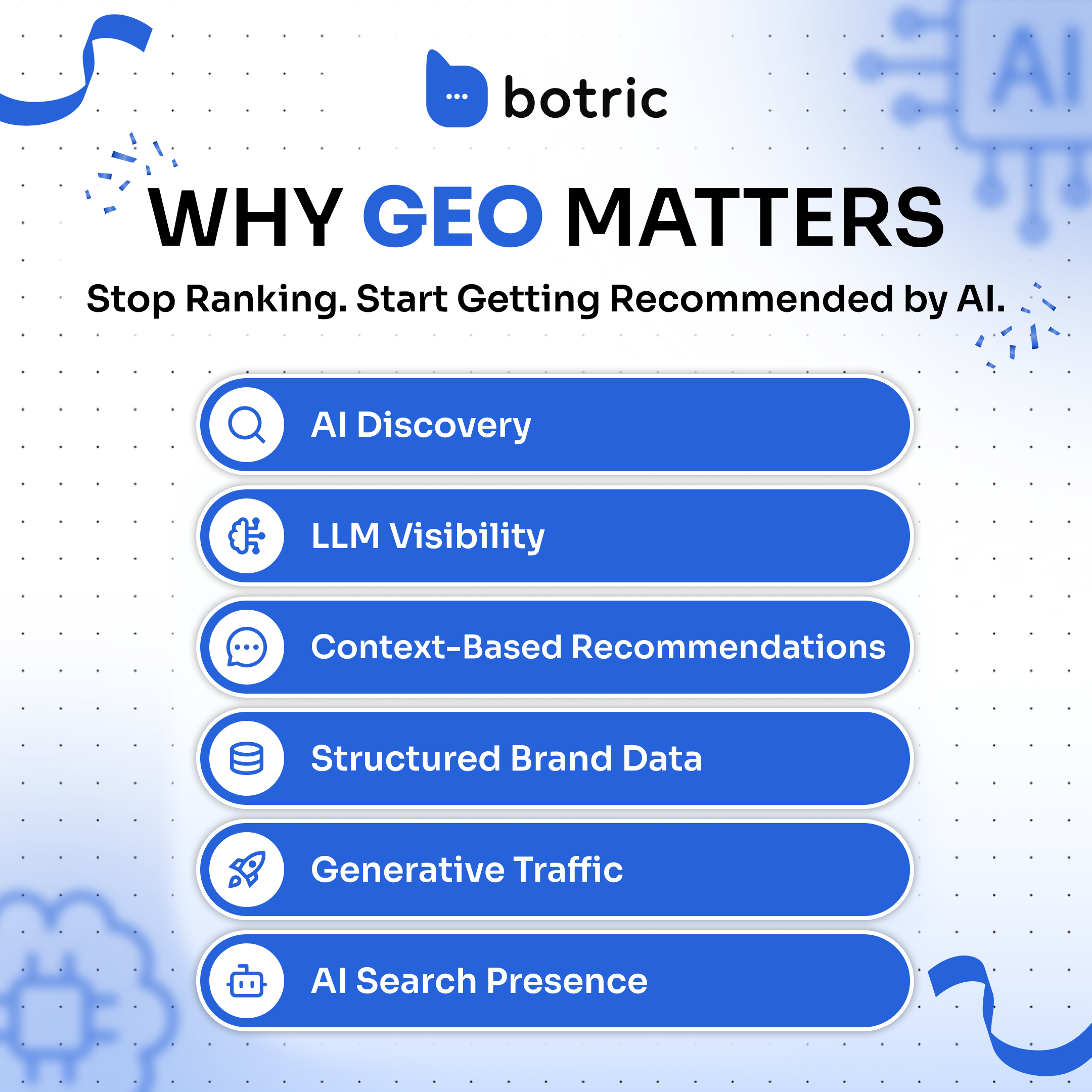
Why GEO matters for the future
AI assistants are increasingly becoming the layer between people and the internet. They summarize options, filter choices, and influence decisions before users ever visit a website.
As this continues, businesses will not compete only on rankings. They will compete on understandability.
The businesses that succeed will be the ones that communicate clearly, align content with real intent, and structure information for both humans and AI.
Final thoughts
Generative Engine Optimization is about clarity, intent, and alignment.
It is about making sure your business answers real questions, presents information clearly, and can be understood by both humans and AI. As AI continues to shape how people explore, compare, and decide, being visible inside AI-generated answers is becoming just as important as ranking in search results.
GEO helps businesses adapt to that reality not by chasing hype, but by focusing on what matters most: clear information for real intent.
Ready to take action? Explore the best GEO tools available today or see which tools help you rank in ChatGPT and AI search engines to start building your AI visibility strategy.
If your website isn't appearing in AI-generated answers yet, read our in-depth breakdown of the 7 reasons your website doesn't show in AI search, and how to fix them.
If you want to automate customer support and GEO optimization. Try Botric today for free.
Key Takeaways
- GEO makes your business easy for AI tools to understand, trust, and recommend.
- Structured content and clear messaging matter more than keyword volume.
- AI judges trust through consistency, credible sources, and third-party mentions.
- GEO does not replace SEO; the two work together.
- Businesses that adapt early gain visibility before competitors catch up.