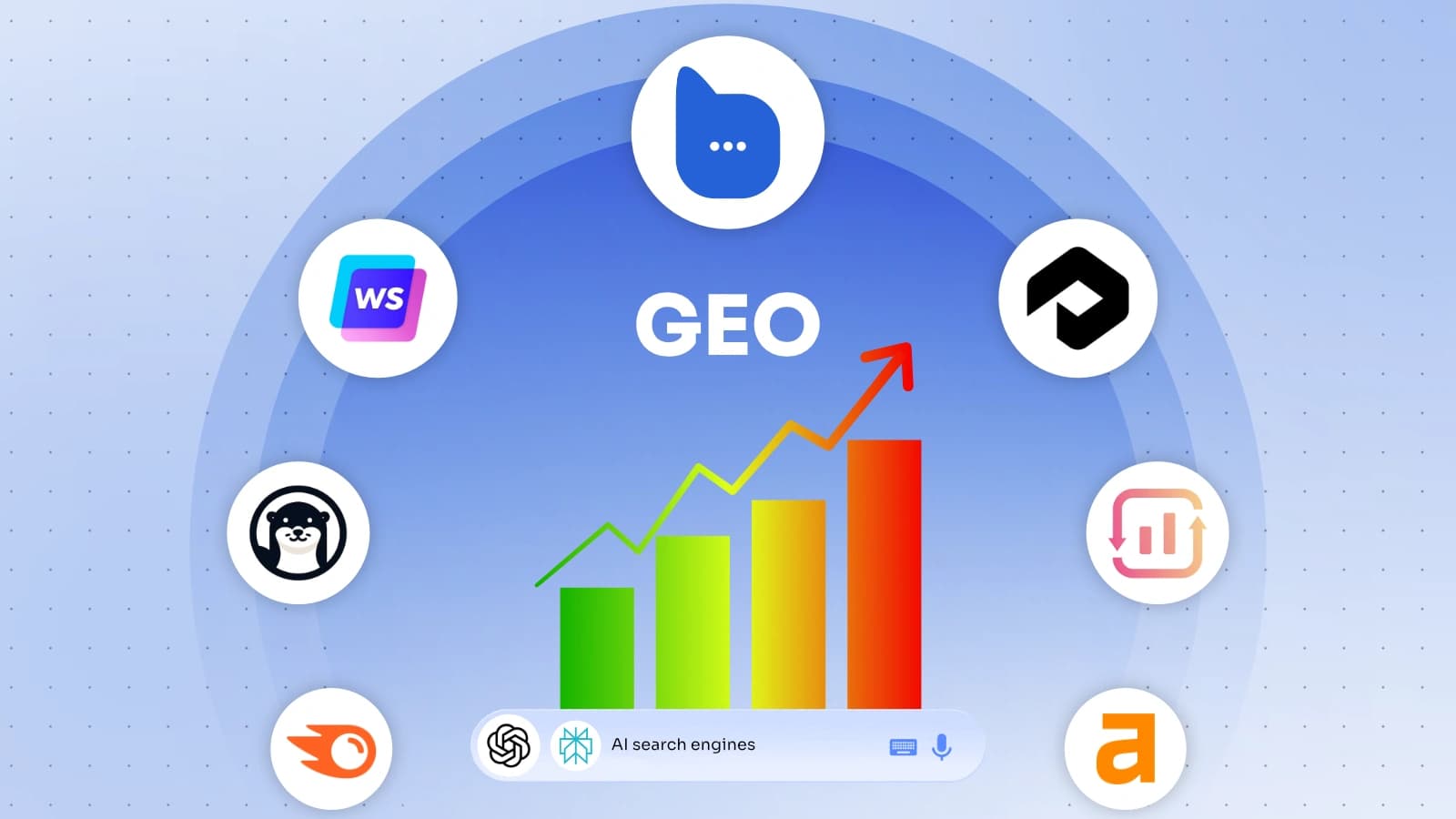
AI search is transforming how users discover brands. Instead of browsing multiple links, people now rely on AI assistants to recommend solutions instantly, which is why I'd treat the right tools to rank in ChatGPT as essential rather than optional.
With the rise of AI SEO tools, LLM optimization tools, and GEO platforms, you can now optimize content not just for rankings but for AI-generated recommendations.
The tools below work as ChatGPT rank trackers and AI visibility platforms, showing you exactly where your brand shows up, or doesn't, across AI-generated answers, so you know what to fix.
The ChatGPT rank tracking tools worth using in 2026 do more than optimize content, they show exactly where your brand shows up in AI-generated answers from ChatGPT, Perplexity, Gemini, and Google AI Overviews, and tell you what's driving it.
The right pick depends on whether you need ongoing rank tracking, content optimization, or both.
- Best overall: Botric tracks your brand across six platforms (ChatGPT, Gemini, Perplexity, Claude, Google AI Overviews, and Google AI Mode) and pairs that with content generation to close the gaps it finds, from $15/month.
- Best for brand monitoring: Profound tracks how AI models mention your brand and surfaces visibility trend data over time, from $99/month.
- Best for lightweight tracking: Otterly AI is built specifically around ongoing AI search tracking with no content layer, from $29/month.
- Best for brand monitoring + CX: Scrunch tracks brand presence, share of voice, citations, sentiment, and answer position in one platform.
- Best for content creation: Writesonic focuses on AI-assisted content, with basic visibility indicators layered on top, from $249/month.
- Best for content optimization: Surfer SEO leans on content and SERP analysis, with tracking limited to Perplexity, from $119/month.
- Best if you're already on Semrush or Ahrefs: both add AI visibility features on top of their core SEO platforms, a reasonable add-on if you're not ready for a dedicated tool, but neither is built primarily for AI rank tracking.
How AI Search Engines Choose Which Brands to Recommend
AI search engines don't rank pages in the traditional sense, they generate answers. To do this, they select brands based on how clearly and reliably their content can be understood and reused.
They prioritize structured, context-rich content that directly answers queries. Authority also plays a key role, as AI systems tend to favor brands that are frequently mentioned across trusted sources. Consistency, clarity, and credibility together determine whether your brand gets recommended.
Why Traditional SEO Is No Longer Enough
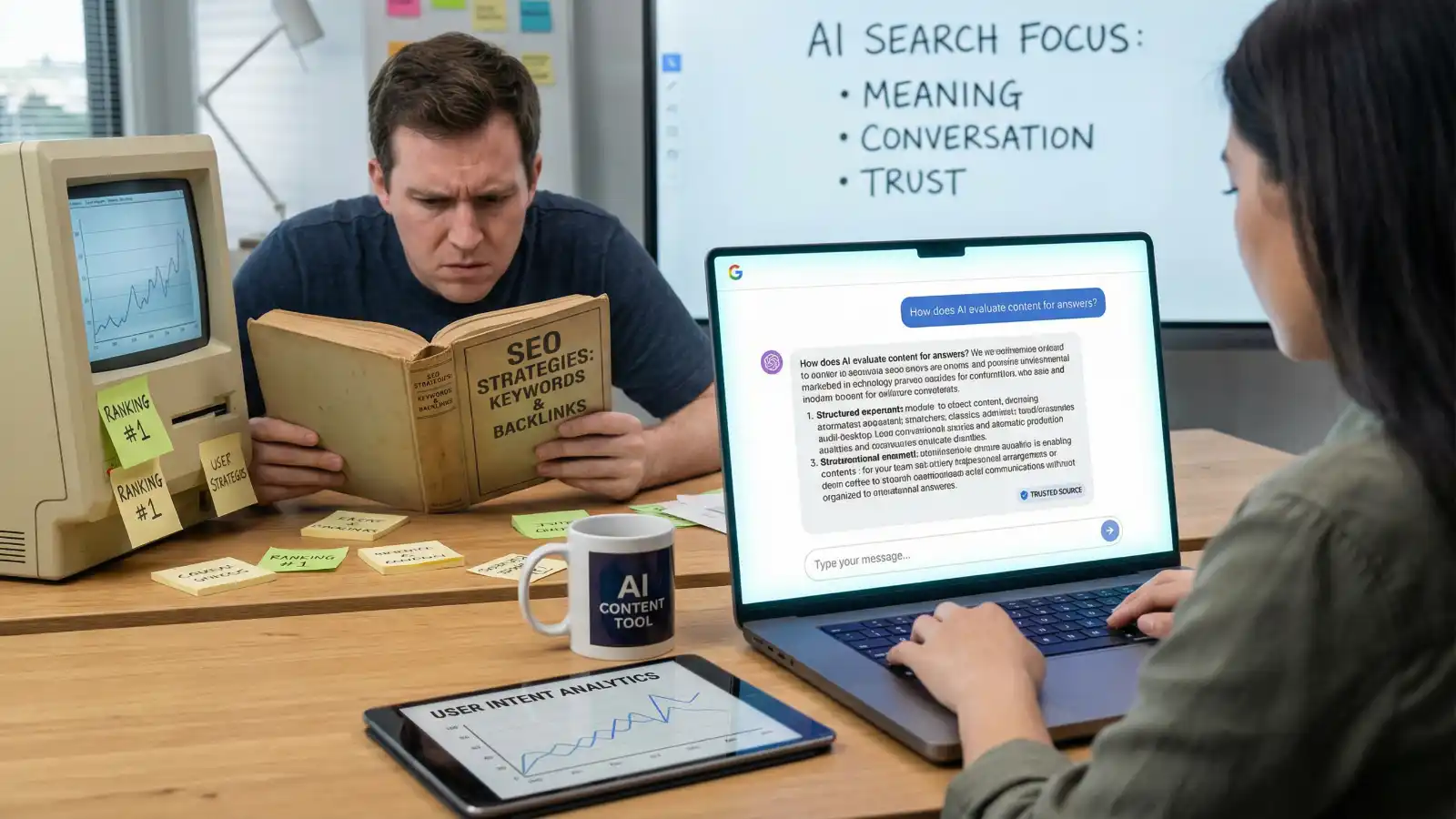
Traditional SEO focused heavily on keywords, backlinks, and ranking positions. While these still matter, they are no longer sufficient in an AI-driven search environment.
Today, AI systems evaluate how well your content answers a question, how naturally it reads, and how trustworthy it appears. This is where AI SEO and LLM optimization tools become essential, they help shape content to align with how AI models process information.
- Meaning and intent, answering the reason behind the query, not just the keywords
- Conversational responses, content written in natural language AI can extract and reuse
- Structured answers, clear headings, concise sections, and FAQ-style formatting
- Trust signals, consistent brand presence across authoritative external sources
This shift makes AI SEO tools and LLM optimization tools critical. Without them, your content may rank on Google but still fail to appear in AI-generated answers.
Top 8 Tools to Rank in AI Search Engines
Beyond SEO, the market is continuously growing with an extensive number of tools built for AI search visibility. However, each one is special in its own way.
1. Botric
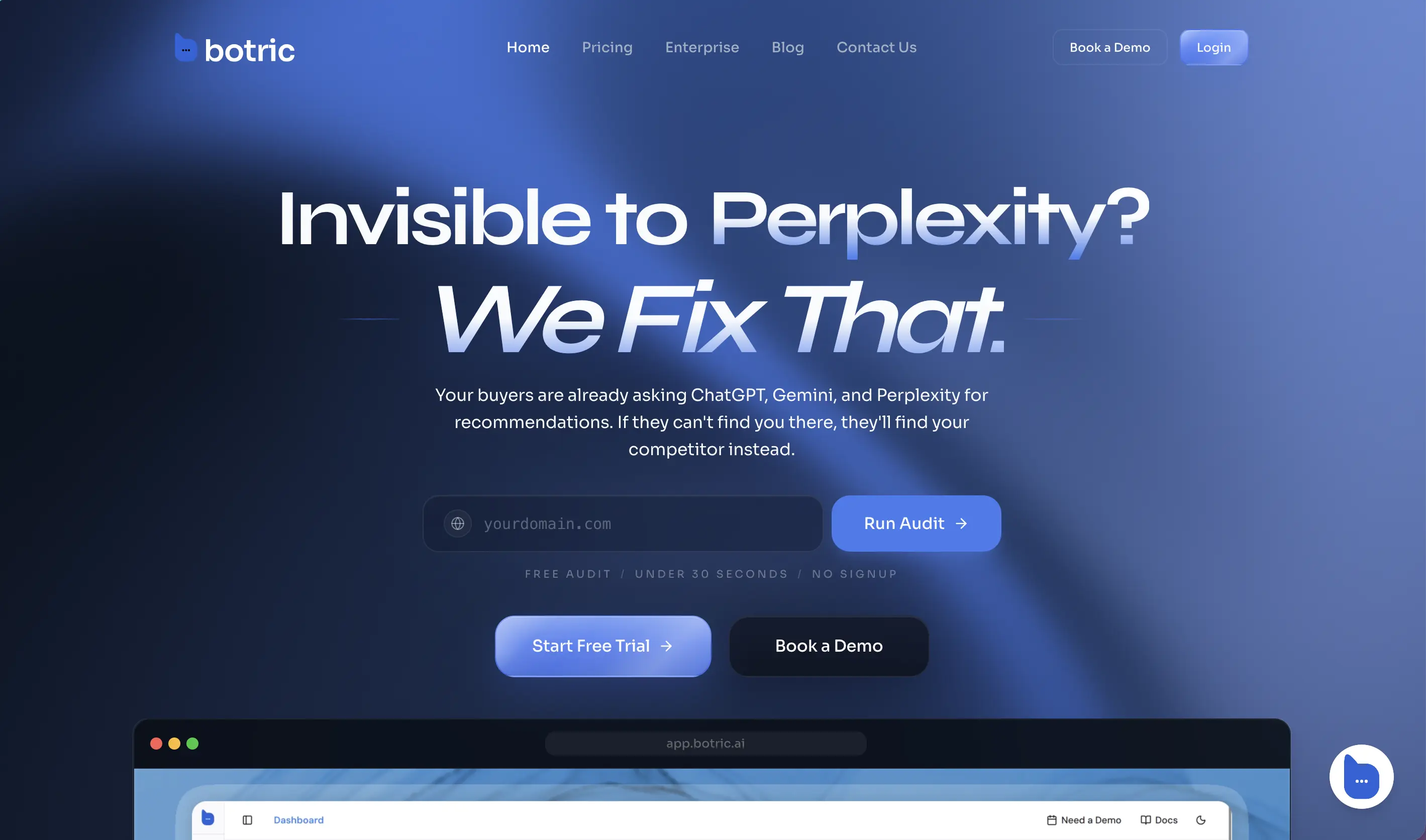
Botric is a full-stack platform built to track exactly where your brand shows up across AI search, then close the gaps it finds.
It tracks six platforms, ChatGPT, Gemini, Perplexity, Claude, Google AI Overviews, and Google AI Mode, and combines that with citation analysis, a central GEO score dashboard, AI-ready site audits, and GEO-optimized content generation, all in one platform.
Instead of handing you a single visibility score and leaving you to figure out what to do with it, Botric tracks your positioning over time and generates the content needed to move it. Plans start at $15/month.
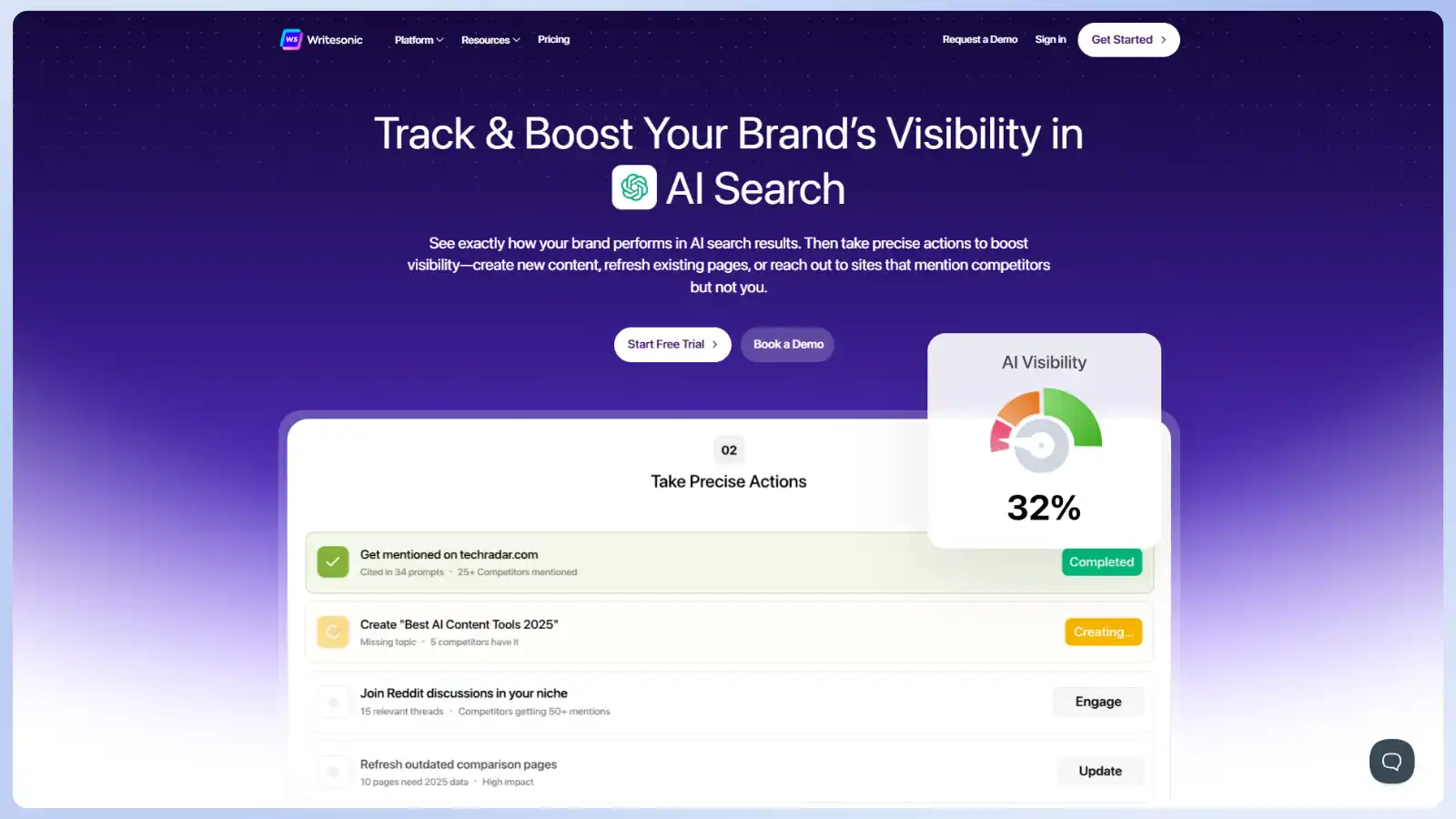
2. Writesonic
Writesonic is a popular AI SEO tool that helps create conversational, optimized content. It is particularly useful for generating answers that align with how AI assistants respond to users.
Its strength lies in producing scalable, AI-friendly content without losing readability. If Writesonic does not fully meet your needs, see the roundup of the best Writesonic alternatives for AI visibility and GEO.
3. Profound
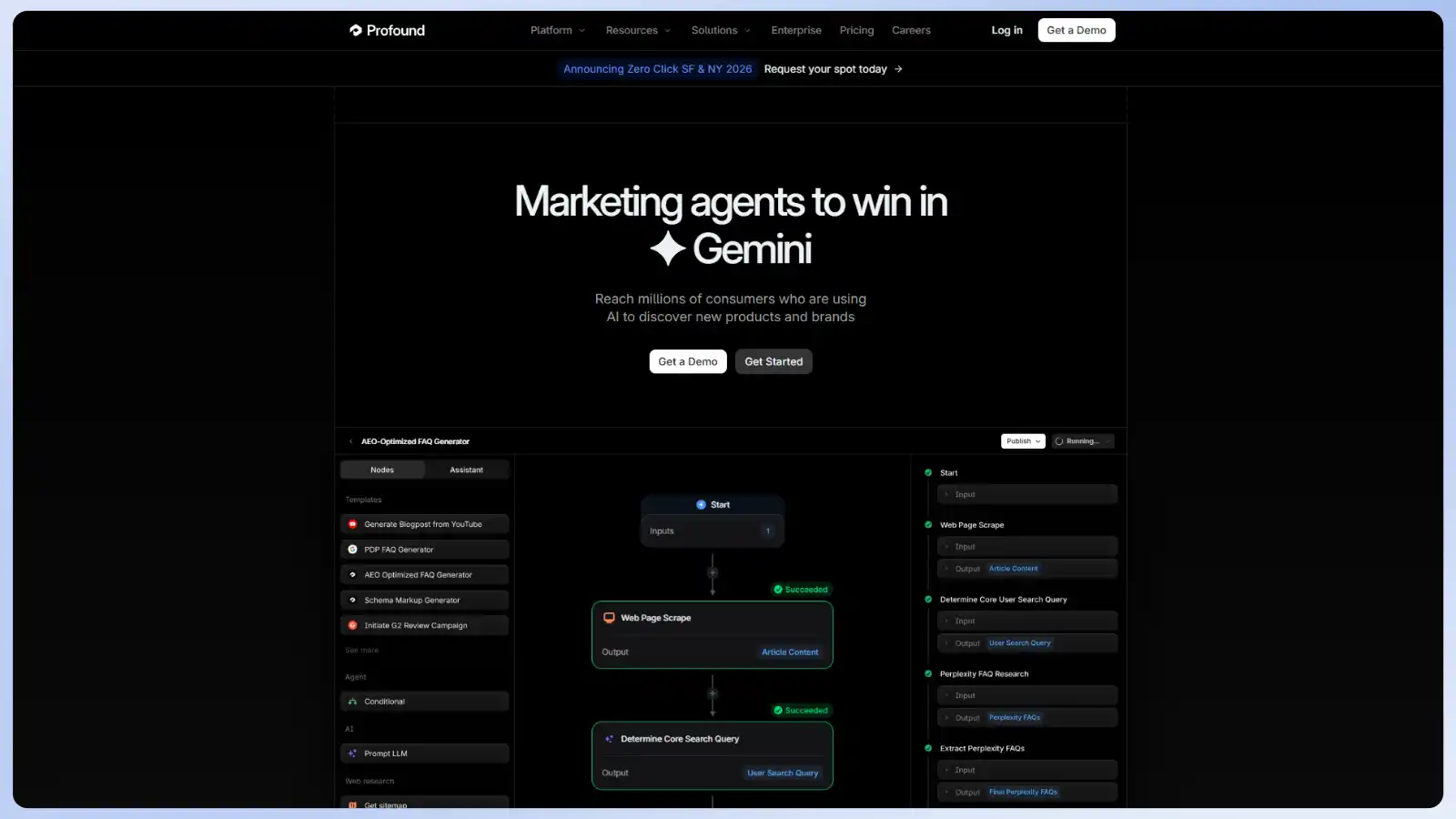
Profound is a dedicated LLM optimization tool designed to monitor how AI models mention your brand. It provides insights into visibility trends and helps improve your positioning in AI-generated outputs.
For brands focused on AI presence, it offers a more targeted approach than traditional SEO tools.
4. Otterly AI
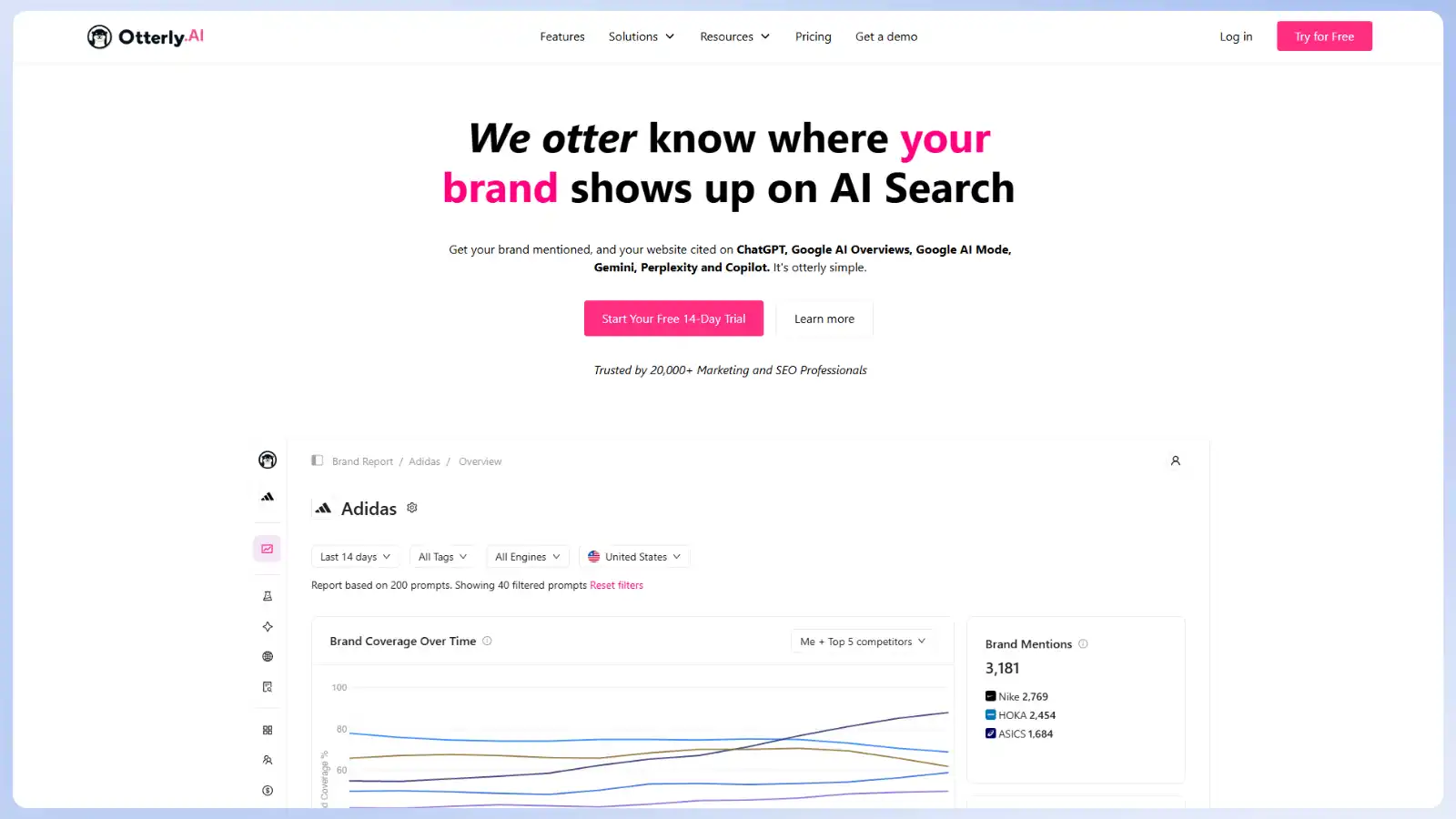
Otterly AI is a fast-growing GEO platform that focuses on AI search analytics. It evaluates how visible your content is across generative engines and provides actionable suggestions for improvement.
This makes it particularly useful for tracking performance beyond traditional search engines.
5. Surfer SEO
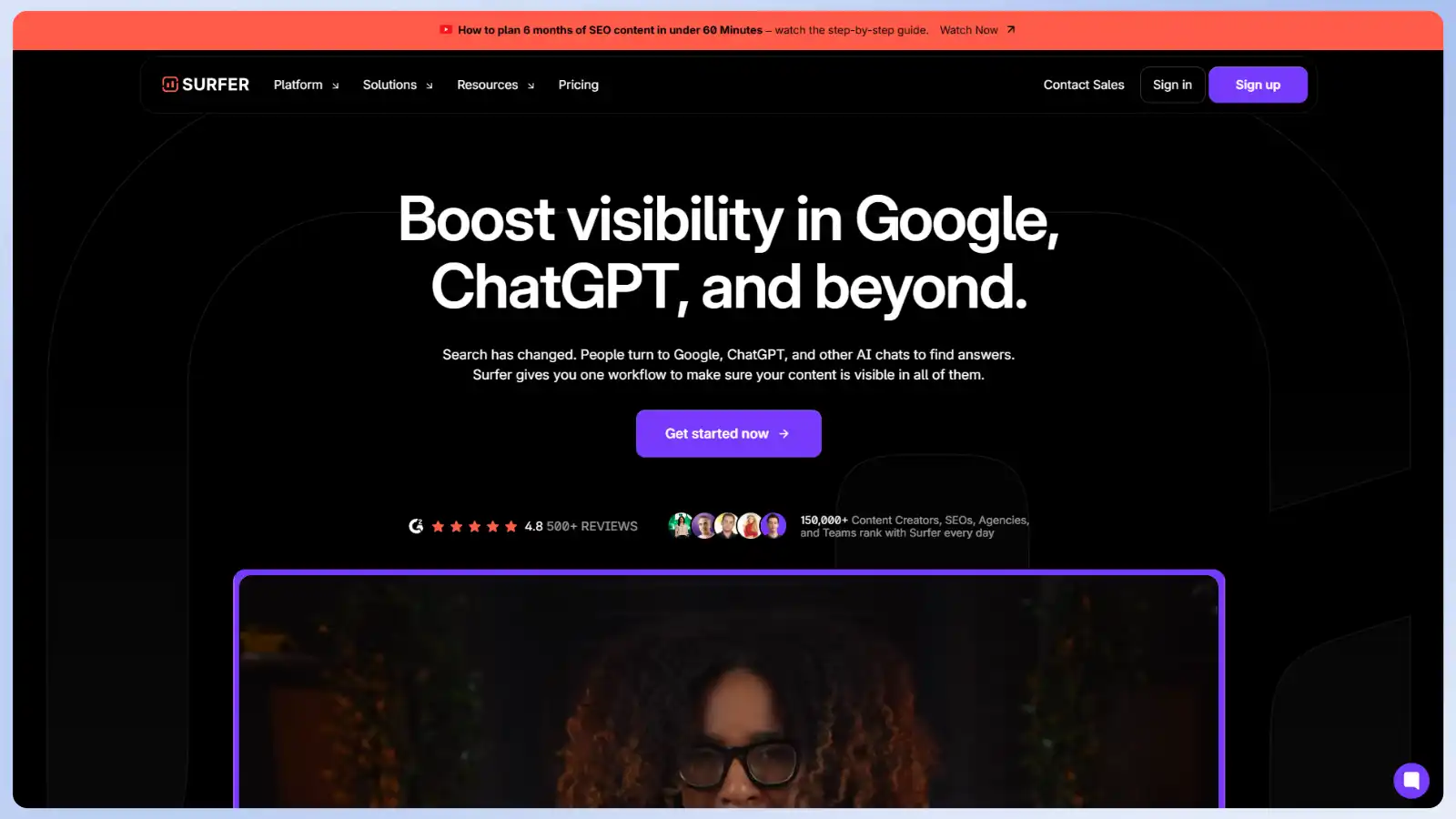
Surfer SEO remains one of the most reliable AI SEO tools for content optimization. It ensures your content is structured, relevant, and aligned with user intent.
Its ability to combine SEO with semantic analysis makes it highly effective for both Google and AI search engines.
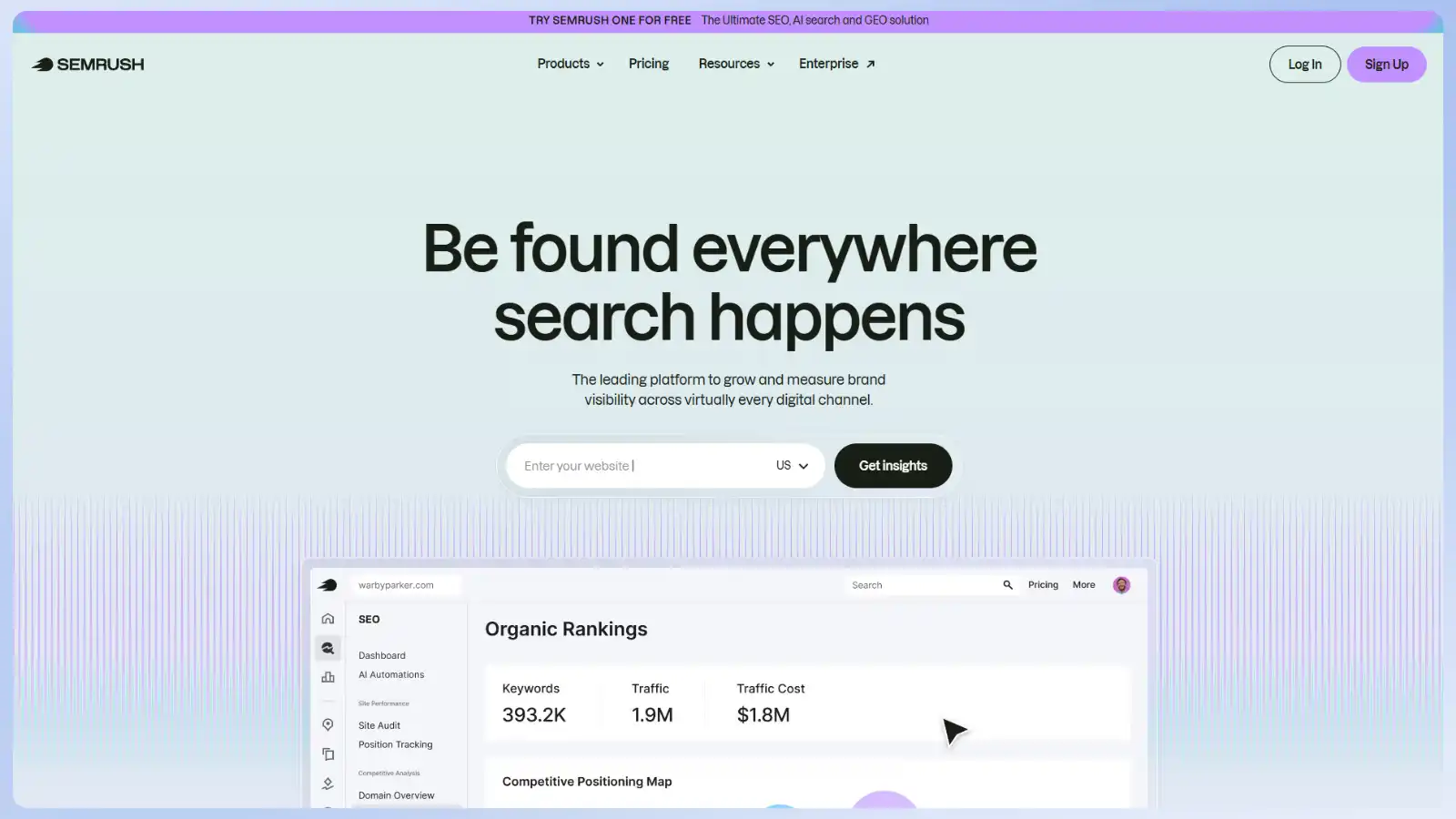
6. Semrush
Semrush is a comprehensive marketing platform that supports long-term visibility. While it started as a traditional SEO tool, it now plays a role in AI optimization by helping build authority and content depth.
Its strength lies in competitor analysis and strategic content planning.
7. Ahrefs
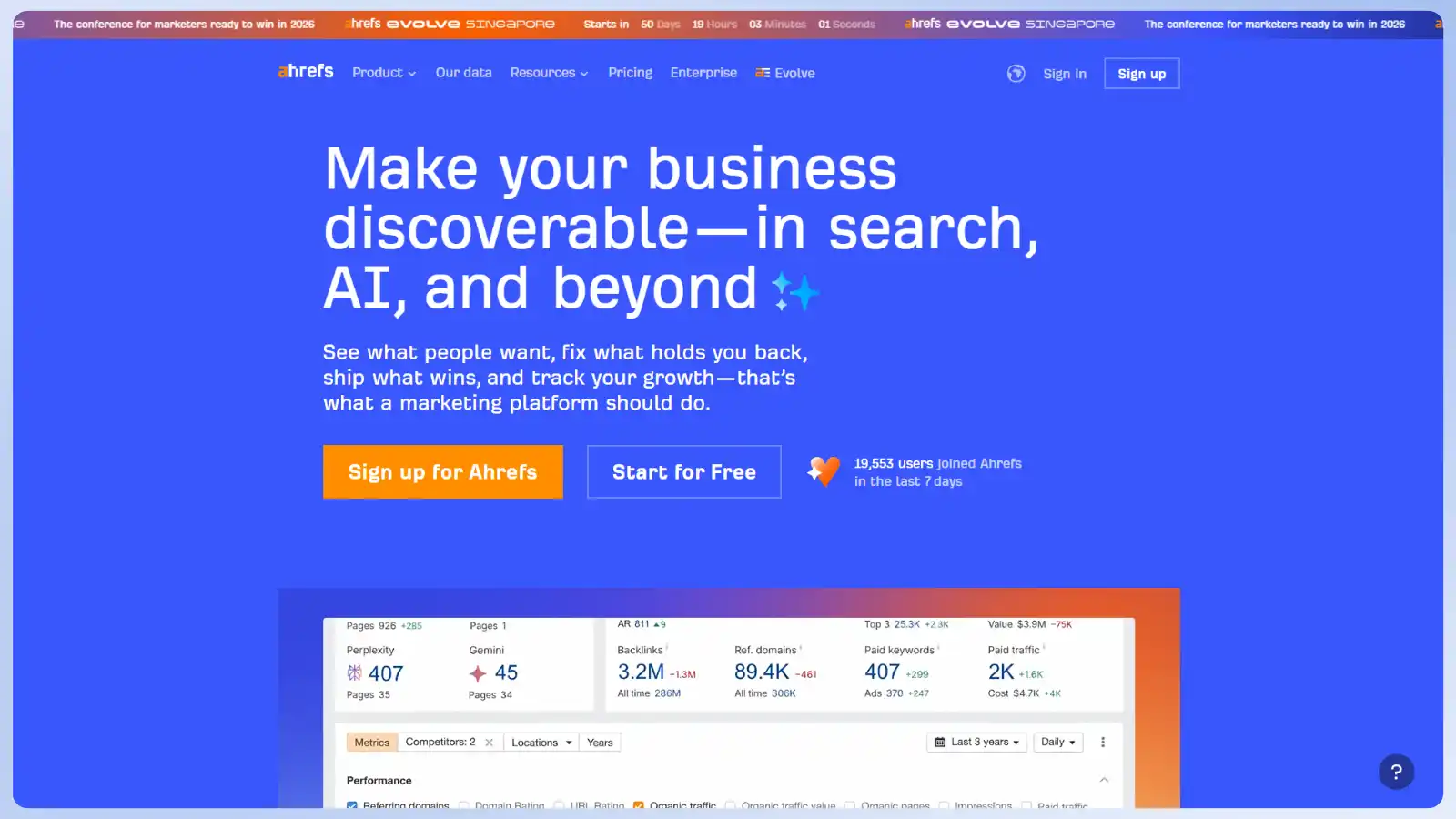
Ahrefs continues to be essential for building credibility through backlinks and domain authority. Even in AI search, trust signals remain important, and Ahrefs helps strengthen them.
It supports the foundation that allows your content to be considered reliable by AI systems.
8. Scrunch
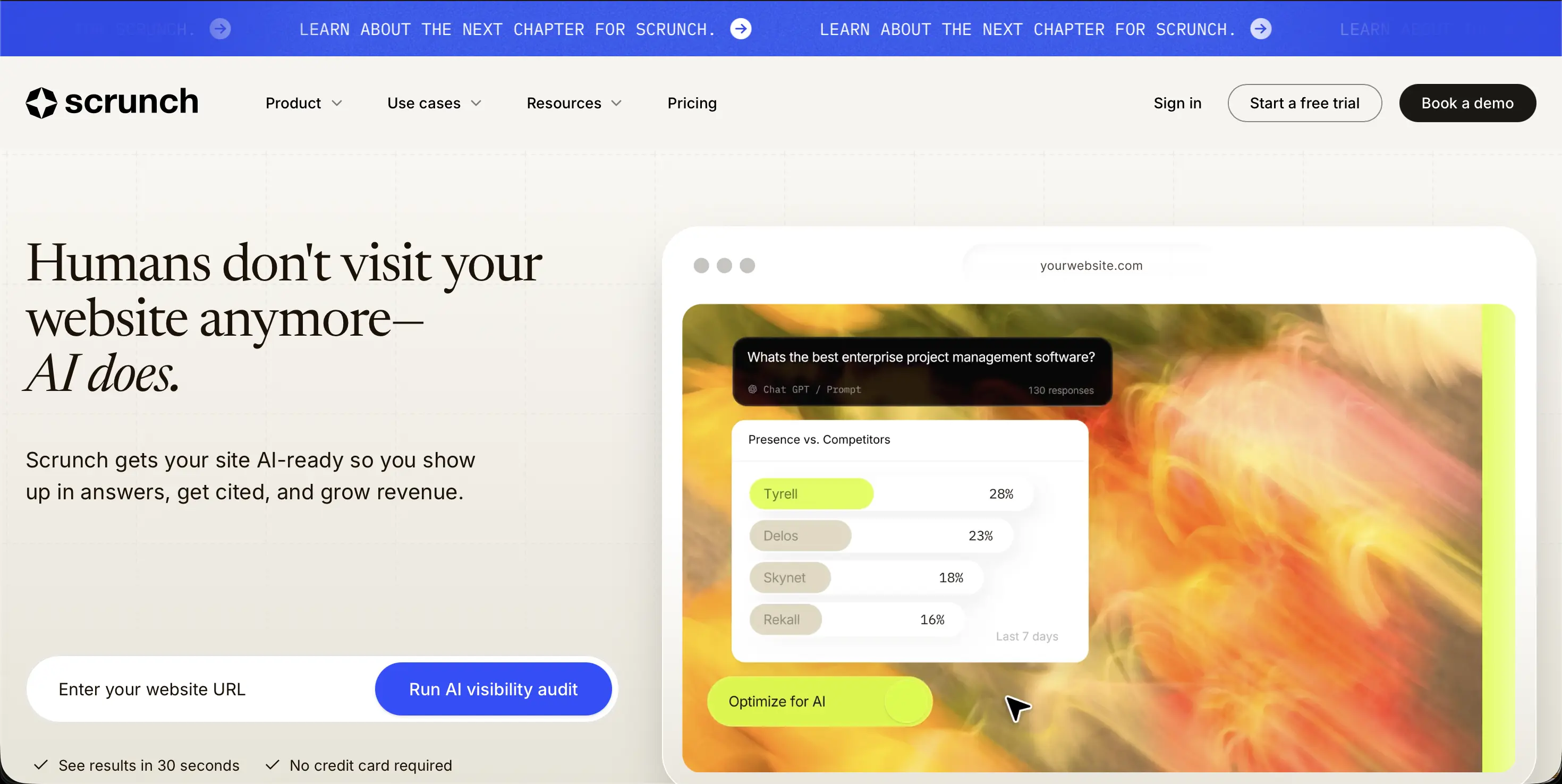
Scrunch is an AI Customer Experience Platform built to help brands observe, understand, and act on how AI assistants like ChatGPT, Perplexity, Claude, Gemini, and others talk about them. It combines monitoring, website auditing, and content optimization in one place, so teams can track their brand presence, share of voice, citations, sentiment, and answer position across AI platforms, then take action on what they find.
What sets it apart is its content delivery layer, which detects AI agent traffic to your site and serves a structured, AI-optimized version of each page directly to those agents without touching the experience for human visitors.
Tools Comparison at a Glance
| Tool | Category | Best Use Case | AI Visibility Focus |
|---|---|---|---|
| Botric | GEO platform | AI visibility tracking, content optimization, audit & recommendations | High |
| Writesonic | AI SEO tool | Content creation | Medium |
| Profound | LLM optimization | Brand monitoring in AI | High |
| Otterly AI | GEO platform | AI search analytics | High |
| Surfer SEO | AI SEO tool | Content optimization | High |
| Semrush | AI SEO tool | Strategy & authority | Medium |
| Ahrefs | AI SEO tool | Backlinks & trust | Medium |
| Scrunch | AI CX Platform | Brand monitoring & content optimization | High |
Which Platform Improves AI Visibility the Most
Botric and Profound are the two real full-stack contenders here, both pair ongoing tracking with actual content support rather than stopping at a dashboard.
Botric tracks six platforms at once (ChatGPT, Gemini, Perplexity, Claude, Google AI Overviews, and Google AI Mode) and generates GEO-optimized content to close the gaps it finds.
Profound goes deep on monitoring and pairs it with autonomous marketing agents for content, with broader engine coverage that leans toward enterprise use cases.
If ongoing tracking without a content layer is all you need, Otterly AI is the leaner, monitoring-only option. For most brands, it comes down to Botric's broader platform coverage against Profound's enterprise-oriented depth.

Tips to Get Recommended by AI Assistants
- Write conversationally, AI models extract and reuse content that reads naturally and directly answers a question
- Structure content clearly, use headings, concise sections, and FAQ-style formatting that AI can parse and cite
- Build authority consistently, publish regularly and earn references from credible external sources
- Focus on GEO, optimize for AI citability, not just search rankings, using platforms like Botric
Final Thoughts
AI search is already reshaping digital visibility. To stay competitive, businesses must adopt the right tools to rank in ChatGPT and move beyond traditional SEO approaches. By combining AI SEO tools, LLM optimization tools, and GEO platforms, you can create content that is not only discoverable but also recommended by AI assistants.
Before you invest in tools, I'd understand why your site may be invisible in AI results in the first place. The guide on the 7 reasons your website doesn't appear in AI search walks through the most common blockers, from crawler access issues to weak E-E-A-T signals, and shows how to fix each one.
Key Takeaways
- AI engines recommend brands whose content is clear, structured, and credible.
- Traditional SEO alone no longer guarantees a mention in AI answers.
- Most teams need two tools: one for tracking visibility, one for producing content.
- Consistent brand information across trusted sources improves your odds of being recommended.
- Track your AI mentions so you know which changes actually worked.
Want to see exactly where your brand ranks in ChatGPT, Gemini, and Perplexity right now? Botric's free GEO audit shows your current AI visibility gaps and what to fix first, no setup required. Get your free GEO audit.
Frequently Asked Questions
What are the best tools to rank in ChatGPT?
Some of the most effective tools include Botric, Surfer SEO, Writesonic, Profound, and Ahrefs. Each covers a different aspect of AI visibility, from content optimization to brand monitoring and GEO tracking.
What are AI SEO tools?
AI SEO tools help optimize content using semantic analysis and AI-driven insights. They ensure your content is structured in a way that both traditional search engines and AI assistants can understand and surface.
What are LLM optimization tools?
These tools focus on structuring content for large language models like ChatGPT and Claude. They help ensure your brand and content are interpreted accurately when AI systems generate responses.
What are GEO platforms?
GEO (Generative Engine Optimization) platforms improve and track your visibility in AI-generated search results. They monitor how often your brand is cited across platforms like ChatGPT, Perplexity, and Google AI Overviews. See the dedicated guide on the best GEO tools for a full breakdown.
Do backlinks still matter in AI search?
Yes, they help build authority and trust, which are still important signals for AI recommendations. While AI search focuses more on content quality and structure, domain authority remains a factor in how AI systems evaluate credibility.
What is the best ChatGPT rank tracker?
Botric, Profound, Otterly AI, and Scrunch are the closest to dedicated ChatGPT rank trackers in this list, each tracks how often and how favorably your brand shows up in AI-generated answers over time, rather than giving you a one-time snapshot. Botric tracks positioning across six platforms and pairs it with content generation. Profound and Scrunch go deep on monitoring with citation and sentiment data. Otterly AI is the leanest option if tracking alone, without a content layer, is all you need.
What's the best tool to check Perplexity rankings?
Botric and Otterly AI both track Perplexity as one of their core platforms, alongside ChatGPT and Gemini. Surfer SEO also covers Perplexity, though its tracking there is more limited than its content optimization features. If Perplexity visibility specifically is your priority, Botric or Otterly AI are the more purpose-built options.
How do I choose the right tool for ChatGPT search analytics?
Start with what you actually need: ongoing tracking, content generation, or both. If you want a single platform to track ChatGPT visibility and produce the content to improve it, Botric or Profound cover both ends. If you already have a content team and just need analytics, a lighter tracker like Otterly AI is enough. If you're already invested in Semrush or Ahrefs for traditional SEO, their AI features work as an add-on rather than a replacement.