Add accurate Organization markup and FAQ markup that matches visible content, but don't count on schema markup for AI search to earn citations on its own.
Google says no special schema is required for its generative AI features. Here is what Google and other platforms say and what to do with it.
No, not directly. Three facts settle it.
- Google's position. No special schema is required for its generative AI features.
- The evidence. No AI platform we checked documents schema markup as a citation factor, and we found no independent test we could verify showing a citation benefit.
- Why it is still worth doing. Schema markup for SEO supports rich-result eligibility and helps machines understand who you are.
Does schema markup help you show up in AI search? The short answer
Not directly, and the sources agree on that point. Google's guide to generative AI search says structured data isn't required and that there's no special schema.org markup to add. It still recommends using structured data as part of overall SEO, because it supports eligibility for rich results in Google Search.
Search Engine Journal agrees that schema won't make AI systems cite you directly but that it helps engines understand who you are, verify your claims and decide whether to feature you. Per that same article, Microsoft has said schema helps its language models understand content. It also reports that OpenAI emphasizes structured product data for ChatGPT shopping.
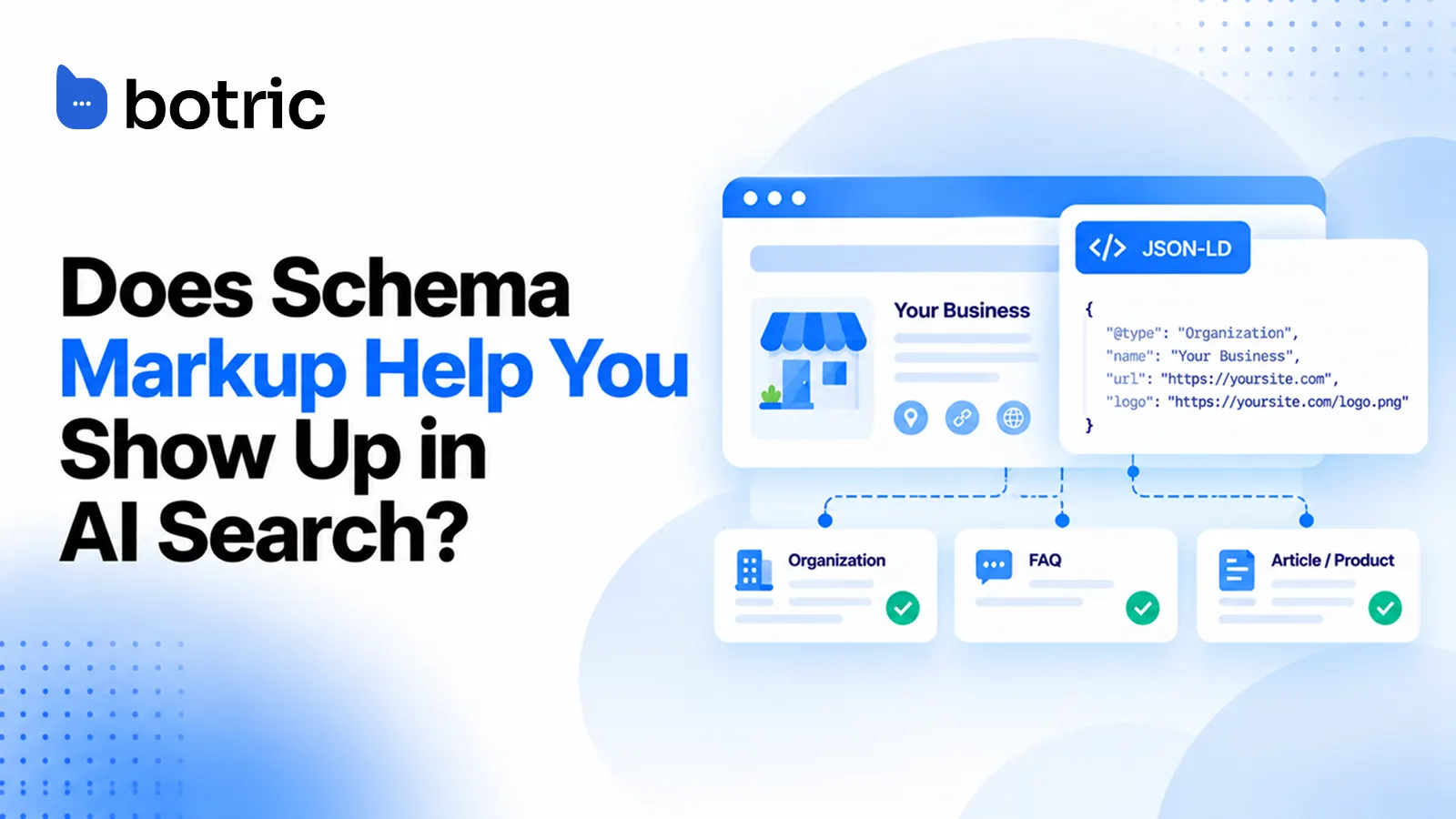
Schema markup is code, usually JSON-LD, added to a page that labels what the page is about (an organization, a product, a set of questions) in a format machines read without guessing.
Think of it as a name badge at a conference. It helps people place you quickly, but nobody gets invited to speak because they wear one.
What does the evidence say about schema and AI citations?
The evidence is limited. No AI platform lists schema markup as a citation factor, and we found no independent test we could verify.
What this adds up to
No AI platform documents schema markup as a citation factor, and Google says no special schema is needed for its generative AI features. We found no independent test we could verify, so treat any claim that schema earns citations as unproven. That is not proof of harm or of uselessness. It means the claim has no solid support yet, so don't build a strategy on it.
You will run into several schema types in practice, including Organization, FAQ, Product or Service, and Article. Botric's Why Your Brand Isn't Showing Up in AI Search Results names these as priority types. Naming them is a checklist, though, and it doesn't establish that any of them earns a citation benefit.
Does schema markup help SEO, and how is schema markup for SEO different from AI search?
Schema markup for SEO has a clear, documented job. It makes pages eligible for Google rich results and helps Google understand a page's content.
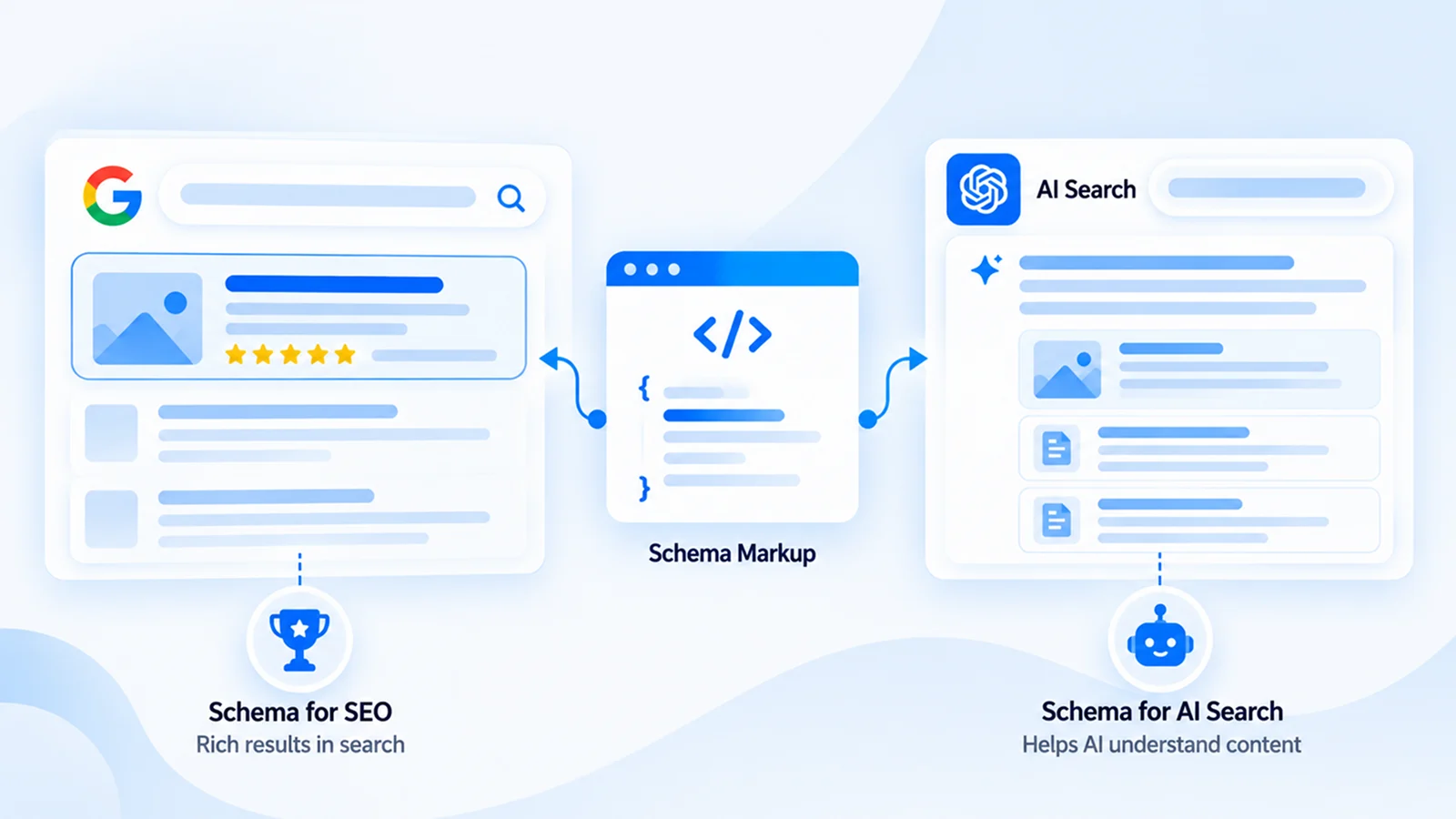
The answer to "does schema markup help SEO" is therefore yes in a narrow sense. It supports eligibility and understanding, and Google does not guarantee that any feature built on structured data will appear.
You can check eligibility with Google's Rich Results Test, which shows which rich results a page can generate and previews how they might look in Search.
| Schema for SEO | Schema for AI search | |
|---|---|---|
| Documented purpose | Rich-result eligibility, content understanding | Helping engines parse and verify facts |
| Direct evidence of benefit | Documented by Google | Limited; no platform documents it |
| Guaranteed outcome | No | No |
| What matters more | Content quality, crawlability | Content quality, entity signals, third-party mentions |
The two jobs get conflated because both use the same markup. The practical split is simple. Google says its generative AI features are rooted in core Search ranking and quality systems, so ordinary SEO practice still applies. Schema's SEO value comes from Google's own documentation; its AI value is, so far, an inference.
How does organization schema markup work, with a JSON-LD example?
Organization schema markup describes who runs a site. Google's documentation says adding it to your home page can help Google understand your organization's administrative details and disambiguate it in search results. Some properties can influence merchant details such as return policy, address and contact information. The properties below are the ones to fill in.
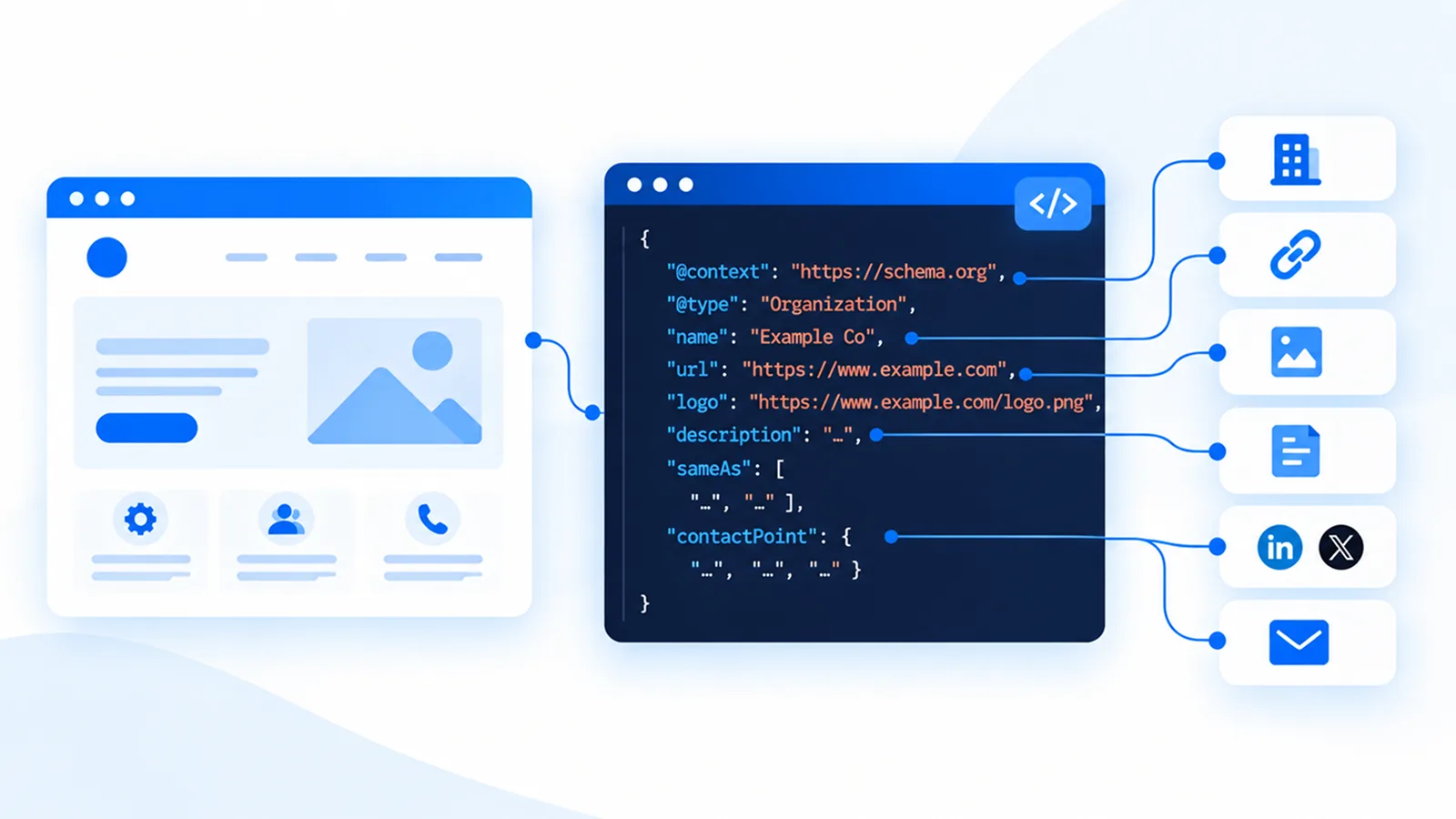
A JSON-LD example
Here is a minimal Organization example. "Example Co" and every URL are placeholders, so replace each value with your real details. Place it inside a script tag of type application/ld+json on your home page.
{
  "@context": "https://schema.org",
  "@type": "Organization",
  "name": "Example Co",
  "url": "https://www.example.com",
  "logo": "https://www.example.com/logo.png",
  "description": "One clear sentence on what the company does and who it serves.",
  "sameAs": [
    "https://www.linkedin.com/company/example-co",
    "https://x.com/exampleco"
  ],
  "contactPoint": {
    "@type": "ContactPoint",
    "contactType": "customer support",
    "email": "support@example.com"
  }
}
What each property does
- name and url state the entity and its canonical home. Keep the name identical to how it appears on the page and in your profiles.
- logo points to the image you want associated with the organization.
- sameAs links to profiles that represent the same entity. This is the property most relevant to disambiguation, because it connects your site to external records.
- contactPoint gives a machine-readable way to reach you.
Google lists no required properties and recommends adding the relevant recommended ones. Put the markup on your home page or a single page describing the organization, such as an about page. You don't need it on every page. Use the most specific schema.org subtype that fits, such as OnlineStore or a LocalBusiness subtype.
Why entity clarity is the defensible reason
The strongest argument for Organization schema isn't a citation lift. It's consistency. Search Engine Journal describes four sources that should agree, namely the webpage, the schema, the platform of record and third-party corroboration.
Engines compare schema against the page, so markup that contradicts visible content works against you. Botric's own guidance on why brands miss AI answers points the same way, naming consistent brand details across profiles as a driver of AI confidence.
Before adding any markup, make sure AI crawlers can reach the page at all. This five-minute crawler check shows how. Then validate before publishing with the Rich Results Test or the Schema Markup Validator, which checks Schema.org markup without Google-specific warnings. The free Botric tools include a structured data test as well.
Is FAQ schema markup still worth adding?
Mostly as low-cost clarity, not as a lever. Google has restricted FAQPage rich results, so don't expect the expandable question-and-answer snippets the markup once produced.
FAQ schema markup can still describe question-and-answer content in a machine-readable way. Botric's article Why Your Brand Isn't Showing Up in AI Search reports that pages with FAQ schema are cited 2.7 times more often than equivalent pages without it. That is the publisher's own claim, and nothing above supports a citation lift from schema generally. Treat it as directional at best.
The rule is simple. Add it only when genuine Q&A content already sits on the page. The markup must match the visible text, since engines compare the two. Marking up questions nobody can see is the fastest way to turn a harmless signal into a trust problem.
Which schema types should you use, and where?
Use only the types that describe content actually on the page.
| Type | What it labels | Where it goes |
|---|---|---|
| Organization | Who runs the site | Home page or an about page |
| Article | A blog post or guide, with author and dates | Each article |
| FAQPage | Visible question-and-answer content | Only pages that show the Q&A |
| BreadcrumbList | The page's position in the site | Pages with a breadcrumb trail |
| Product or SoftwareApplication | A product or app and its details | Product pages |
Google's structured data documentation lists the supported types and the properties each one needs.
What should you do with schema now?
Treat schema as hygiene and put your effort where the evidence is stronger. Follow this order.
- Start with accurate Organization markup on your home page, following the Organization guidance above with your real details.
- Add page-level markup only where it describes real content, such as Article on posts and FAQPage where a visible Q&A exists.
- Validate every change with the Rich Results Test or Schema Markup Validator.
- Keep schema consistent with the page, your business profiles and third-party listings.
- Don't let it substitute for content quality, entity signals and third-party mentions. Botric's own GEO guidance frames GEO as clear structure plus consistent business details, not markup alone. For the full action plan, see how to get your business to show up in AI search.
- Measure citations before and after a markup change rather than assuming impact. AI answers vary between runs, so judge direction over several weeks.
It is reasonable to test whether prompts about your brand return more accurate descriptions after you fix entity data. It is not reasonable to claim that schema caused any citation gain.
With these controls in place, an AI visibility tracking platform can show whether movement follows your changes, and schema checks are one part of that broader audit work. For a wider diagnostic, see the baseline, crawler-access and entity-signal checklist that walks through those checks step by step.
To see where your own site stands before changing any markup, start with Botric's free plan. It includes a site audit, five prompts and 800 credits, with no card required.
Conclusion
Schema markup is worth adding as hygiene, not as a growth tactic. Its documented value is rich-result eligibility and clearer machine understanding of who you are. Its value for AI citations is unproven. Google says no special schema is needed, and we found no verifiable test showing a citation benefit.
The sensible path is to add accurate Organization markup, tie FAQ markup to visible Q&A, validate every change, and keep your business details consistent across your site and profiles. Then measure mentions and citations over several weeks before crediting any change to markup. If you want a baseline first, Botric's free plan includes a site audit and five tracked prompts.
- Schema markup for AI search helps machines parse and verify content, but the evidence that it raises AI citations is limited.
- Google says no special schema is required for its generative AI features, and no platform documents schema as a citation factor.
- Schema's documented value is Google rich-result eligibility and understanding, and it guarantees no ranking boost.
- Add accurate Organization markup, keep FAQ schema tied to visible Q&A, and validate everything.
- If you do one thing, fix entity consistency across your site and profiles first, then measure citations before and after any markup change.
Try Botric to check how AI crawlers access your site before changing any markup. The Site Audit checks schema markup, crawler access, and other technical issues to help you identify what to fix first.
Frequently Asked Questions
Is schema markup required to appear in Google AI Overviews?
No. Google states structured data isn't required for generative AI search and that there's no special schema.org markup to add. A page does need to be indexed and eligible to appear in Search with a snippet.
Does schema markup help SEO at all?
It helps with rich-result eligibility and with Google understanding your page. It is not a ranking switch, and Google does not guarantee that any structured-data feature will show up.
Is JSON-LD the format to use?
Yes for most sites. Google recommends JSON-LD where possible, and it keeps the markup separate from your visible text. It can go in the head or the body of the page.
Does FAQ schema still work after Google's restrictions?
It no longer reliably produces expandable Google results, but it can still label real Q&A content for machines. Add it only when the questions and answers are visible on the page.
Which schema types should I add first?
Organization on your home page, Article on your posts, and FAQPage only where a visible Q&A exists. Add BreadcrumbList if the page shows a breadcrumb trail.
Where should Organization schema go?
On your home page, or on a single page describing the organization, like an about page. It doesn't need to appear on every page.
Could schema markup ever hurt?
Markup that contradicts visible content can undermine trust, since engines compare the two. Keep it accurate and matched to the visible text.