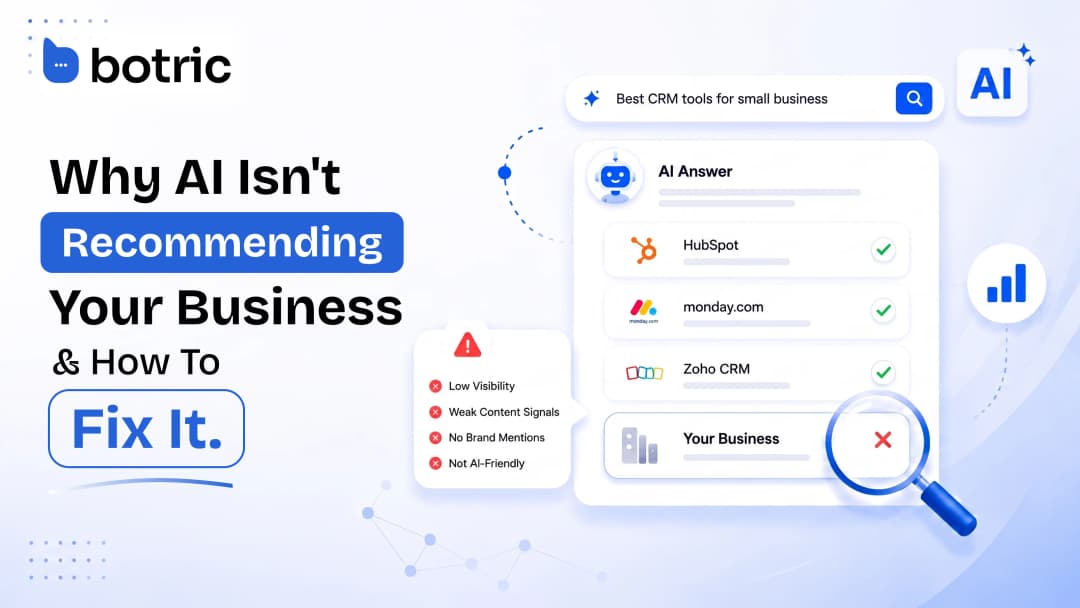
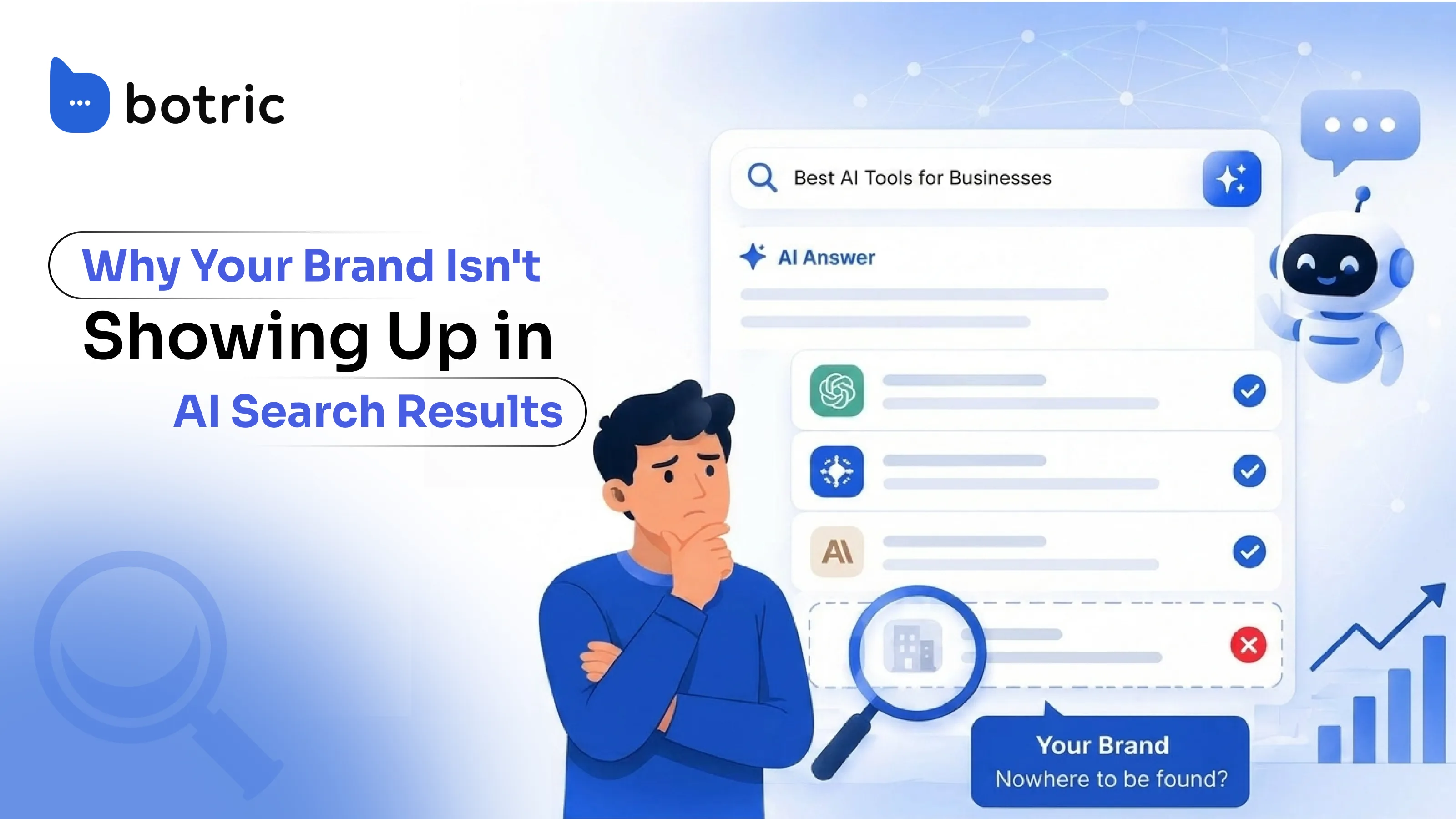
You ask ChatGPT to recommend a tool in your category. Your competitors appear. You don't.
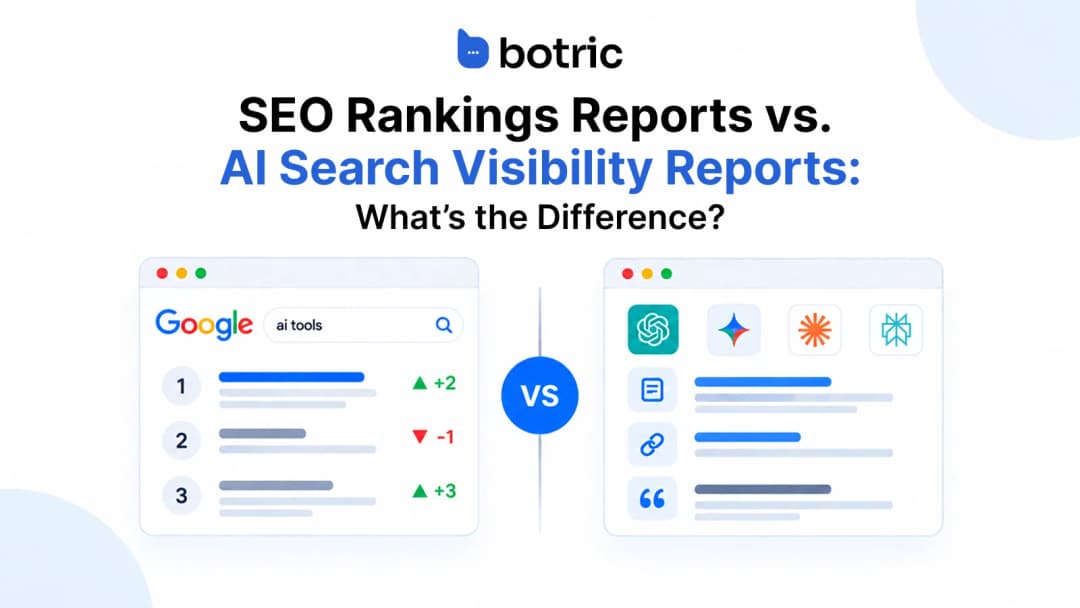
This is not a fluke. By 2026, Gartner projects 25% of search volume will shift to AI engines, yet 73% of brands remain invisible in AI-generated answers. Traditional SEO will not save you here: there is only a 0.034 correlation between Google rankings and ChatGPT citations, and high Domain Rating shows a negative correlation of -0.18 with AI visibility.
For a broader introduction to how AI search discovery works, read our guide on Generative Engine Optimization explained for businesses.
Why AI Search Treats Brands Differently Than Traditional Search
Traditional search engines rank pages based on backlinks, keywords, and on-page signals. They return a list of links and let the user decide.
AI search works differently. Large language models like GPT-4, Claude, and Gemini are trained on vast amounts of web content. When a user asks a question, the model synthesizes a single answer from a narrow pool of sources it considers credible. Instead of ten links, the user gets one response, with two or three citations if they're lucky.
That compression is brutal for brands. The difference between being cited and being ignored often comes down to three things: whether AI can access your content, whether external sources validate your brand, and whether your brand information is consistent enough to recognize as a single entity.
The Three Reasons Your Brand Is Invisible in AI Search
1. Poor Content Structure for AI Processing
AI systems cannot reference what they cannot read, and many brands unknowingly block AI crawlers or present content in formats these systems cannot process.
The most common technical blockers:
- Blocking AI crawlers in
robots.txt, GPTBot (OpenAI), PerplexityBot, ClaudeBot (Anthropic), and CCBot are the crawlers that feed AI systems. A single blanket disallow rule removes your site from consideration entirely. - JavaScript-heavy pages, Pages that only render after JavaScript executes often appear blank to crawlers. If your best content is loaded client-side, AI may never see it.
- Content behind logins or lead forms, Gated content is inaccessible to AI systems by definition. If your most authoritative material requires an account, it will not be cited.
- Missing structured data, Without Schema.org markup, AI must guess what your page is about rather than reading machine-readable labels. Pages with FAQ schema are cited by AI engines 2.7 times more often than equivalent pages without it.
"The content that AI systems can't render simply doesn't exist in their understanding of your site.", Zach Chahalis, Senior Director of SEO & Data Analytics, iPullRank
Go to yourdomain.com/robots.txt and check for entries that block GPTBot, PerplexityBot, ClaudeBot, or CCBot. If any are blocked, remove those entries immediately. Then add FAQ schema to your key pages using Google's Rich Results Test to verify the markup is valid.
2. Missing Third-Party Citations and Brand Mentions
Technical fixes alone are not enough. AI systems do not rely solely on your website, they cross-reference your brand against the broader web. Independent sources like review platforms, editorial coverage, industry forums, and social media discussions all contribute to how credible and real your brand appears to an AI.
Brand mentions have a 0.664 correlation coefficient with AI citations, making them one of the strongest signals of AI visibility. By contrast, traditional SEO metrics like Domain Rating show a negative correlation of -0.18 with AI citations. If the only source talking about your brand is your own website, you have a Source Gap.
The data is striking:
- Brands with a presence on Reddit see a 3.9x increase in AI citations, Reddit contributes to roughly 40% of AI citations in some datasets
- LinkedIn accounts for approximately 11% of AI citations
- Content that includes three or more specific data points per 500 words is cited 4.1 times more often than opinion-based material
"If the only entity talking about your business is your business, there is no corroboration. It is the equivalent of walking into a job interview and your only reference is yourself.", Magna
Claim and complete your profiles on G2, Capterra, Crunchbase, and Google Business Profile. Pursue editorial placements in industry publications. Contribute expert answers on Reddit threads in your category. Each of these builds the external validation that AI systems use to confirm your brand is a recognized entity, not just a website.
3. Inconsistent Brand Information Across Platforms
The final barrier is fragmentation. AI systems use a process called entity resolution to recognize your brand as a single, coherent entity across the web. If your brand appears as three slightly different names across platforms, AI treats them as three separate, partial identities, none with enough authority to confidently cite.
Examples of the fragmentation problem:
- "Acme Inc" on your website, "Acme Software" on LinkedIn, "Acme AI Solutions" on G2
- Described as "AI monitoring" on your homepage but "social listening" on third-party directories
- Incomplete or contradictory profiles on Wikidata, Crunchbase, and product review sites
Each inconsistency dilutes your entity authority. Instead of a single strong signal pointing to your brand, AI receives scattered fragments that weaken overall confidence in who you are and what you do.
Audit your brand name, tagline, and core description across every platform where you have a profile. Standardize them to match exactly what appears on your homepage. Complete any incomplete profiles on Wikidata and Crunchbase, even partial profiles with conflicting information reduce AI confidence in your brand's identity.
How to Improve Your AI Search Visibility
Fixing AI brand invisibility involves three reinforcing strategies: technical optimization, external validation, and authoritative content creation.
Add Structured Data and Schema Markup
Structured data gives AI systems machine-readable labels for your content instead of forcing them to infer meaning from prose. This reduces ambiguity and significantly increases citation rates.
- Organization schema, Your company name, logo, and contact details. Goes on your homepage.
- FAQ schema, Question and answer pairs. Add to any page that answers common customer questions.
- Product or Service schema, Pricing, availability, and reviews. Helps AI accurately describe your offering.
- Article schema, Blog and editorial content. Establishes authorship and publication context.
Schema markup increases AI citation rates by 36% and delivers 47% more context for AI data extraction. Use Google's Rich Results Test to confirm your markup is implemented correctly before publishing.
Build External Citations and References
Once your technical foundation is solid, external validation becomes the primary lever. AI systems synthesize information from everywhere your brand appears, review sites, industry publications, and community forums carry significantly more weight than press release syndication or low-authority directories.
High-impact platforms for AI citations:
- G2 and Capterra, Product review platforms heavily referenced for software categories
- Reddit, Community discussions and comparisons that AI systems frequently pull from
- LinkedIn, Company pages and thought leadership content
- Crunchbase, Funding, founding, and company background information
- Industry publications, Earned media coverage in recognized outlets
A case study worth noting: a small SaaS team went from zero AI mentions to consistent citations in Perplexity and ChatGPT in seven weeks. Their approach was to create profiles on G2 and Capterra, contribute expert answers on relevant Reddit threads, and publish original benchmark data. The key insight from their analysis, content with three or more specific data points per 500 words was cited 4.1 times more often than opinion-based material.
"AI doesn't cite the best content. It cites the most recognized content, sources it's learned to associate with a consistent, specific, trustworthy voice.", Brad Bartlett, Content Strategist
Create In-Depth, Expert Content
Content quality alone does not drive AI citations, but content structure does. AI systems extract answers from content, not summaries. Pages written with clarity, specificity, and a recognizable brand identity perform significantly better than generic or overly promotional material.
- Front-load your identity, Include your brand name, an industry descriptor, and your main offering within the first 40–100 words. Pages with entity salience scores above 0.7 see 3.2x higher retrieval rates in AI responses.
- Use question-based headers, Organizing content around how users phrase queries increases alignment with conversational AI by 2.1x.
- Prefer structured formats, Lists, step-by-step guides, and tables improve extraction accuracy by 47% compared to plain paragraphs.
- Target 600–1,200 words, This length range produces a 41% citation rate, more than double that of pages under 500 words.
- Include proof blocks, Benchmarks, case studies, and data-backed claims give AI verifiable material to extract and cite.
Timeliness also matters. Research shows that 95% of ChatGPT citations reference content published within the past ten months. Update your highest-value pages every 90 days, add a visible "Last Updated" timestamp, and include author bios with credentials. These signals help AI treat your content as a current, authoritative source rather than outdated material.
Tools for Monitoring and Improving AI Visibility
Only 27% of marketers track their brand's presence in AI-generated answers, and citation performance can vary by 615 times between platforms. There is also a reliability problem: only 30% of brands that appear in an AI-generated answer show up again in the next identical query. Tracking visibility over time is the only way to know whether your changes are working.
Using Botric for Visibility Audits and Citation Tracking
Botric is built specifically to monitor how six AI platforms, ChatGPT, Gemini, Perplexity, Claude, Google AI Overviews, and Google AI Mode, perceive your brand. It queries multiple AI engines with category-specific terms, tracks where your brand appears or is absent, and identifies which third-party sites are cited by AI when competitors appear instead of you.
Key capabilities:
- Daily dashboard updates, Real-time tracking across multiple AI platforms
- Citation gap analysis, Surfaces the specific third-party sources your brand is missing from
- Competitor citation patterns, Shows which types of content AI prefers when citing others in your category
- Automated alerts, Notifies you of shifts in visibility so you can respond quickly
Businesses using Botric report an average visibility increase of 40% after implementing its recommendations.
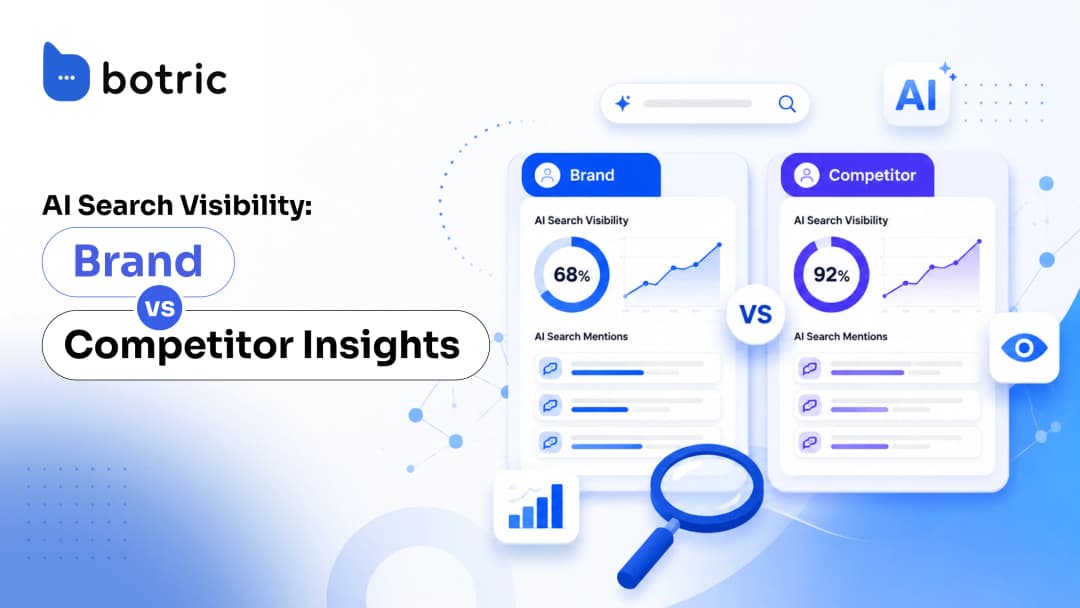
To get the most out of the platform, first confirm your robots.txt allows AI crawlers. Then use Botric to identify citation gaps and benchmark your position against competitors in AI-generated responses. For a broader comparison of options, see our roundup of the best GEO tools available today and the best tools to rank in ChatGPT and AI search engines.
Converting AI Search Traffic with Brand-Trained Chat Agents
Once your brand starts appearing in AI search results, the conversion opportunity is substantial. AI-driven search traffic converts at 14.2% compared to just 2.8% for traditional Google search.
"GEO has improved how our brand appears across AI-generated answers, helping us reach users we previously missed through traditional SEO. Combined with automated chat, inbound conversations are now easier to manage.", Jason Turner, CEO of Digibution Network
Conclusion
AI search is already a significant discovery channel, and it will only grow. If your brand is invisible in ChatGPT, Perplexity, or Gemini today, you are missing traffic that converts at four times the rate of traditional search.
The fix requires addressing three layers simultaneously: technical access (unblock AI crawlers, add schema markup), external validation (build a presence on the platforms AI systems reference), and brand consistency (standardize your identity across every profile and directory).
Traditional SEO metrics, rankings, domain authority, backlinks, have almost no correlation with AI citations. Brand mentions, structured data, and off-site entity authority are what drive visibility here.
The most important first step is knowing where you currently stand. Start by manually searching your most important buyer questions in ChatGPT and Perplexity. Note who is being cited and who is absent. Then use a tool like Botric to track this at scale across platforms and get actionable data on exactly where your brand's authority needs to be strengthened.
Want to go deeper? Read the complete guide on why your website isn't appearing in AI search and how to fix it, explore how Generative Engine Optimization works for businesses, or compare the best GEO tools for 2026 to find the right stack for your team.
Key Takeaways
- AI search generates answers instead of ranking links, so being cited is everything.
- Three blockers cause most invisibility: weak entity signals, unextractable content, and thin third-party coverage.
- High Google rankings and domain authority do not predict AI citations.
- Fix entity consistency first, then content structure, then off-site mentions.
- Monitor citations to confirm your changes are working.
Frequently Asked Questions
How do I check if AI crawlers can access my site?
Go to yourdomain.com/robots.txt and review the rules. Look specifically for any Disallow entries that reference GPTBot, PerplexityBot, ClaudeBot, or CCBot. If any of these crawlers are blocked, remove those entries. You can also run manual queries in ChatGPT or Perplexity using questions your brand should answer, if you are never cited, crawler access is one of the first things to check.
Which schema markup should I add first for AI visibility?
Start with Organization schema on your homepage to establish your brand identity, then add FAQ schema to your highest-traffic pages. These two types directly address the two most common reasons AI skips a brand: not knowing who you are, and not finding a clear answer to cite. Add Article schema to blog content once the foundational schemas are in place.
How can I earn third-party mentions that AI will cite?
Focus on platforms AI systems reference most: G2 or Capterra for product reviews, Reddit for category discussions, and industry publications for editorial coverage. Publish content with specific data points, benchmarks, and case studies, AI systems favor verifiable material over opinion-based content. Consistency matters too: make sure your brand name and description are identical across every platform where you have a presence.
Why does my brand appear in ChatGPT but not Perplexity?
Different AI platforms draw from different source pools and apply different ranking logic. Citation volume can differ by up to 615 times between platforms for the same brand. This is why cross-platform monitoring matters, appearing on one platform does not guarantee visibility on others. Each platform may weight different off-site signals, so a diversified presence across review sites, forums, and editorial sources helps coverage across all of them.
Does improving AI visibility also help traditional SEO?
Yes, but the relationship is not symmetric. Strong AI visibility does not automatically produce better Google rankings. However, the actions that improve AI visibility (building external citations, strengthening E-E-A-T signals, adding structured data) also tend to improve traditional SEO metrics. Think of it as a shared foundation with different measurement frameworks on top. Read more about how Generative Engine Optimization differs from traditional SEO.