Small and mid-size business owners and marketers can get named in AI recommendations with seven actions: check the prompts, align your business details, answer customer questions, publish distinctive content, check crawl access, earn outside mentions, and recheck.
This AI search optimization plan starts this week. No one controls what ChatGPT, Gemini or Perplexity says.
This work is called generative engine optimization (GEO), and it comes down to three things:
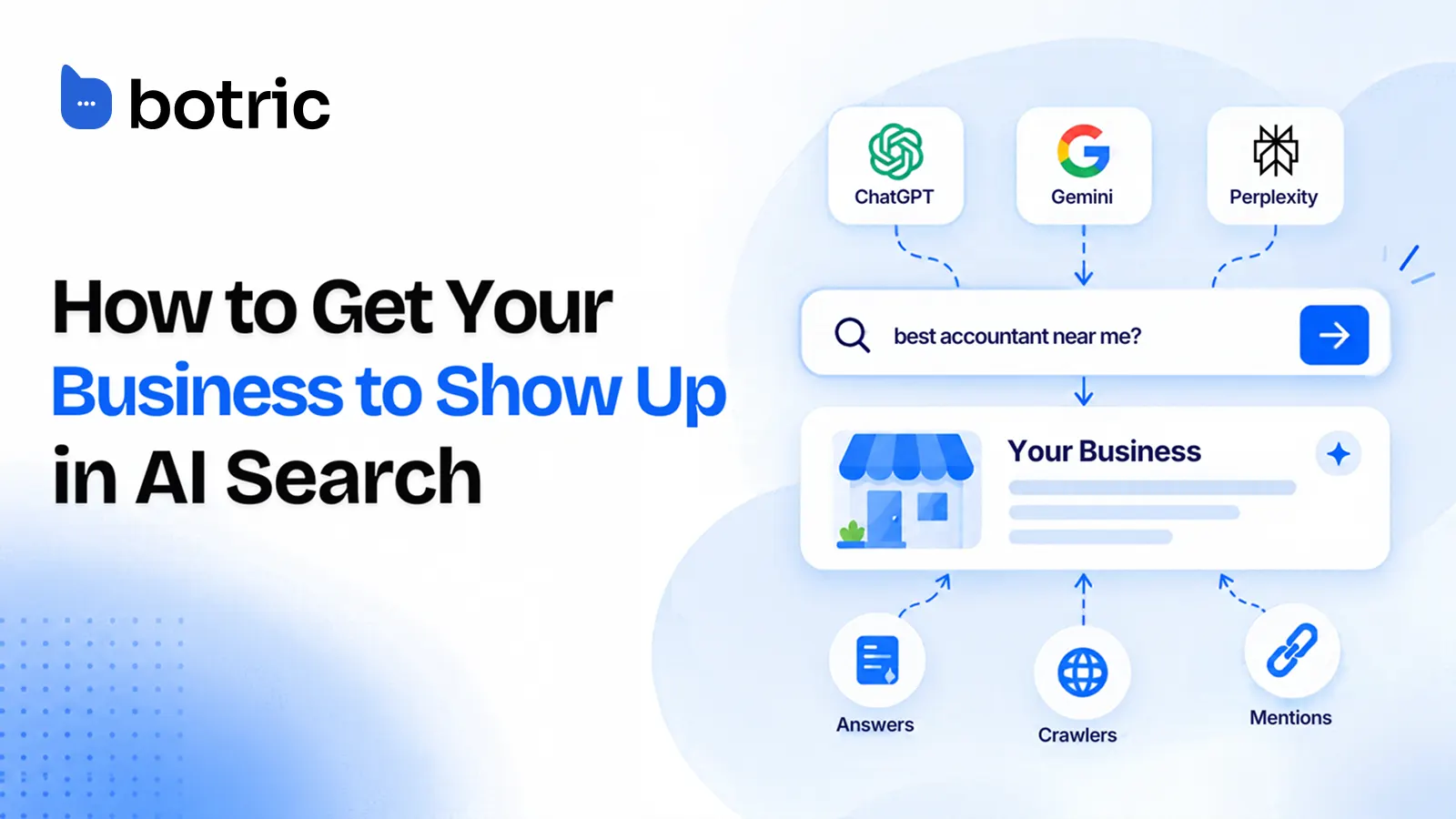
- Be findable. AI crawlers can reach your pages, and your business details match everywhere.
- Be understood. Your pages answer real customer questions directly, in plain HTML.
- Be mentioned. Trusted outside sources such as reviews, roundups and editorial media name you.
Then repeat the same customer questions every few weeks to watch the trend. No one can guarantee a placement.
How do you get your business to show up in AI search?
AI search optimization is the work of making your business easy for AI tools to find, understand, and recommend. Three things have to line up. AI crawlers must be able to access your pages, trusted sources must mention your brand, and your website must provide clear answers in plain HTML.
You steer those inputs but never own the outcome. OpenAI itself says a place in the answers is not guaranteed. Treat visibility as a trend you improve over weeks, and check it by engine, because each one can answer differently.
What is generative engine optimization, and how is it different from SEO?
Generative engine optimization (GEO) means structuring content so generative tools can cite, summarize, or feature it in AI-generated responses. It is also known as AI SEO or ChatGPT SEO.
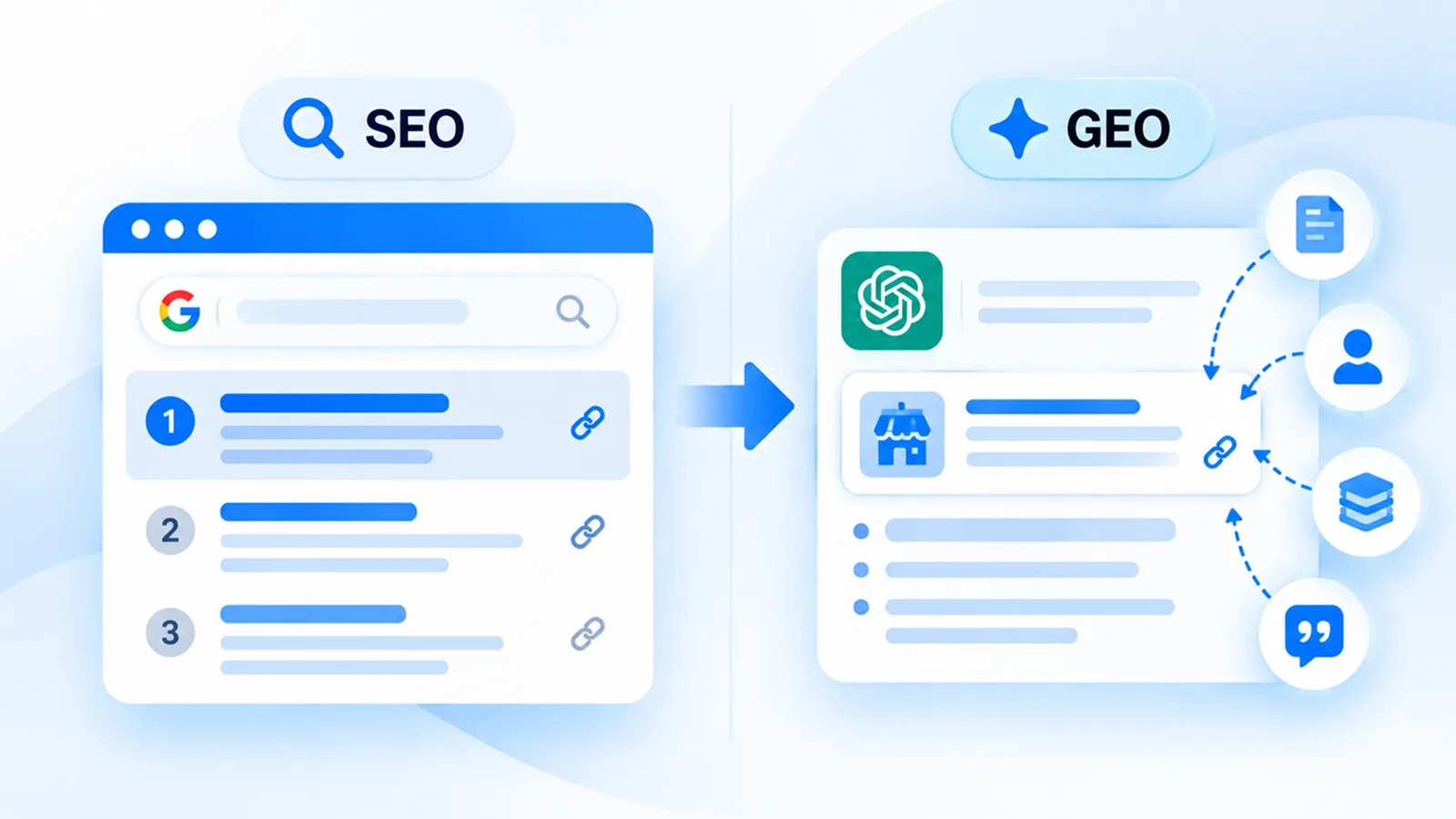
Traditional SEO focuses on keywords and link-building, while GEO emphasizes user intent, semantic meaning, and content quality. AI tools may also break a single prompt into smaller search queries, using multiple lookups to build a response.
Ranking well still matters. Google's AI optimization guide says its generative features in Search are rooted in core ranking and quality systems. Think of GEO as a second layer on top of sound SEO. It doesn't replace it.
If you're asking how to rank in AI search on Google, the same guide sets the entry bar. A page must be indexed and eligible to appear in Google Search with a snippet. That eligibility gets you considered. It doesn't guarantee a mention, and other AI engines run on their own crawlers and sources.
What can you do this week? A 7-step AI search optimization plan
Each step takes only hours. Do them in order, because the first one tells you where you stand.
1. Ask the AI tools your customers' questions.
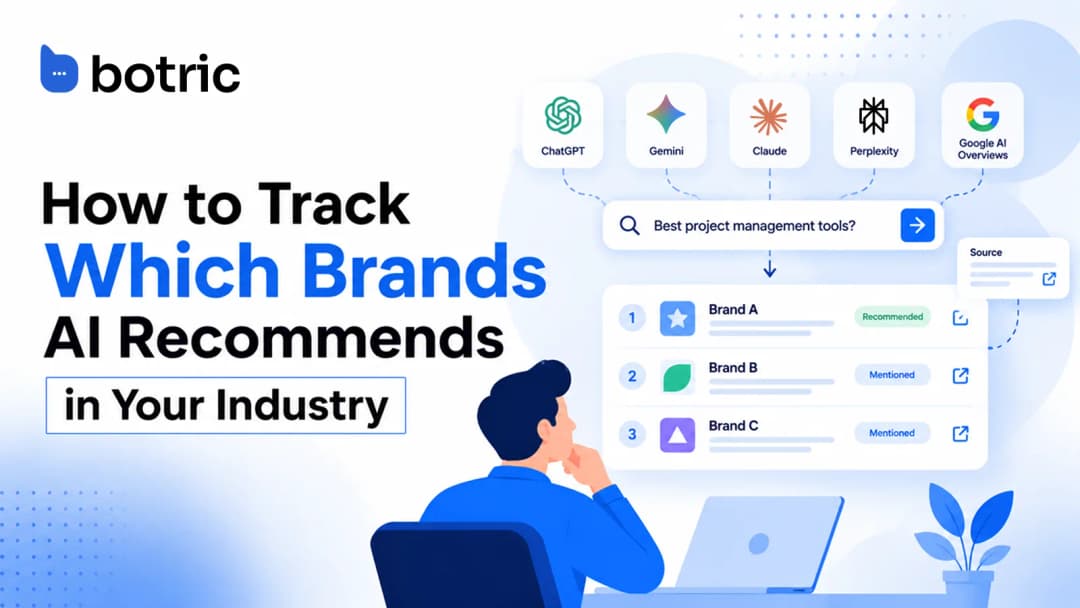
Open ChatGPT, Gemini and Perplexity and type what a buyer would, such as "best accountant for restaurants near me." Record whether you appear, who does, and which sources get cited. Use fresh sessions and keep a simple spreadsheet.
Botric suggests running manual brand audits inside ChatGPT, Gemini and Perplexity, and a spreadsheet is enough to start. Tracking tools exist for scale, but this free pass shows you the gap first.
2. Make your business details identical everywhere.
Match your name, address, phone number and one-line description across your website, directories and social profiles.
Botric's guide to getting listed in ChatGPT and Gemini recommends auditing Google Business Profile, Bing Places, Apple Maps, Yelp and LinkedIn. Conflicting details give an AI tool a reason to trust a competitor with cleaner data.
3. Answer real customer questions in plain language.
Write pages and FAQs that open with the direct answer, then add detail. State what you do, who you help, where you operate and what it costs.
Our explainer on generative engine optimization says AI systems favor clear explanations and direct answers over vague, promotional copy. This is how to show up in AI search for the specific questions buyers type.
4. Publish content only you could write.
Google's guidance asks for distinctive, useful content with a unique viewpoint or first-hand experience. A first-hand review gives a perspective drawn from personal experience, in Google's words. Add your own pricing ranges, process steps and real examples.
Google also warns that mass-producing pages for query variations to manipulate rankings or generative AI responses violates its scaled content abuse policy.
5. Confirm AI crawlers and search partners can reach you.
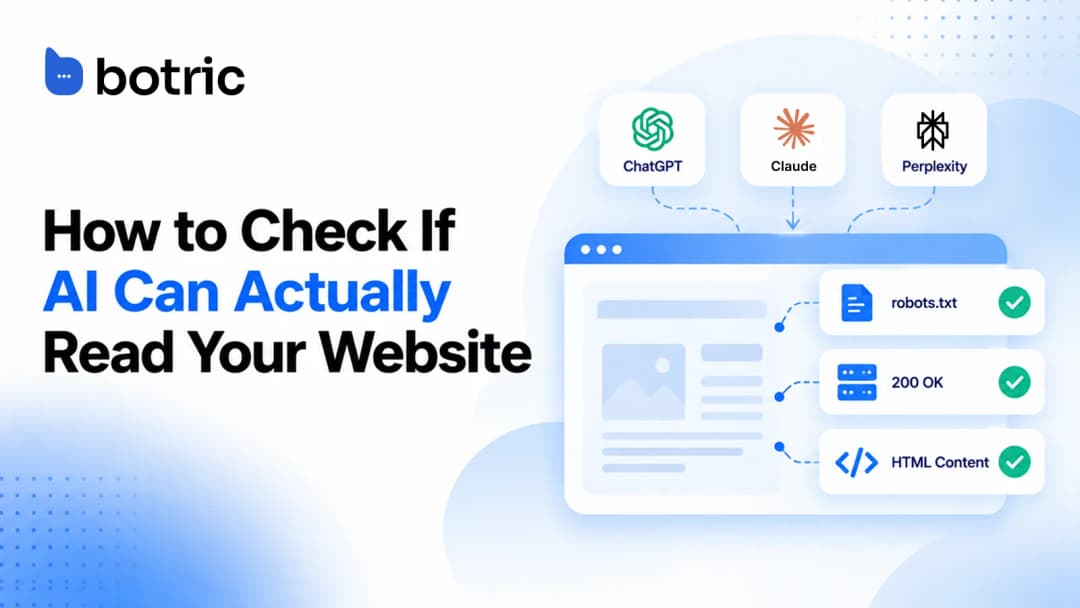
ChatGPT finds pages through its own search crawler and search partners. It also wants the answer in plain HTML. Check that your robots settings don't block those crawlers and that key facts sit in page text, not in images or scripts.
Google adds that content must be crawlable and indexed to qualify for its AI features. To test this yourself, follow our five-minute crawler check. For the wider technical side, see Botric's guide to technical SEO and structured data.
6. Earn mentions on sources AI already trusts.
Look at which sources AI tools cite when they answer your customers' questions, which step 1 records. Reviews, third-party roundups, professional profiles and news coverage often appear there, and independent studies or data-led coverage can add outside validation.
7. Re-check on a schedule.
Repeat step 1 every few weeks with the same questions. Botric also tracks AI Overview appearances and AI-platform referrals in GA4. A manual check is a valid start, and this step-by-step tracking guide shows the spreadsheet method.
A tracker such as Botric's AI visibility tool automates the weekly re-runs across ChatGPT, Perplexity, Gemini and Claude.
A quick comparison: SEO habits and AI-search habits
| Area | Classic SEO habit | AI-search habit |
|---|---|---|
| Goal | Rank in a list of links | Be named inside the answer |
| Content | Publish crawlable, indexed pages eligible for a snippet, as Google's guidance asks | Answer the whole question directly, with first-hand detail |
| Authority | Backlinks | Mentions on trusted sources plus links |
| Measurement | Rank position | Run the same customer prompts on each engine and log mentions and cited sources |
| Time frame | Weeks to months | Weeks to months, with variable results |
Why can't anyone promise a spot in ChatGPT or Gemini?
Because the engines aren't yours, and they don't behave the same way twice. Botric notes that generative tools rewrite prompts and can produce different answers across platforms. The same question on a different engine, or phrased differently, can name a different business.
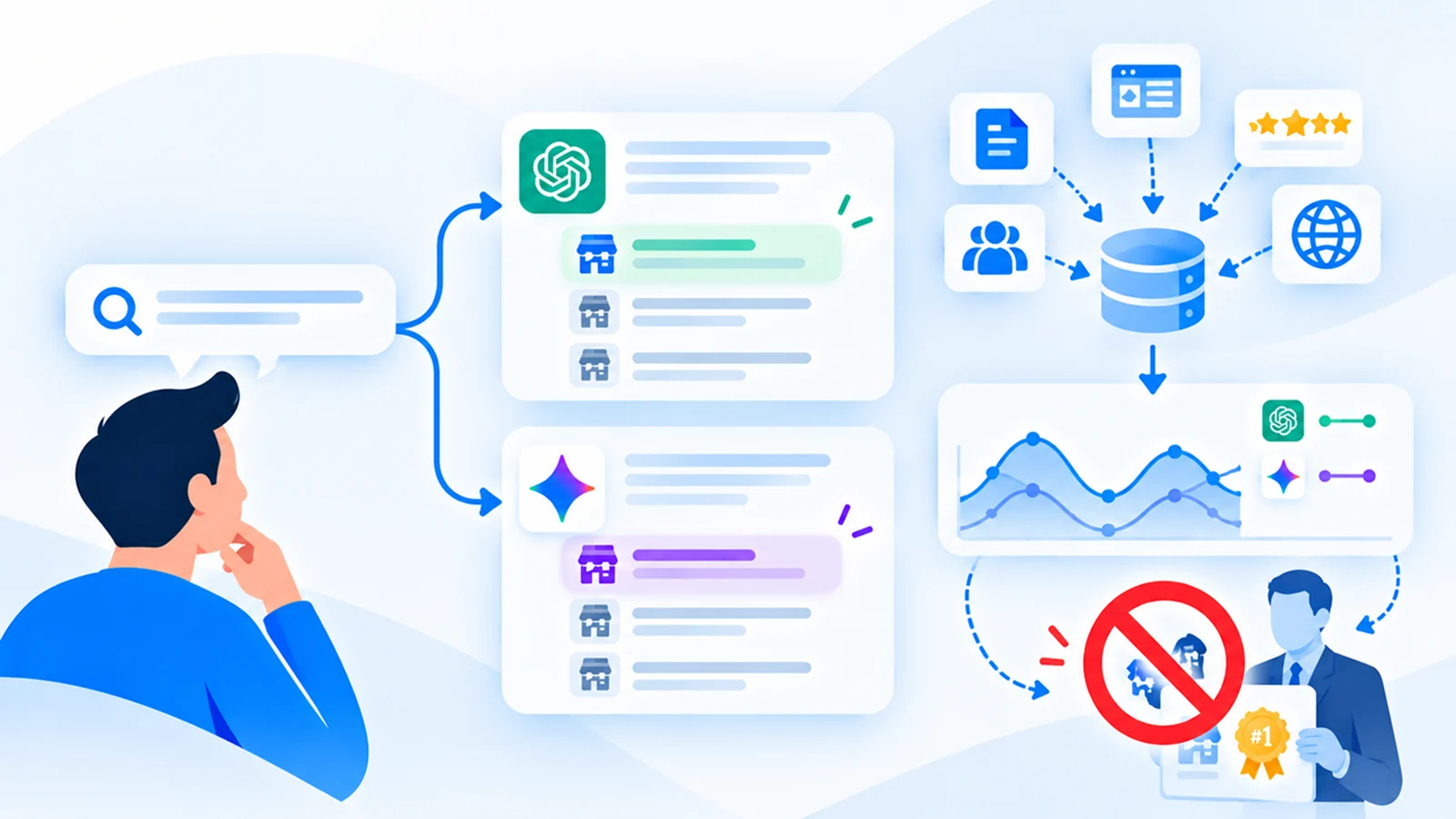
Recommendations also draw on training data and outside sources you don't control, and OpenAI's help center says placement in ChatGPT search is not guaranteed. Read any case study with the same caution, including ours: each result comes from one business, one market and a limited set of prompts, and none proves the work alone caused the change.
So frame results as a trend to watch. A realistic expectation is that fixing details and publishing clear pages can move you into more answers over weeks, with swings between engines.
Treat any agency or tool that guarantees a placement as a red flag. Ask what they measure, across which prompts and engines, and how they separate their effect from normal drift.
What mistakes should you avoid?
- Checking once. AI answers vary by engine and by prompt, so one result proves nothing. Repeat the same questions and look at the trend.
- Letting business details drift. Different names, addresses or descriptions across your site and profiles give an AI tool a reason to trust a competitor with cleaner data.
- Mass-producing pages. Google says generating pages at scale to manipulate rankings or generative AI responses violates its scaled content abuse policy.
- Blocking crawlers by accident. A stray robots.txt rule or firewall setting can keep AI crawlers out, as the crawler checklist explains.
- Leaning on markup alone. Schema can clarify a page, but the research on schema and AI citations does not show it earns citations by itself.
- Buying a guaranteed spot. No one can promise one.
Conclusion
Showing up in AI search comes down to being findable, consistent and mentioned. See what AI tools say about you today, fix conflicting business details, answer real questions in plain language, and earn mentions on the sources AI already trusts. Treat generative engine optimization as a layer on top of sound SEO, not a replacement for it.
Results will vary by engine and by prompt, so measure the trend instead of a single answer, and be wary of anyone promising a guaranteed spot. If you only have a week, do steps 1, 2 and 6 first, then add tracking once you have a baseline.
- AI tools name businesses they can find, understand and see mentioned on trusted outside sources.
- GEO sits on top of SEO: write direct answers, keep details consistent, and publish what only you can say.
- Start with a free manual prompt check, then repeat it every few weeks to see the trend.
- No vendor can guarantee placement, and results differ by engine and by prompt.
- Small businesses should do steps 1, 2 and 6 first, then add a tracker once you have a baseline.
Botric's free audit shows how your site looks to AI tools in about 30 seconds, with no signup. When you want ongoing tracking instead of manual checks, the free plan and the 7-day free trial let you start without paying.
Frequently Asked Questions
Does ranking on Google guarantee my business shows up in AI answers?
No. Google says its AI features draw on core Search ranking and quality systems, so strong SEO helps. But other engines pull from their own crawlers, partners and trusted outside sources.
Does GEO replace SEO?
No. Botric's explainer calls GEO an extension of SEO. SEO targets rankings and clicks, while GEO targets being cited inside the answer itself.
How do I check whether I appear in AI search today?
Ask ChatGPT, Gemini and Perplexity the questions your customers ask, in fresh sessions, and log who gets named and which sources get cited. Repeat with the same questions every few weeks so you can see a trend.
Do I need a paid tool to get started?
No, the manual prompt checks in step 1 cost nothing. Tools automate the repeat tracking. Botric has a free plan, with paid tiers starting at $15/month billed monthly. Whatever tool you consider, compare how many prompts and engines it covers and how often it re-runs them.
What business information should I make consistent online?
Your name, address, phone number and core description should match across your website, directories and social profiles. Botric's listing guide recommends auditing Google Business Profile, Bing Places, Apple Maps, Yelp and LinkedIn so AI tools see one clear version of your business.