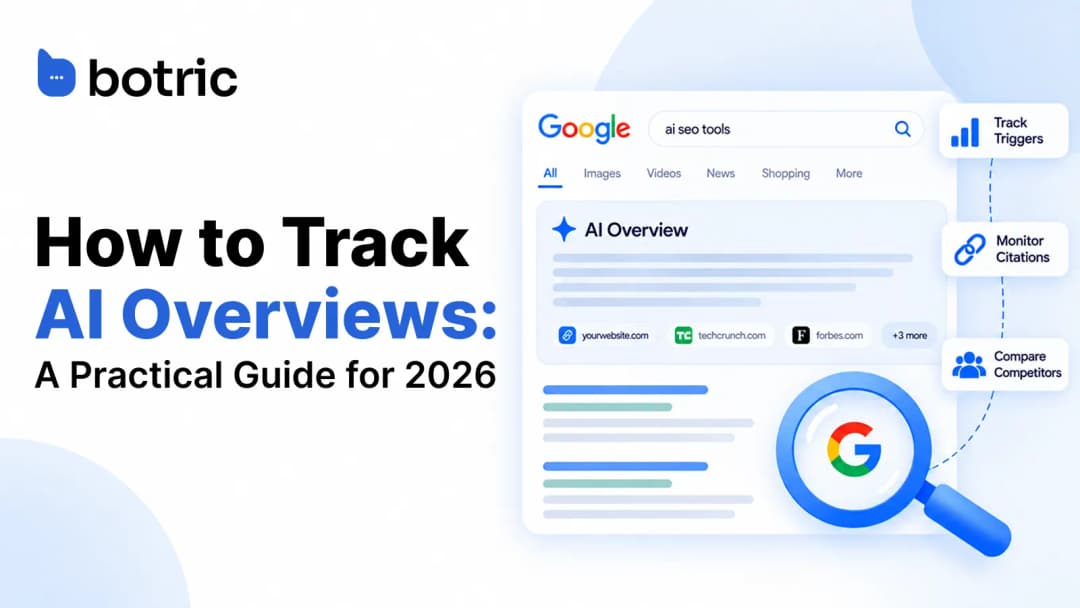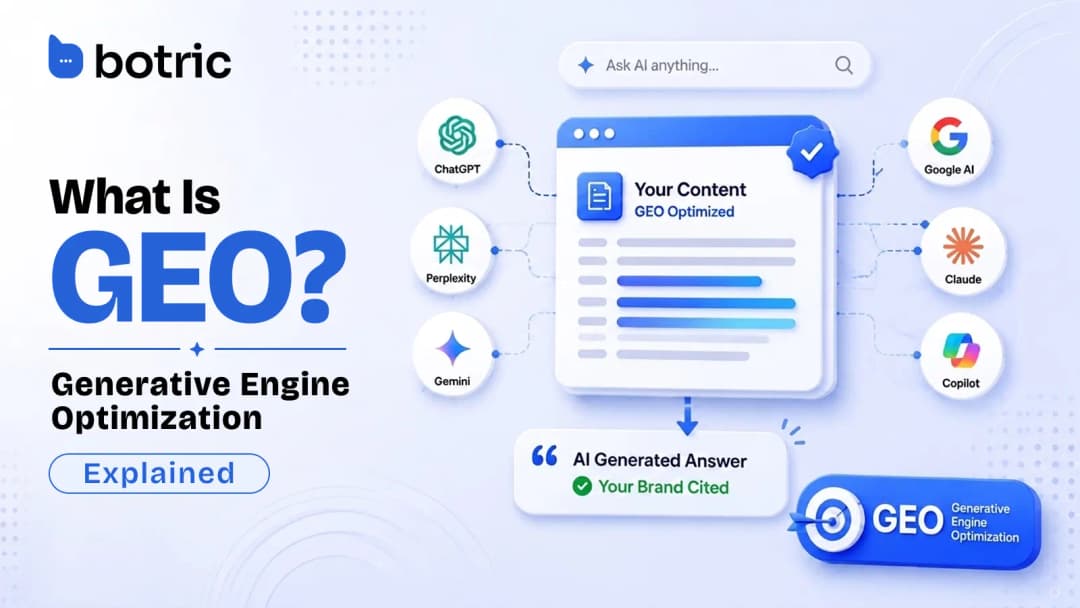
Traditional SEO alone is no longer enough to stay visible online. Less than 20% of Google's top 10 organic results overlap with the sources cited by AI tools like ChatGPT, Perplexity, and Google AI Overviews. Being #1 on Google does not mean you appear in AI answers, and increasingly, it is the AI answer that gets the click.
The scale of the shift is real: AI search traffic grew 1,200% in 2025, and visitors arriving through AI-generated answers convert at rates 5x higher than traditional organic traffic. Yet 85.7% of businesses remain invisible in AI-generated responses, leaving high-intent buyers to find competitors instead.
- AI Overviews now appear in 55% of Google searches, reducing organic click-through rates by up to 58%
- Only 20% of sources cited by AI overlap with Google's top 10 organic results
- 60% of AI search sessions end without a click, but the clicks that do happen go overwhelmingly to cited sources
- Visitors from AI-cited sources convert at 14.2% vs. 2.8% from traditional organic search
Visibility in AI search is not about rankings, it is about being cited. The strategies that drive citations are meaningfully different from traditional SEO, and this guide covers all of them.
For context on why this problem exists, read our breakdown of why your brand isn't showing up in AI search results and the 7 technical reasons websites go invisible in AI search.
Build a Consistent Online Presence and Brand Identity
For AI systems to recommend your business, a consistent brand identity across the web is non-negotiable. 93% of citations in ChatGPT come from third-party sources, review sites, social profiles, directories, and news coverage, not from your own website. AI systems cross-reference these sources to verify your legitimacy and determine how confidently they can describe you.
If your business name, category, or description varies across platforms, AI models struggle to resolve your brand as a single entity.
"If your brand is ambiguous or inconsistently described across the web, the model struggles to place you in the right context.", Beth Nunnington, VP of Digital PR, Journey Further
Align Business Information Across All Platforms
Start by establishing a single source of truth, typically your About page. It should clearly define what your business does, who it serves, and where it operates. Add Organization schema markup to your homepage so this information is machine-readable.
Then standardize every external profile to match:
- Use the same brand name and one-line description everywhere, your website, Google Business Profile, LinkedIn, Crunchbase, G2, Capterra, and social media
- Make NAP data (Name, Address, Phone) identical across all listings, "123 Main Street" and "123 Main St." look equivalent to humans but create entity confusion for AI
- Align team member profiles: bios, credentials, and LinkedIn profiles should support your E-E-A-T signals consistently
Even minor inconsistencies, "Inc." versus "Incorporated", weaken the signal AI uses to confirm your identity.
Audit your brand name and description across your five most important external profiles (LinkedIn, Crunchbase, G2, Google Business Profile, and your primary industry directory). Update any that differ from your homepage's About section. This single pass often closes a significant share of entity resolution issues that suppress AI citations.
Track Citations with Botric
Manually checking brand citations across hundreds of platforms is not feasible at scale. Botric automates this, monitoring where your brand appears online, flagging inconsistencies, and auditing how AI systems currently interpret your brand.
This matters because 40–60% of cited sources in AI search change month-to-month. Citation positions are not static. Botric's centralized dashboard highlights citation gaps, conflicting entity data, and specific areas where your brand's online presence needs reinforcement. Pages that have not been refreshed in 90 days are three times more likely to lose their citation position, Botric tracks this decay so you can intervene before visibility drops.
"The fix is to make your brand easy to verify, and hard to misunderstand.", Brand Vision
Optimize Content for AI Search Algorithms
AI search engines do not rank pages, they extract answers. A system like ChatGPT or Perplexity breaks your content into chunks, selects the most relevant ones, and synthesizes a response. This means content structure is as important as content quality.
Google AI Overviews now appear in 88% of informational searches. About 40% of the sources cited in those overviews rank between positions 11–20 in traditional search, meaning structural optimization can get you cited even when your page does not hold a top organic ranking.
The data on what moves the needle is clear: adding authoritative citations to your content boosts AI visibility by 39.6%; including specific statistics increases it by 26.5%. Conversely, traditional keyword optimization has a slight negative effect on AI search performance.
Structure Content for Retrieval-Augmented Generation (RAG)
AI systems use Retrieval-Augmented Generation to compose answers. They break your content into chunks, evaluate relevance, and extract specific passages. To be cited, those passages need to stand on their own.
Answer-first formatting, Place the most critical information in the first 40–60 words of each section. Research shows 44.2% of AI citations come from the first 30% of a page's content. Lead with the answer, then support it with detail.
Self-Contained Content Units (SCUs), Write 60–180 word paragraphs that fully answer a single question without requiring surrounding context. Use an "answer sandwich" structure: direct answer → supporting statistic or citation → practical takeaway.
Question-based headers, Use H2 and H3 headers phrased as questions ("How does X work?" / "What is Y?"). These align with how users phrase prompts in AI tools and help systems match your section to the right query.
Evidence density, Embed specific data points, statistics, or named sources every 150–200 words. General claims are summarized or skipped; verifiable data is cited.
Timeliness, 76.4% of ChatGPT citations come from content updated within the past 30 days. Regular updates are not optional, they directly affect whether AI includes your content.
| Element | Traditional SEO | AI Search Optimization (RAG) |
|---|---|---|
| Primary Focus | Keyword density and backlinks | Evidence density and extractability |
| Heading Style | Creative or keyword-rich | Question-format matching prompts |
| First Paragraph | Hook or context | Direct answer (40–60 words) |
| Content Unit | Full page relevance | Self-contained chunks (SCUs) |
| Data Usage | General claims | Specific stats with named sources |
| Update Cycle | Quarterly or yearly | Monthly (due to 40–60% citation churn) |
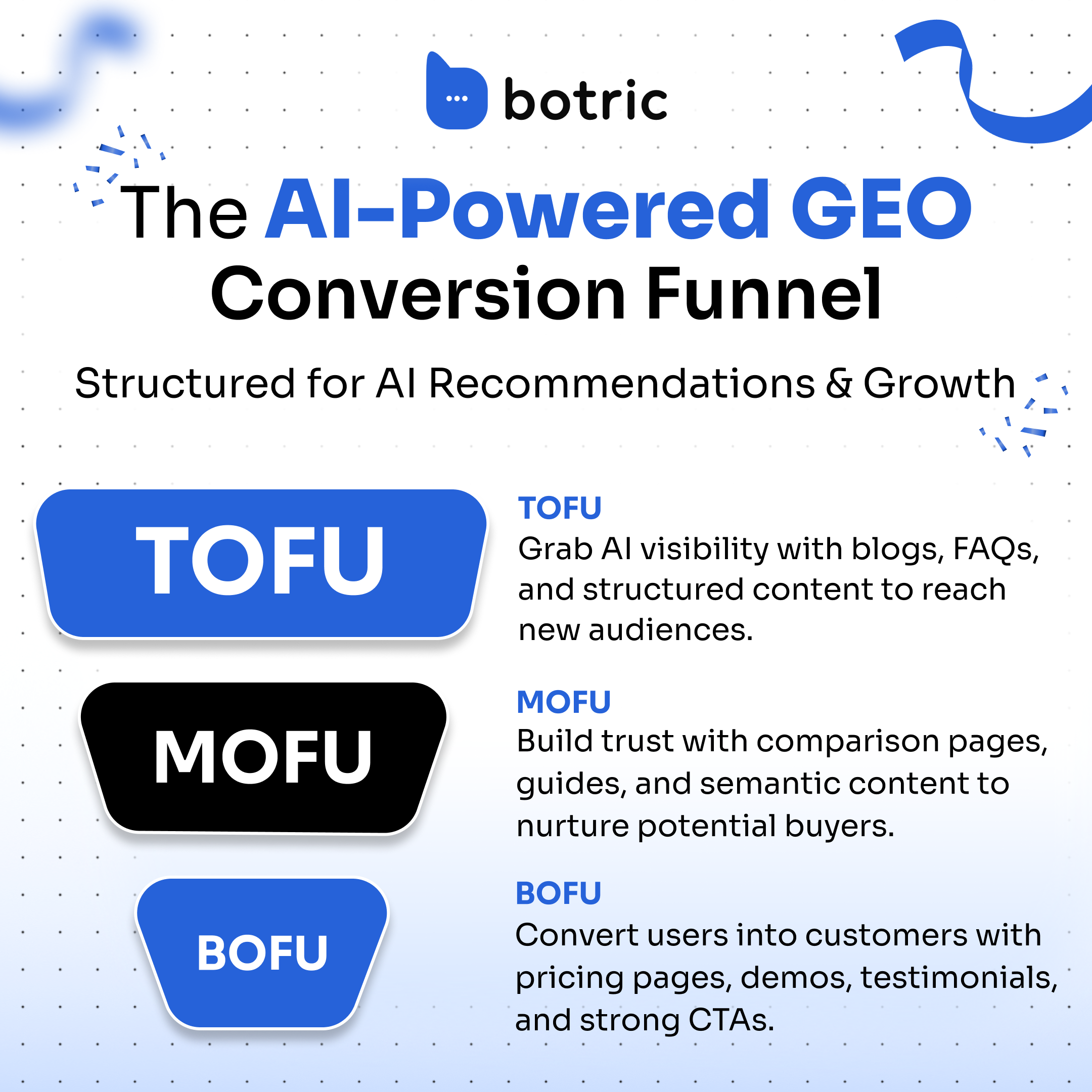
Group Keywords into Topic Clusters
AI systems evaluate your authority across an entire topic, not just a single page. A brand with deep, interconnected coverage of a subject is far more likely to be cited than one with isolated articles targeting individual keywords.
Build your content around a pillar-cluster framework:
- Pillar article (3,000–6,000 words): A comprehensive hub covering your main topic in full
- Cluster articles (1,500–2,500 words each): 5–12 pieces that explore specific subtopics or implementation questions
- Linking: Connect the pillar to every cluster article and back again, using descriptive anchor text
For B2B brands, 3–7 deep clusters of 30–50 articles each outperform 15–20 shallow clusters every time.
- Map clusters around a question hierarchy, start with core questions, branch into subtopics, then specific implementation details
- Use AI query analysis to find frequently asked but poorly addressed questions in your category, these are your citation gaps
- Apply RAG principles throughout: answer-first formatting, authoritative citations, schema markup (FAQPage, HowTo, Article)
- Refresh pillar pages quarterly, freshness signals influence 18–22% of AI citation decisions
"Focus and depth beat breadth and shallowness in the compounding-content model.", Topic Intelligence
Improve Website Structure and Technical SEO
A strong content strategy needs an equally strong technical foundation. AI crawlers, GPTBot, ClaudeBot, PerplexityBot, and OAI-SearchBot, have different requirements from traditional search bots, and many websites unintentionally block them through outdated configurations or default CDN settings.
Crawler permissions, Many CDNs, including Cloudflare, block AI bots by default. Review your robots.txt file and add explicit allow rules for GPTBot, OAI-SearchBot, ClaudeBot, and PerplexityBot. This is the single highest-impact technical fix, a blocked crawler means zero citations regardless of how good your content is.
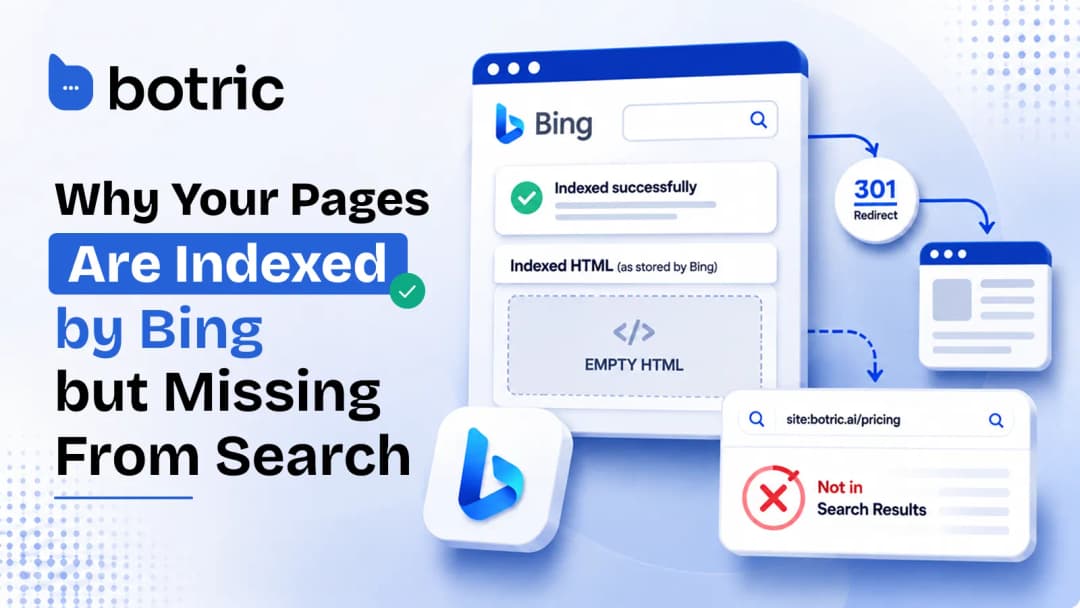
JavaScript rendering, 69% of AI crawlers cannot process JavaScript. If your site uses client-side rendering frameworks like React, Vue, or Angular, AI bots may encounter blank pages. Switch to Server-Side Rendering (SSR) or implement prerendering to serve raw HTML snapshots to crawlers.
Site architecture, All essential pages should be reachable within 3–4 clicks from the homepage. Place an llms.txt file in your root directory to provide AI systems with a clear map of your site's key content.
Go to yourdomain.com/robots.txt now and check for Disallow rules that reference GPTBot, ClaudeBot, PerplexityBot, or OAI-SearchBot. Removing these entries takes under five minutes and can have an immediate impact. Then check whether your most important pages render as plain HTML, view their source and confirm key content is present without JavaScript execution.
Add Structured Data and Schema Markup
Schema markup transforms content into a format AI systems can extract directly. 82% of domains cited by ChatGPT use schema markup, and implementing it increases your likelihood of appearing in AI-generated summaries by over 36%.
Use JSON-LD format, it keeps structured data separate from HTML and is the easiest for AI systems to parse. When implementing Article schema, include the full plain text in the articleBody field so AI can evaluate your entire argument rather than a snippet. Use the sameAs property on Organization and Person schema to link to authoritative profiles like LinkedIn or Crunchbase.
| Schema Type | AI Citation Impact | Best Use Case |
|---|---|---|
| FAQPage | +89% | Blog posts, service pages, product Q&A |
| HowTo | +76% | Tutorials, step-by-step guides |
| Product | +52% | SaaS product pages, pricing pages |
| Article + Author | +34% | Editorial content, thought leadership |
| BreadcrumbList | +18% | Site hierarchy and navigation signals |
Keep your dateModified property current, content updated within the last 30 days is 3.2x more likely to be cited by AI.
Build a Strong Internal Linking Structure
Internal links help AI crawlers navigate and understand your content map. Organize pages into the topic cluster framework described above and ensure links flow in both directions between pillar and cluster pages.
Use descriptive anchor text, "see our guide to webhook authentication" rather than "click here." Place links to your most important content within the first 30% of each page, where 44.2% of all AI citations originate. Audit for orphan pages regularly, pages with no inbound internal links are frequently missed by AI crawlers entirely. Implement BreadcrumbList schema on every page for an additional 18% lift in citation rates.
"Your internal linking structure determines how easily AI crawlers can discover and understand your content universe.", Alicia Sandino, Linkflow
Create Multiple Content Formats for AI Search
By 2026, leading AI systems are multimodal, they process text, images, video, and audio simultaneously. Relying solely on text-based content limits how many query types your brand can appear in.
Brands that consistently use multimodal formats report a 54% higher rate of brand mentions compared to those relying on text alone. Original visual assets, proprietary data charts, annotated diagrams, custom graphics, encourage direct citation rather than paraphrasing, because AI systems cannot easily reproduce them.
Optimize Visual and Multimodal Content
Video content, Host on YouTube and embed on relevant pages. Include full transcripts with chapter timestamps so AI can identify and cite specific segments. Apply VideoObject schema with chapter markers (hasPart property) to help AI categorize and reference specific sections.
Images and diagrams, Use descriptive filenames (ai-search-framework-2026.png rather than IMG_1234.png). Write alt text that explains the key concept shown, not just what the image depicts. Add captions beneath images, they provide additional extractable context for crawlers. Custom visuals built from original data are particularly strong citation drivers.
Audio and podcasts, Publish detailed show notes, chapter timestamps, and full transcripts. LLMs can search transcript text, so unformatted audio is effectively invisible to AI systems.
Include specific data points every 150–200 words across all formats. Quantified claims are cited; vague assertions are summarized or skipped.
Write FAQs in Natural Language
FAQ sections are among the highest-performing content formats for AI citation. They are structured around the exact query patterns LLMs process, and they deliver self-contained answers that are easy to extract.
In one documented test, adding FAQ content with FAQPage schema increased AI citations from 529 to 2,379, a 350% increase. FAQ sections achieve 3.2x higher citation rates compared to equivalent information buried in standard paragraph content.
- Use question-based H2 or H3 headers, phrased the way a user would actually ask ("How much does [Service] cost for a small business?" not "Pricing")
- Keep answers between 40–60 words per question, this is the optimal length for AI extraction
- Make every answer self-contained, do not rely on surrounding context to complete the meaning
- Ensure FAQ content is fully visible on the page, not hidden in accordion menus or tabs that AI crawlers may not expand
Ensure your robots.txt explicitly allows AI crawlers to access FAQ pages. If key content is gated behind JavaScript interactions, it may not be indexed at all.
Track and Adjust to AI Search Changes
AI search evolves fast. Strategies effective in early 2026 may need revision by mid-year. AI Overviews now appear in 55% of Google searches, but the overlap between top organic results and AI-cited sources has already fallen below 20%, and it continues to decline. Traditional SEO dashboards cannot track this gap, which is why citation monitoring needs its own dedicated workflow.
"The gap between Google rankings and AI recommendations is widening every quarter, and traditional SEO dashboards can't even show you where you stand.", Topify
60% of AI searches end without a click. But the clicks that do happen go to cited sources, making citation frequency the most important metric to watch.
Conduct Regular Visibility Audits
Establish a baseline for how often your brand is cited in AI responses, then track it consistently. Use your keyword clusters to create 30–50 natural-language prompts that reflect how your audience actually searches. Run these prompts across ChatGPT, Perplexity, Gemini, and Google AI Overviews in incognito mode, and log citation frequency, placement, and sentiment for each.
Botric automates this process, tracking your presence across all major AI platforms, benchmarking your AI Share of Voice against competitors, and identifying exactly which prompts your brand is missing from. For a broader comparison of available tools, see our guide to the best GEO tools for AI search visibility and the best tools to rank in ChatGPT and AI search engines.
Perform a quarterly structural audit and weekly checks for your highest-priority queries. During weekly checks, look for new competitors entering your "shadow set", brands appearing in AI responses for your target queries that are not yet showing up in your traditional analytics. These are early warning signs of emerging competitive threats in AI search.
Update Old Content Regularly
AI models heavily favor fresh content: 50% of AI-cited content is less than 13 weeks old. Even detailed, comprehensive articles lose citation positions if they are not updated regularly. A clear refresh cadence prevents this:
- High-competition topics: every 3–4 months
- Authority and product pages: every 6 months
- Evergreen guides: annual review minimum
When updating, do more than change the date. Rewrite section openings to be answer-first. Replace vague headers like "Our Services" with specific question-based ones like "What Services Does [Business] Offer?" Add or expand FAQ sections with 5–8 question-answer pairs under 150 words each. Update dateModified in your JSON-LD and refresh <lastmod> tags in your sitemap, AI crawlers use these signals to prioritize recrawling.
"Content that isn't actively maintained doesn't just slip in rankings, it quietly exits the visibility system altogether.", Mahi Kothari, Senior Content Strategist, Quattr
Conclusion
AI search visibility in 2026 is built on citations, not rankings. The overlap between Google's top organic results and AI-cited sources has fallen below 20% and continues to decline. The visitors you gain through AI citations convert at 14.2%, nearly five times the rate of traditional organic traffic. The brands that invest in being citable today will be the ones that own their categories in AI search tomorrow.
The strategies in this guide are not one-time projects. AI models continuously retrain and reprioritize sources. Brands that treat GEO as an ongoing practice, consistent brand signals, structured content, fresh updates, and regular auditing, will compound their advantage over time. Those that do not will quietly lose citations without their analytics ever showing why.
"The brands that show up in AI answers today will own the categories of tomorrow. The ones that don't won't even know they're missing.", Topify
Start with a visibility audit. Know your current citation rate across ChatGPT, Perplexity, and Gemini before making any changes. Use Botric to establish your baseline, identify where competitors are appearing instead of you, and surface the specific technical or content gaps holding you back. Then follow the frameworks in this guide systematically, consistency, structure, freshness, and citations.
Want to go deeper? Read the complete guide to Generative Engine Optimization explained for businesses, learn how to track AI citations for B2B SaaS, or explore the best GEO tools available in 2026.
Key Takeaways
- Ranking on Google does not guarantee a mention in AI-generated answers.
- Consistent brand information across the web is the foundation everything else sits on.
- Write answer-first content with clear headings and verifiable facts.
- Fix the technical basics: crawlability, site structure, and structured data.
- Track visibility regularly, because AI models change often.
Frequently Asked Questions
How do I know if my brand is being cited by AI tools?
Use an AI visibility tracking platform to monitor mentions and citations across AI-generated content. Manually, you can run 20–30 of your most important buyer queries through ChatGPT, Perplexity, and Google AI Overviews in incognito mode and log whether your brand appears. Key metrics to track: citation frequency (how often you appear), citation position (whether you appear in the top three), and conversions from AI referral traffic in GA4. Tools like Botric automate this tracking across all major platforms and alert you to changes in visibility.
What should I change first on my site for AI crawlers?
Start with your robots.txt file. Check for any Disallow rules that block GPTBot, ClaudeBot, PerplexityBot, or OAI-SearchBot, and remove them. This is a five-minute change that can have immediate impact. Next, check whether your most important pages render as plain HTML, if your site uses client-side JavaScript rendering, AI crawlers may only see a blank page. Add Organization schema to your homepage and FAQ schema to your highest-traffic pages. These three changes address the most common reasons AI crawlers skip a site entirely.
How often should I update content to stay visible in AI search?
Refresh high-competition pages every 3–4 months and authority pages every 6 months. When updating, go beyond changing the date, rewrite section openings to be answer-first, add or expand FAQ sections, update statistics with current figures, and refresh your dateModified schema field. AI models heavily favor recently updated content: 50% of AI-cited content is less than 13 weeks old, and 76.4% of ChatGPT citations come from content updated within the past 30 days. Freshness is not optional, it directly determines whether AI includes your content in responses.