
You can always open Claude and ask whether it recommends your brand. But one answer won't tell you how consistently your brand appears when potential customers ask related questions. And doing that manually means repeating dozens of prompts, keeping track of competitors, saving cited links, and figuring out whether anything has changed. It gets messy pretty quickly.
That's why I looked into seven Claude rank tracking tools. I wanted to find out which ones give you useful information beyond a visibility score, how much they actually let you track, and whether their pricing makes sense.
Some monitor Claude daily, others only weekly, and a few charge more for Claude than other AI models. Here's how they compare and which ones I'd consider for different needs.
Quick Answer: What Are the Best Claude Rank Tracking Tools?
If you're comparing Claude rank tracking tools, I'd look beyond the starting price. Some platforms monitor Claude daily, others update weekly, and several have limits that affect how many answers you can actually track.
Here are seven tools worth considering, depending on what you need:
- Botric: Best for connecting Claude visibility tracking with prompt research, competitor analysis, GEO audits, and content creation or optimization through Blog Agent and Page Agent.
- Geoptie: Best for daily Claude monitoring across different countries, with brand mentions, competitor comparisons, citation analysis, and GEO audits.
- Otterly.AI: Best for monitoring Claude alongside other AI search engines, with flexible engine selection, citation tracking, sentiment analysis, and visibility trends.
- LLMrefs: Best for SEO teams that want to track Claude visibility using keywords and automatically generated questions, with citation insights and competitor comparisons.
- Rankscale: Best for teams that need flexible monitoring schedules, regional tracking, citation research, and page-level GEO audits.
- Promptwatch: Best for teams that want Claude visibility data connected to custom reports and other tools through API and MCP integrations.
- AthenaHQ: Best for broader AI search research, with extensive model coverage, prompt-volume estimates, citation intelligence, and competitor analysis.
What Does Claude Rank Tracking Actually Tell You?
Claude doesn't provide a fixed, public list of ranked websites in the way Google does. A Claude rank tracker collects answers to a defined set of questions and analyzes which brands and sources appear.
Some platforms also assign a position or visibility score, but that number describes their observed answers, not a universal Claude ranking.
| What to measure | Why it matters |
|---|---|
| Brand mentions | Shows whether Claude names your business, even without a link |
| Owned-domain citations | Shows whether a response references a page on your website |
| Competitor appearances | Identifies brands recommended in the same buyer questions |
| Cited third-party pages | Reveals publishers and pages that may shape the answer |
| Changes across runs | Helps distinguish recurring gaps from one unusual response |
One distinction is especially easy to miss: a mention isn't a citation. Claude might recommend a product it knows about while citing only an independent comparison article. Treating those two outcomes as the same metric would hide a valuable content or earned-media opportunity.
Claude also has different answer conditions. It may answer from model knowledge or use web search and cite retrieved pages. Anthropic's web-search documentation explains the latter behavior. When comparing tracking platforms, ask what model and retrieval configuration they use. A dashboard collecting an API response isn't necessarily recreating every detail of a user's session in Claude.
How I Evaluated These Claude SEO Tracking Tools
I compared these AI visibility tracking tools based on the factors that matter when choosing a Claude tracker, rather than assigning weighted scores to features that don't mean the same thing across vendors.
- Actual Claude support: Is Claude included in the relevant paid plan, or does it require an upgrade?
- Answer evidence: Can you inspect brand mentions, citations, competitor appearances, and the underlying answers rather than only a score?
- Tracking capacity: How do prompt counts, refresh frequency, selected models, credits, and locations interact?
- Research and optimization features: Does the product offer source research, page audits, content recommendations, or useful reporting integrations?
- Value at the right tier: What does Claude monitoring cost on a plan that actually fits the job, not merely on the vendor's cheapest advertised subscription?
I checked official product and pricing documentation, plus public G2 ratings where a verifiable product profile was available. The article reflects documented capabilities and editorial analysis. I write for Botric, which publishes this article and appears in the comparison. Prices and ratings were reviewed on November 17, 2026.
The 7 Best Claude Rank Tracking Tools
1. Botric: Best for Claude Visibility Tracking and Content Optimization
G2 rating: 5.0/5.0
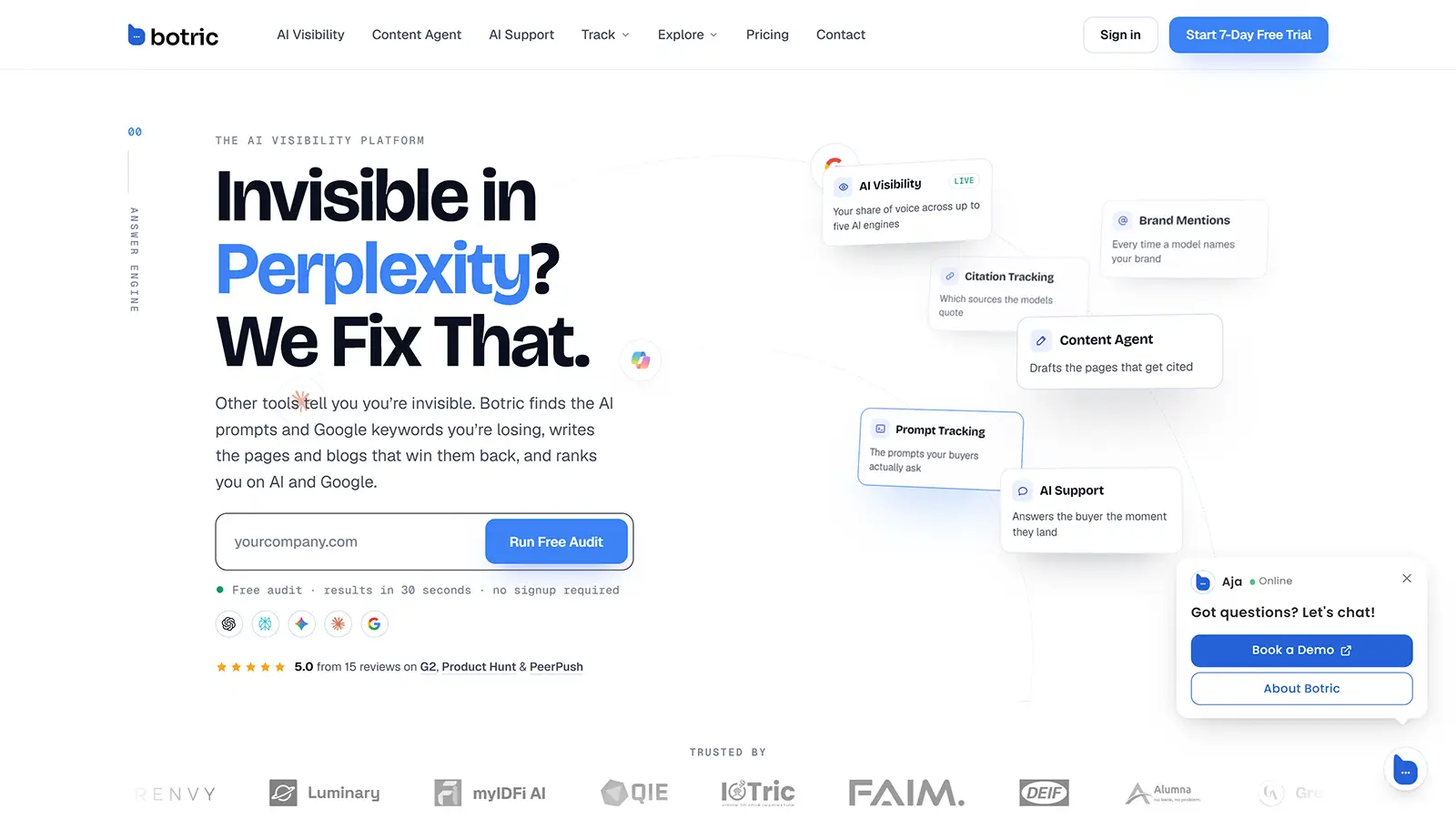
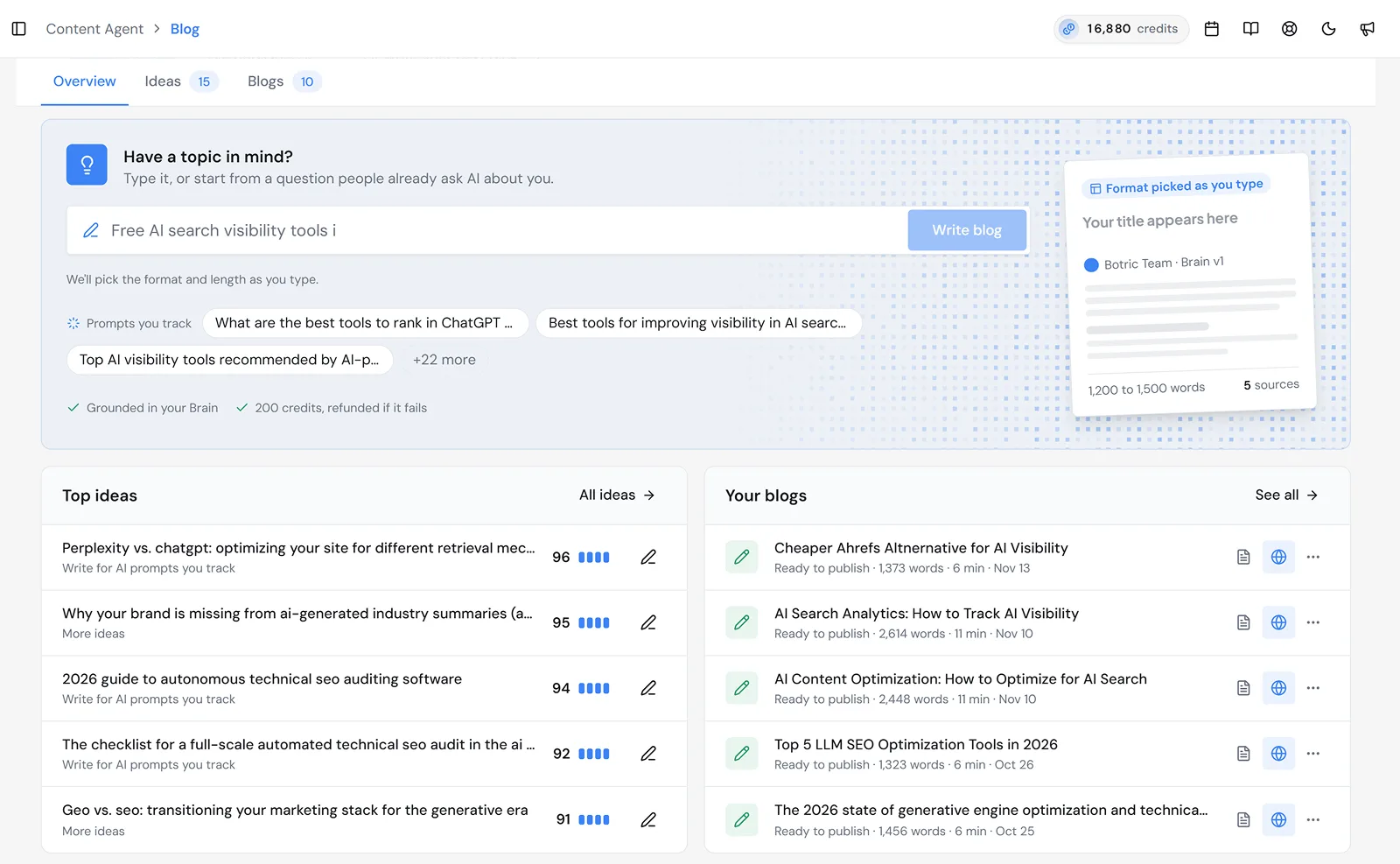
Botric makes more sense when you're trying to answer two questions together: Does Claude recommend us? and What should our content team investigate next? It monitors selected buyer questions, tracks brand mentions separately from website citations, and shows which competitors appear in answers. Prompt research, GEO audits, and content agents help teams investigate those findings and create new content.
For example, finding that Claude repeatedly names competing products without citing your comparison page is a signal to review the answers and cited sources. It isn't proof that publishing another article will fix the problem.
Key features
- Claude prompt monitoring: See which tracked questions mention your brand, cite your domain, or recommend competitors; Claude checks run weekly.
- Citation and competitor research: Separate owned citations from third-party references and investigate competitor-only appearances.
- Prompt research and visibility trends: Find relevant buyer questions and follow performance across monitored AI engines.
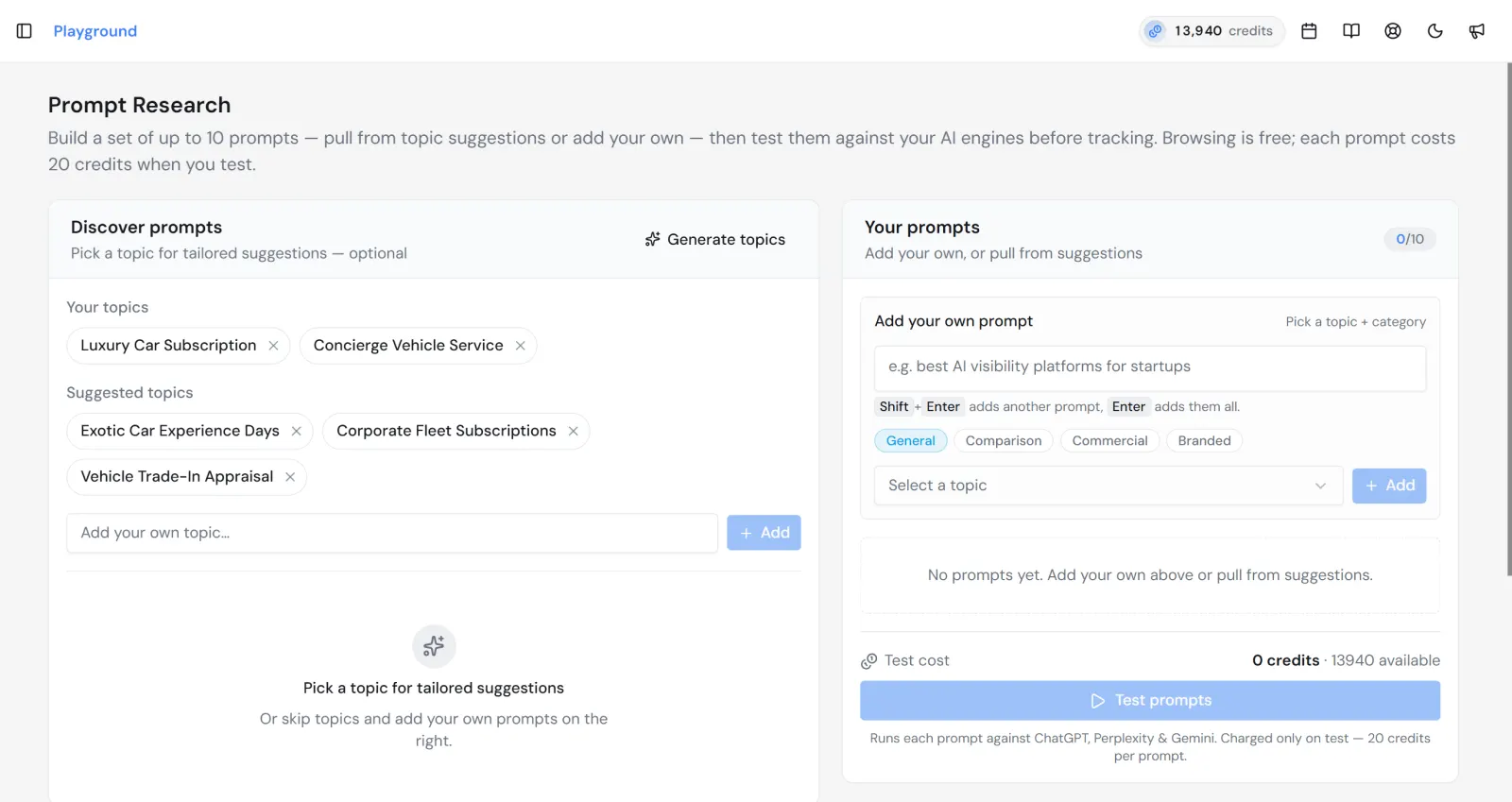
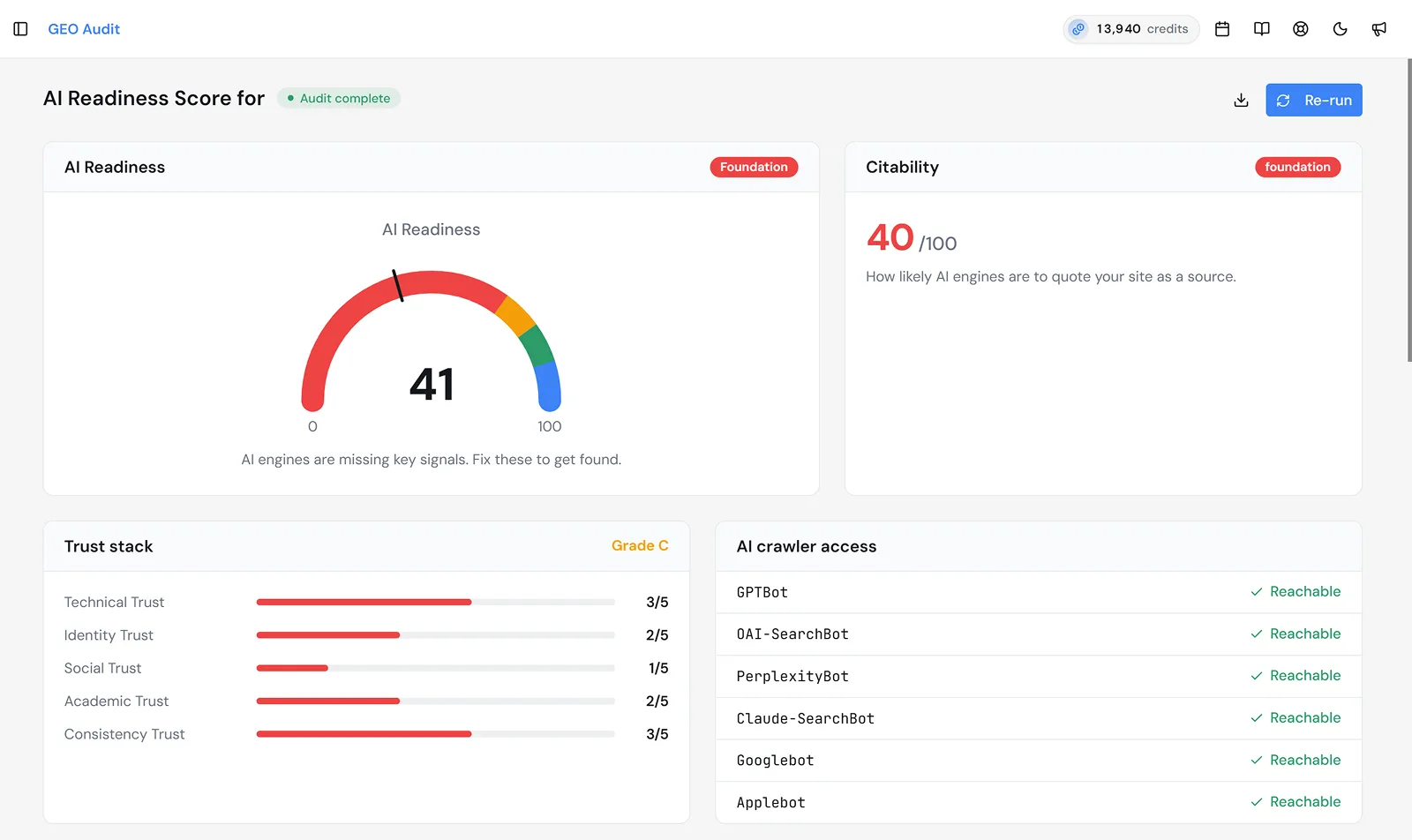
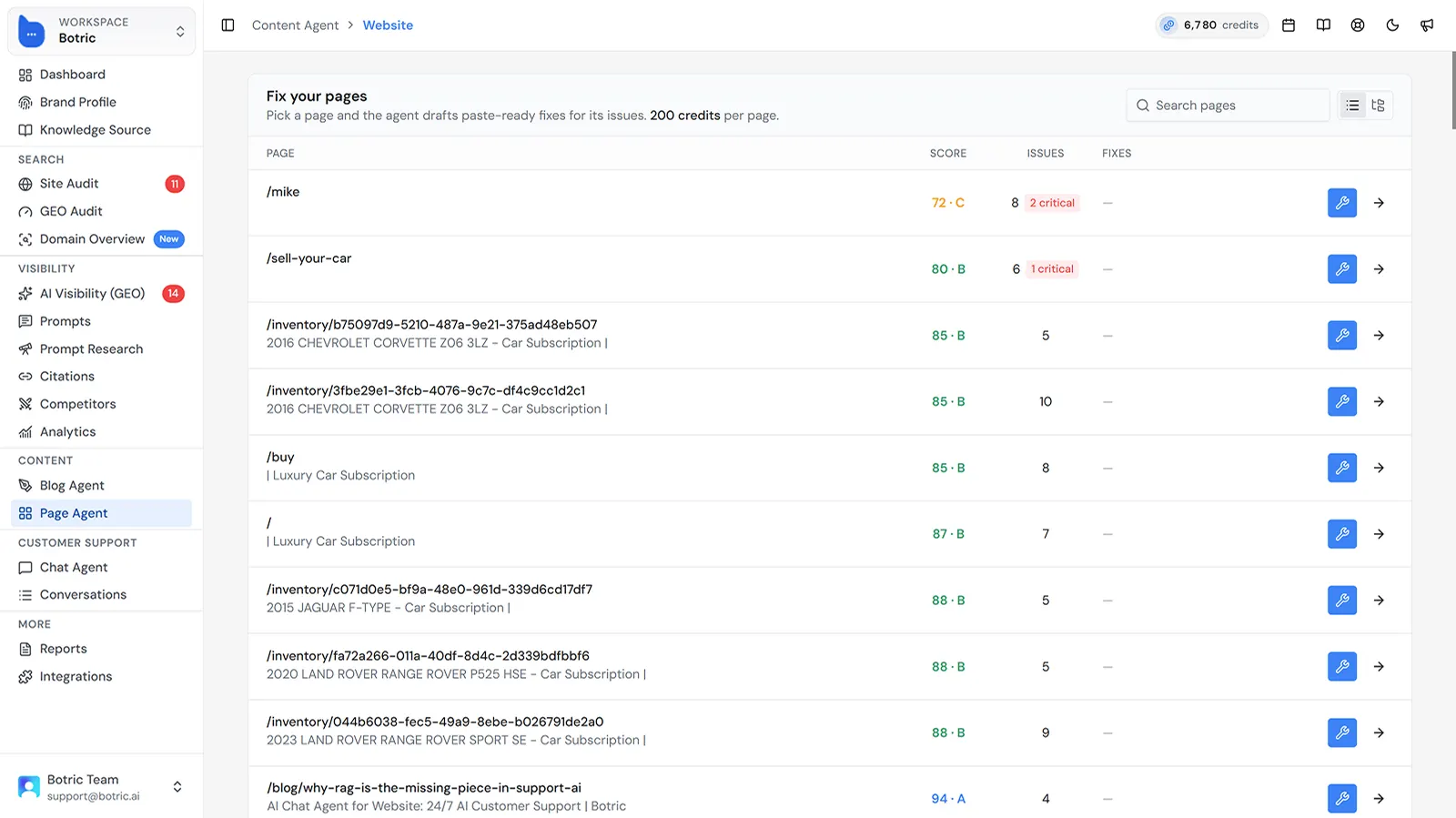
- GEO and site audits: Review page and crawlability issues that may need technical or editorial attention.
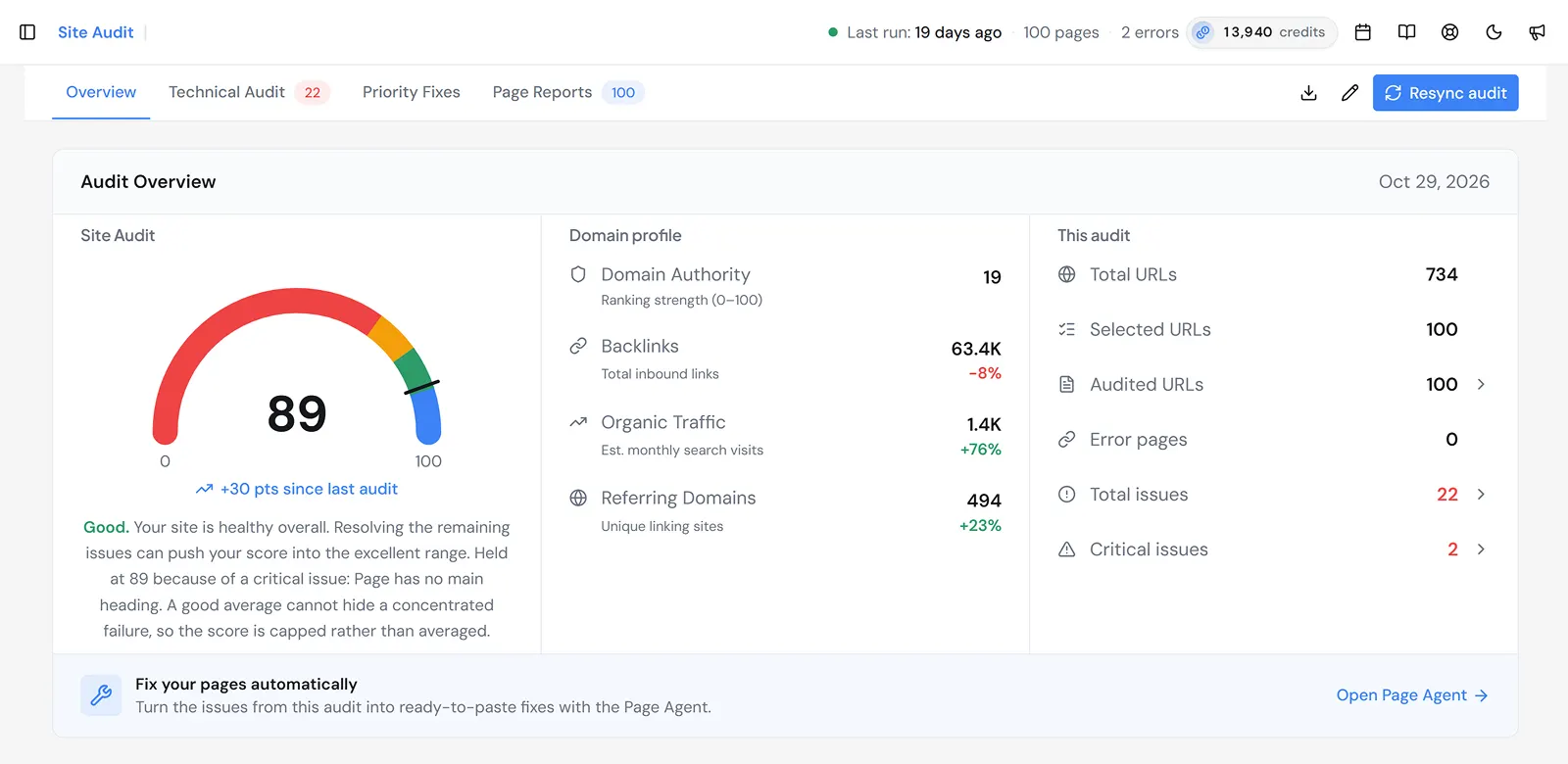
- Blog Agent and Page Agent: Generate new article drafts or analyze and improve existing pages, respectively.
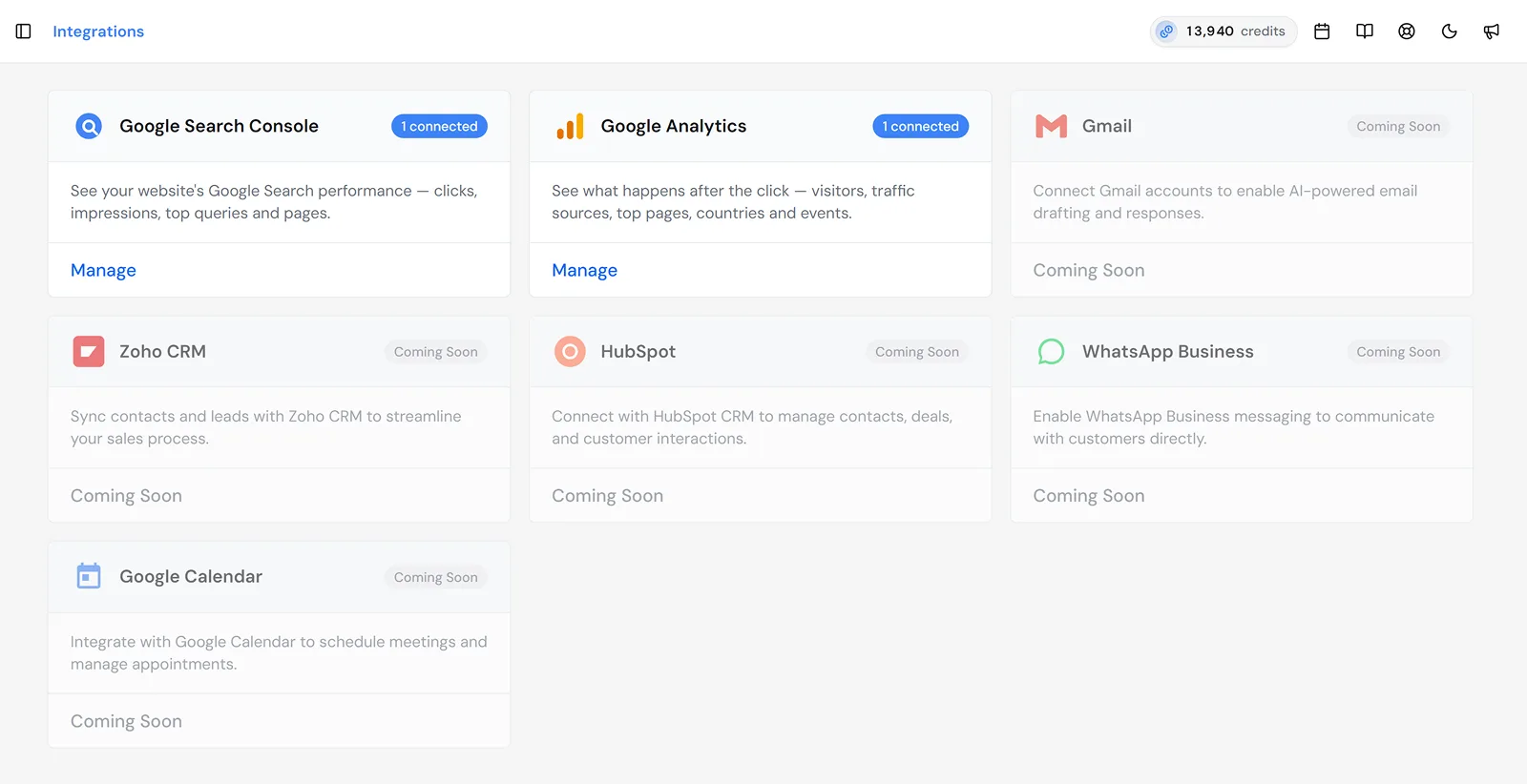
- GA4 reporting and integrations: Review AI referral traffic context through connected analytics, and access supported data via MCP/API on Infinity.
Pricing
- Bit – $15/month: 15 prompts, 1,500 credits, and ChatGPT and Google AI Overviews tracking. Includes prompt research, GEO audits, competitor analysis, and content tools.
- Byte – $49/month: 25 prompts, 5,000 credits, and three AI engines, adding Perplexity. Includes additional content-generation capacity, GA4 reporting, and a longer reporting history.
- Infinity – $149/month: 150 prompts, 15,000 credits, five workspaces, and five AI engines, including Claude and Gemini. Includes Blog Agent, Page Agent, GEO audits, and MCP/API access.
My assessment
I would consider Botric for content teams that want to turn missing brand mentions or citations into research-backed content improvements. Its main limitation is weekly Claude tracking, although users can manually track prompts daily using the Prompt Research feature.
2. Geoptie: Best for Affordable Daily Claude Rank Tracking
G2 rating: No verified rating available.
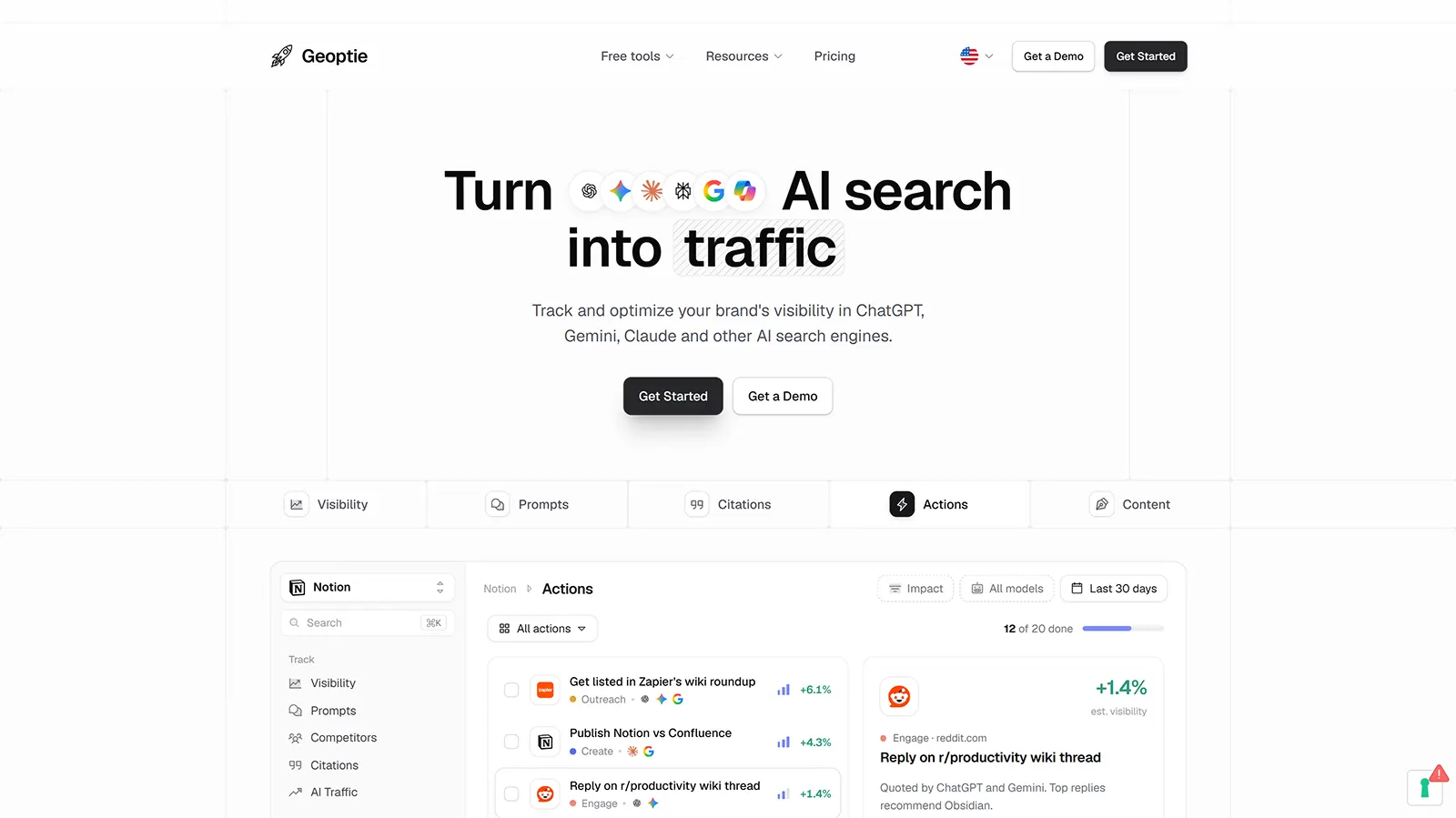
Geoptie has a refreshingly straightforward proposition: Claude is one of the engines available on its entry plan, not a feature reserved for enterprise customers. You select four of seven supported engines for each brand, and Geoptie runs each monitored prompt daily across that selection. Its country settings are especially useful for marketers whose competitors differ by market.
The platform also offers citation reports, competitor and sentiment analysis, GEO audits, and content-generation tools. That breadth makes Geoptie more than a one-off Claude mention checker. But its Starter plan is designed around a relatively small collection of questions, so it's worth planning your prompt set before subscribing.
Key features
- Daily Claude checks: Choose Claude alongside three other engines from a seven-engine catalog.
- Country-level targeting: Monitor a prompt in any of 123 supported markets; one question monitored in three countries uses three prompt slots.
- Brand and competitor analysis: Compare mentions, competitors, sentiment, and trends for selected prompts.
- Citation research: Inspect referenced domains and URLs rather than relying on an overall visibility number.
- GEO audits and content tools: Review pages and use its content checker, recommendations, and generation features.
- Client reporting: Professional adds white-label reports, REST API access, and MCP connectivity.
Pricing
- Starter – $49/month: 15 prompts, two brands, four selected AI engines, and daily tracking across 123 markets. Includes citation analysis, competitor monitoring, GEO audits, and content optimization.
- Professional – $99/month: 100 prompts and ten brands, with all Starter features. Adds white-label reports, REST API access, and MCP integration.
- Business – $249/month: 300 prompts and unlimited brands, with Professional features included. Supports an additional 100 monitored prompts for $99/month.
My assessment
Geoptie is a strong shortlist candidate for small teams that need daily Claude monitoring without a large subscription commitment. The catch is the 15-prompt ceiling on Starter. A few product categories, several countries, and alternative wordings can use that allowance quickly.
3. Otterly.AI: Best for Multi-Engine Claude Visibility Monitoring
G2 rating: 4.7/5
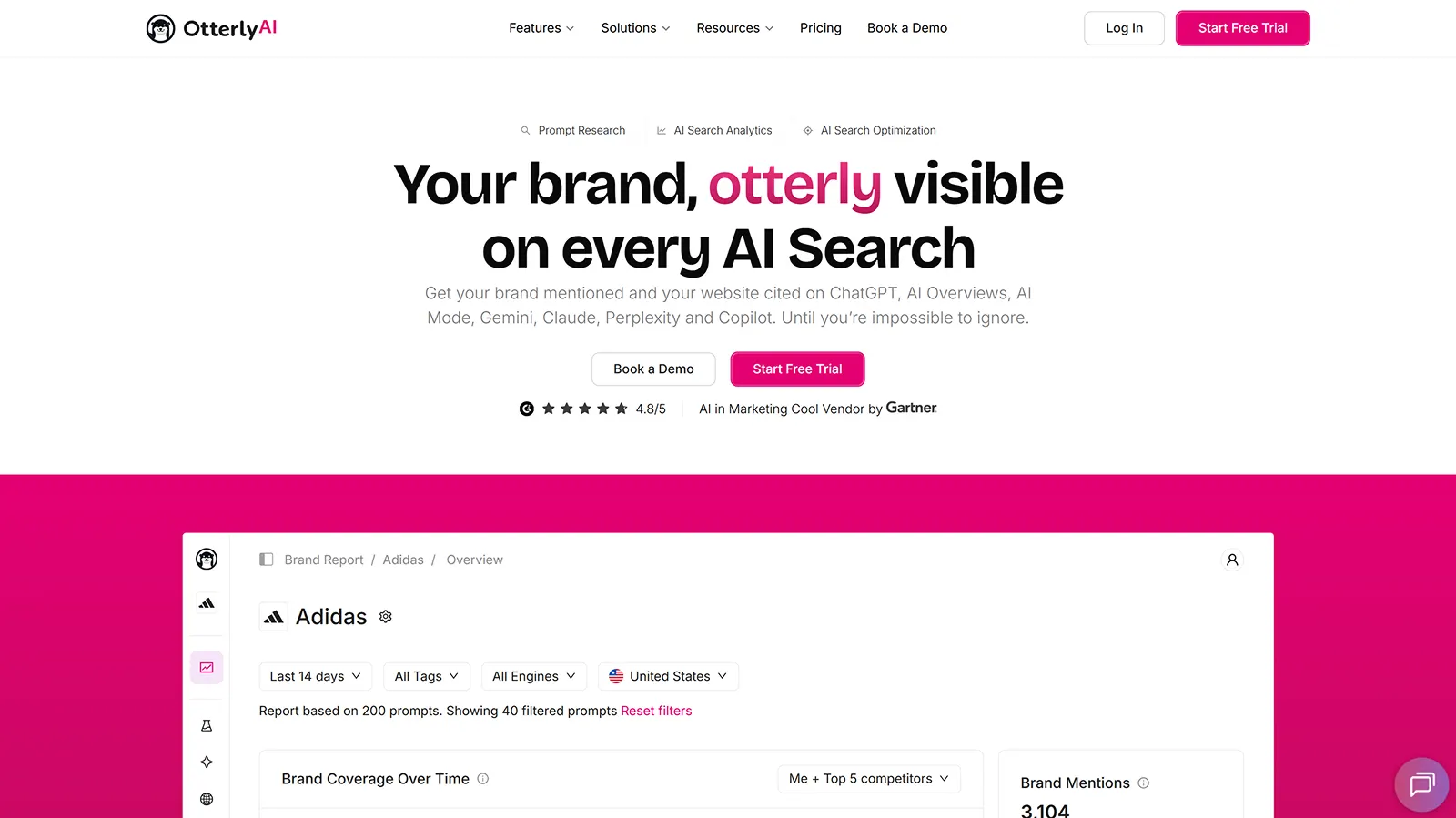
Otterly.AI approaches Claude tracking as part of a configurable multi-engine monitoring program. Rather than imposing one fixed engine bundle, it lets you select at least three engines for a workspace. Claude became selectable on all plans in the pricing update, which makes its low-cost Lite subscription a legitimate option for Claude monitoring.
The important detail is how prompt credits work. These credits represent allocated monitoring capacity within a workspace, rather than being deducted every time a monitoring check runs. Claude needs a larger allocation than most other engines, so selecting it reduces the number of prompts the same plan can monitor.
Otterly's cited-source reports, competitor comparisons, and sentiment analysis are useful, but I'd open its calculator before comparing its starting price with other trackers.
Key features
- Engine selection per workspace: Choose at least three from Claude, ChatGPT, Gemini, Perplexity, Copilot, and Google's AI search experiences.
- Daily answer monitoring: Follow brand appearances, competitor mentions, and changes for the selected engine mix.
- Citation-source reports: Examine cited URLs and domains to identify the sources appearing in monitored answers.
- Sentiment and competitive visibility: Compare how answers describe your brand and other providers.
- Prompt and workspace controls: Configure coverage separately for different brands or markets.
- Exports and integrations: More advanced API/MCP access and additional capacity begin on higher plans.
Pricing
- Lite – $29/month: 2,000 allocated prompt credits, daily tracking, and configurable AI engine selection. Includes brand visibility, citation tracking, sentiment analysis, and basic optimization recommendations.
- Standard – $189/month: 15,000 prompt credits and greater monitoring capacity across selected engines. Adds unlimited workspaces, API/MCP access, agent analytics, and additional reporting capabilities.
- Premium – $489/month: 50,000 prompt credits and monitoring capacity suited to larger teams. Supports daily or weekly tracking, additional GEO audits, and higher integration allowances.
My assessment
Otterly is attractive for a tightly defined prompt set and teams that want to change their engine mix. It becomes less obviously inexpensive when you need many Claude prompts across several engines. Compare the number of questions the chosen workspace can actually track, not a generic credits-to-prompts conversion.
4. LLMrefs: Best for Keyword-Based Claude Rank Tracking
G2 rating: No verified rating available.
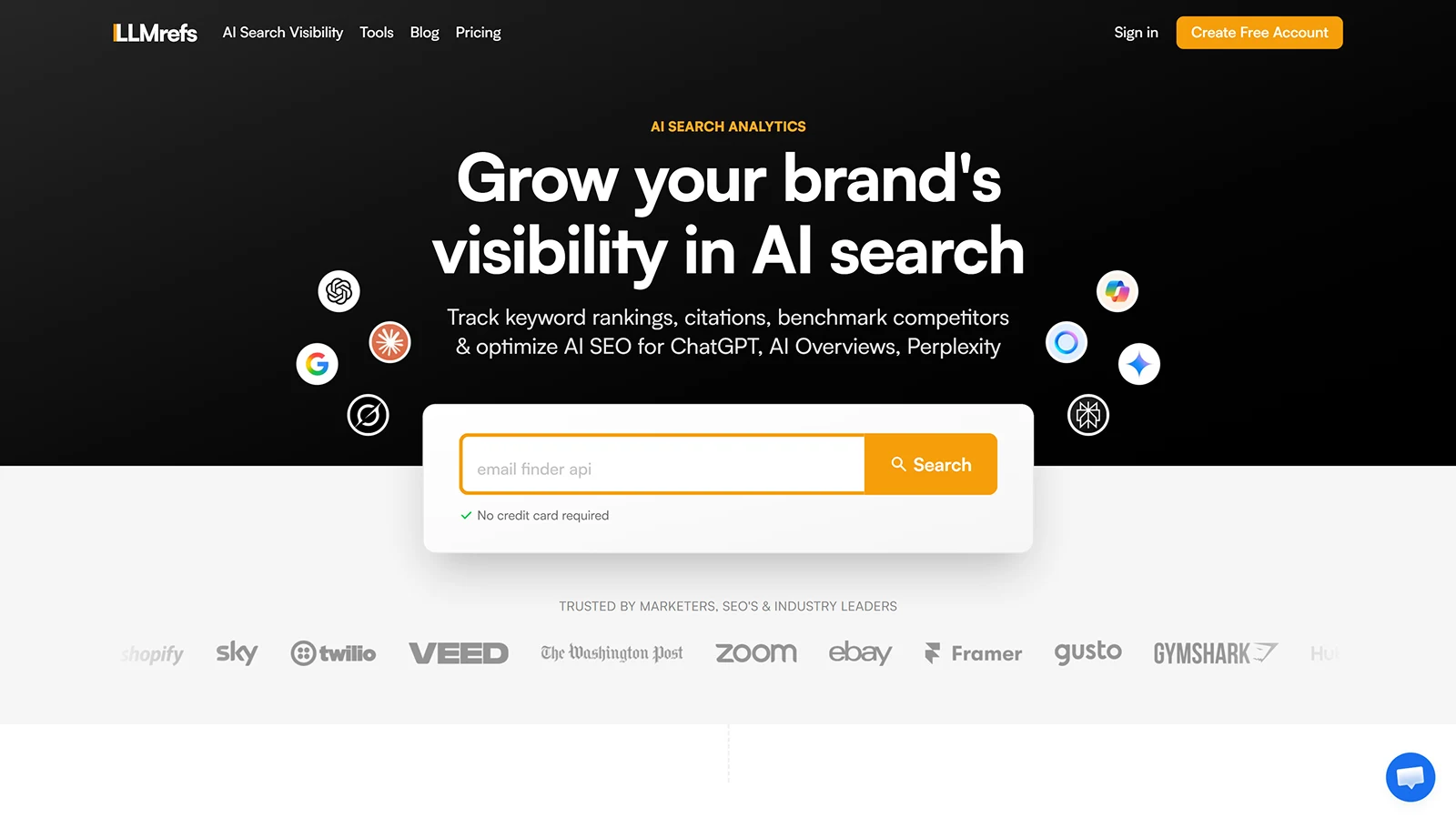
LLMrefs is an interesting fit for teams already working from keyword lists. Instead of asking you to manually invent every conversational prompt, it takes target keywords and generates related questions for AI visibility analysis. This lets SEO teams use their existing keyword research to investigate how brands appear in AI-generated answers.
Its dashboards report brand appearances, answer positions, share of voice, and citations, with the ability to filter by engine. Claude is included in its supported engine selection. I particularly like the idea of working backward from keyword clusters to answer evidence, although generated prompts still need editorial review. A phrase that looks relevant to an SEO researcher isn't necessarily how a buyer would ask Claude for advice.
Key features
- Keyword-to-prompt discovery: Turn tracked keywords into related conversational questions and fan-out queries.
- Claude and other AI engines: Compare brand visibility across multiple assistants and AI search experiences.
- Share-of-voice and position reporting: See which brands appear for related questions and where they are mentioned.
- Citation and competitor analysis: Inspect referenced sources and competing brands associated with a topic, including Claude citation tracking.
- Country and engine filters: Analyze the same keyword area across different selected markets and engines.
- Exports and API access: Share findings with other team members or reporting workflows.
Pricing
- All in One – $79/month: 500 tracked prompts, all supported AI engines including Claude, and weekly visibility reports. Includes keyword-based prompt research, citation tracking, unlimited projects, competitor analysis, API access, and CSV exports.
My assessment
LLMrefs is compelling when your team already plans content using topic clusters and wants to see how those topics perform in Claude.
The main caution is that automatically generated prompts still need reviewing to ensure they reflect genuine buyer questions, and the weekly reporting guarantee may not satisfy teams that need daily Claude exports. It's stronger as a research-and-monitoring layer than a full content-production system.
5. Rankscale: Best for Flexible Claude Tracking and Citation Analysis
G2 rating: 5.0/5
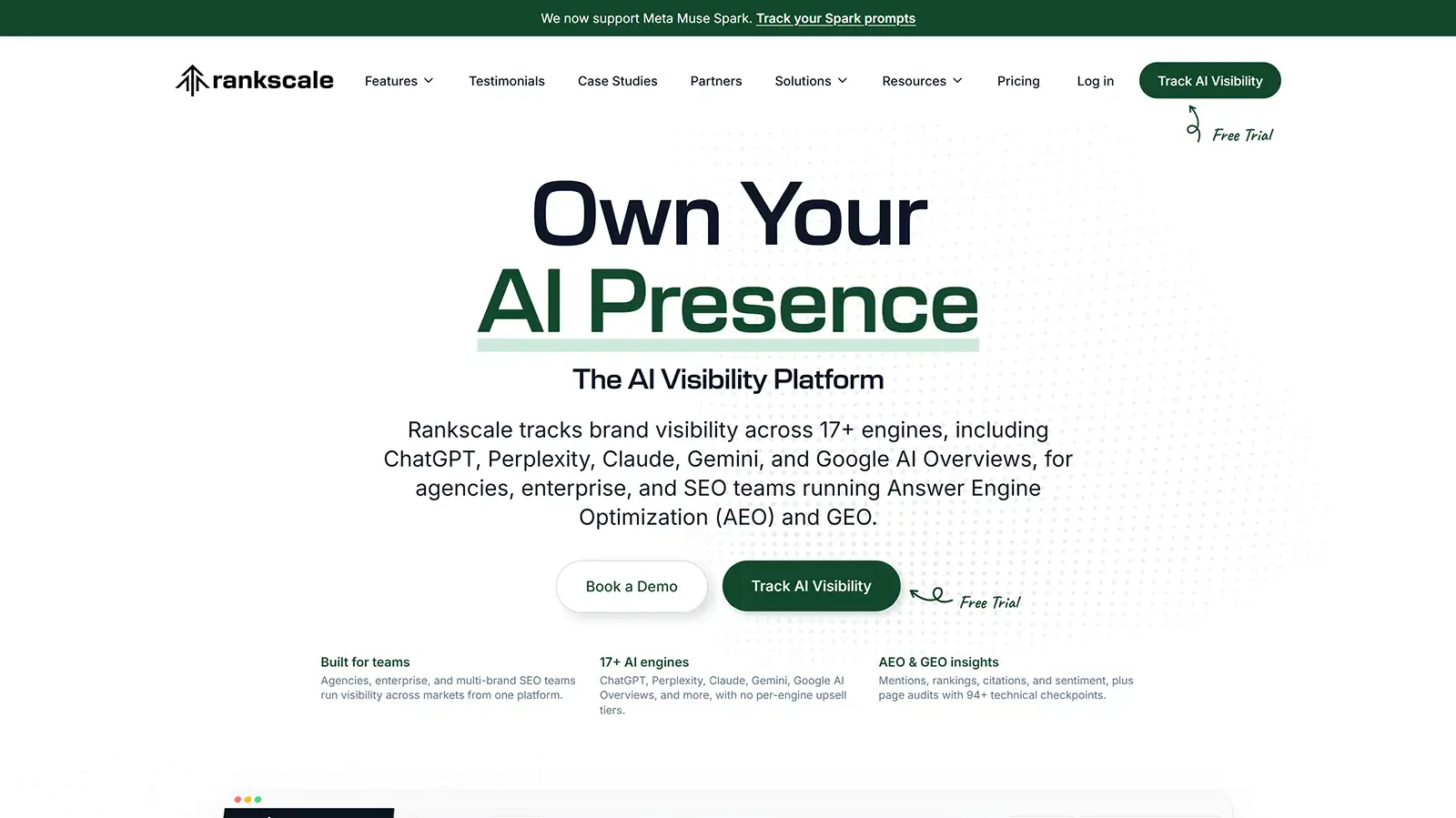
Rankscale is built for people who don't want every monitored question checked on exactly the same schedule. You can allocate different monitoring frequencies across supported engines and locations, then use its dashboards, citations, and page audits to investigate what appears in the results.
This makes it useful for agencies with a few high-priority commercial questions and a wider set of lower-frequency research prompts.
Its credits work differently from Otterly's: Rankscale actually charges usage credits when a query runs. Claude is more expensive to check than several other engines, which makes a maximum advertised answer count a poor estimate of Claude-specific capacity.
Key features
- Claude and multi-engine checks: Run monitored prompts across supported models and regions.
- Flexible scheduling: Set monitoring frequency from frequent runs to less regular research checks where supported.
- Citation and competitor analysis: Examine which brands appear and which sources Claude or other engines cite.
- Prompt research and dashboards: Organize topics, investigate visibility changes, and present findings to clients.
- Page audits: Review URLs for issues relevant to AI discoverability and content structure.
- Integrations: MCP is available on Pro, while direct REST API access begins on Pro+.
Pricing
- Pro – $99/month: 1,200 credits, ten brand dashboards, and 50 page audits. Includes AI engine monitoring, citation analysis, unlimited search-term creation, and MCP access.
- Pro+ – $229/month: 3,000 credits, 25 brand dashboards, and 100 page audits. Adds REST API access and five monthly prompt-research allowances.
- Growth – $385/month: 5,500 credits, 50 brand dashboards, and 200 page audits. Includes expanded monitoring capacity, white-label options, and agency-oriented features.
- Enterprise – $780/month: 12,000 credits, 100 brand dashboards, and 200 page audits. Designed for higher monitoring volumes and enterprise requirements.
My assessment
Rankscale is best for teams that want scheduling control and page-level investigation. It isn't inherently cheaper than fixed-prompt platforms; value depends on the checks you run. I'd use the credit calculator with my actual Claude workload rather than rely on its “up to” response maximum.
6. Promptwatch: Best for Claude Rank Tracking With API and MCP Integrations
G2 rating: 4.5/5
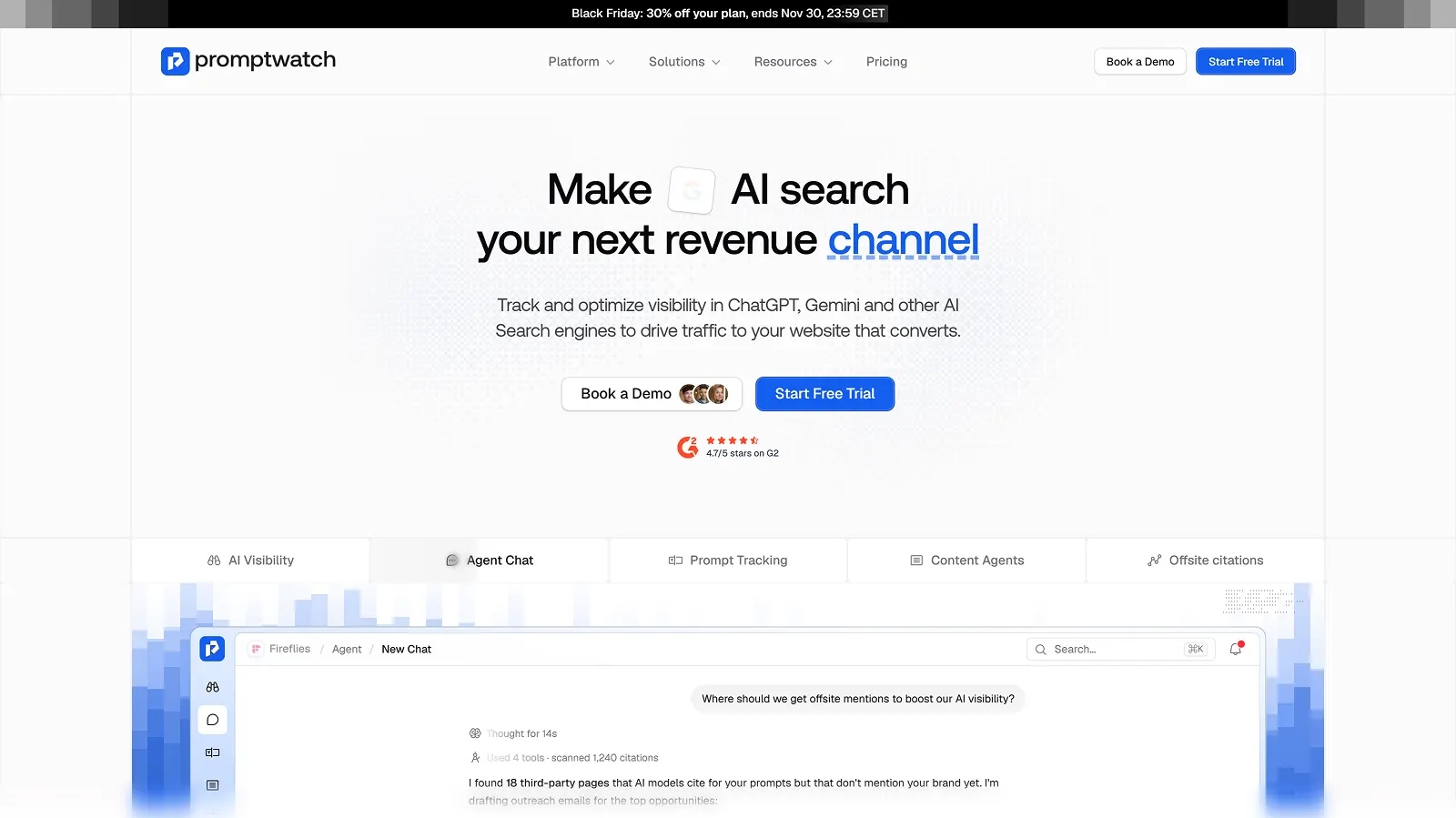
Promptwatch is worth a close look if Claude visibility reporting needs to feed another system. In addition to monitoring brand mentions, citations, sentiment, and competitor appearances, its Essential tier includes API and MCP access. That makes it easier for teams to bring Claude visibility data into their existing reporting and analytics workflows.
Key features
- Claude answer tracking: Compare mentions, citations, and sentiment across supported AI experiences.
- Source and competitor gaps: Inspect which sources are cited and where competing brands appear instead.
- Agent Chat: Ask questions about monitored data without building every report manually.
- API and MCP on Essential: Use supported data in external reporting and assistant workflows.
- Country-level monitoring: Segment observations by supported markets and prompts.
- Content writing and refresh tools: Available on Professional and higher tiers, not automatically included in Essential.
Pricing
- Essential – $95/month: 50 prompts, 6,000 responses, one project, and daily tracking across supported models. Includes Agent Chat, citation analysis, country-level tracking, MCP, and API access.
- Professional – $245/month: 150 prompts, 18,000 responses, and two projects. Adds content writing and refresh tools, a knowledge base, and agent analytics.
- Business – $579/month: 350 prompts, 42,000 responses, and five projects, with up to hourly monitoring. Adds state/city tracking, shopping insights, Ads Radar, fact checking, and audit logs.
My assessment
Promptwatch is compelling when integrations matter and you need daily observations. The 6,000-response limit is the constraint to check, especially if your prompt set runs across several engines. I'd also confirm exactly which Claude configuration the collection method covers before using it as a direct substitute for manual Claude app checks.
7. AthenaHQ: Best for Advanced Claude Analytics and Multi-Model Research
G2 rating: 4.9/5
AthenaHQ serves a different purpose from an entry-level Claude monitoring tool. Its value comes from bringing visibility across different AI models, competitor and citation analysis, prompt-volume research, and an AI agent into a broader research workflow. Claude is one of the eleven models on its Starter plan, alongside several other established AI platforms.
For a marketing team deciding which category pages to improve, the platform's combination of topics, estimated prompt demand, sources, and competitors can help prioritize research. The trade-off is its higher starting price and response-credit limits.
Key features
- Eleven supported models: Starter includes Claude alongside ChatGPT, Gemini, Perplexity, Grok, and others.
- Answer and citation analysis: Investigate which brands and sources appear for tracked questions.
- Prompt-volume estimates: Research potential demand for topics and questions in AI search.
- Competitor and content insights: Explore source patterns and related optimization opportunities.
- Athena Agent: Investigate findings and develop supported research workflows.
- Reporting and integrations: CSV exports, with API access available as an additional paid option.
Pricing
- Essential – Free: 300 credits and access to a limited selection of AI models. Includes prompt and response analysis, source intelligence, competitor insights, and content recommendations.
- Starter – $295/month: 3,600 response credits, eleven AI models including Claude, and one-month credit rollover. Includes prompt-volume research, citation tracking, competitor analysis, content optimization, and CSV exports; API access costs extra.
My assessment
I'd shortlist AthenaHQ if Claude is only one part of a broad AI research program and the team will actually use its topic and prompt-demand features. It is harder to justify for a small company that only wants a dozen Claude questions checked each week.
Claude Rank Tracking Tools Compared: Features, Pricing, and Limits
All seven tools can track Claude, but they aren't interchangeable. Some are designed for monitoring a small set of questions daily, while others focus on keyword research, source analysis, or connecting visibility data to content improvements.
I'd compare them based on the Claude-enabled plan, the actual monitoring allowance, and what you can do with the results.
| Tool | Best For | Claude-Enabled Plan | Tracking Frequency | Included Monitoring Capacity | Main Limitation |
|---|---|---|---|---|---|
| Botric | AI visibility tracking with content optimization | Infinity, $149/mo | Weekly | 150 prompts across 5 supported engines | Claude isn't available on lower plans; weekly monitoring |
| Geoptie | Affordable daily Claude monitoring | Starter, $49/mo | Daily | 15 prompts across 4 selected engines | Small prompt allowance on Starter |
| Otterly.AI | Configurable multi-engine tracking | Lite, $29/mo | Daily | 2,000 allocated credits; about 10 daily prompts across 4 engines including Claude | Claude reduces available prompt capacity |
| LLMrefs | Keyword-based Claude visibility research | All in One, $79/mo | Weekly visibility reports | 500 tracked prompts, supported engines included | Less suitable when daily reporting is essential |
| Rankscale | Flexible tracking schedules and citation research | Pro, $99/mo | Configurable | 1,200 monthly usage credits; Claude costs 2 credits per check | Monitoring costs depend on actual usage |
| Promptwatch | Claude monitoring with API and MCP access | Essential, $95/mo | Daily | 50 prompts and 6,000 monthly responses | Response limits apply across monitored models |
| AthenaHQ | Broad AI model coverage and GEO research | Starter, $295/mo | Confirm Claude schedule | 3,600 monthly response credits across 11 models | Higher entry cost and credit-based limits |
Geoptie offers a straightforward way to monitor a limited set of Claude questions daily. Otterly.AI gives you more control over the AI engines you include, while LLMrefs takes a different approach by organizing tracking around keywords and related prompts.
Rankscale is useful when you want to choose how frequently different questions run. Promptwatch stands out for reporting integrations, and AthenaHQ is better suited to teams researching visibility across a wider range of models.
Botric is worth considering when Claude tracking is part of a broader content workflow. Its prompt research, GEO audits, Blog Agent, and Page Agent help teams investigate findings and work on relevant content.
What Matters Most When Choosing a Claude Rank Tracker?
It's tempting to compare tools by starting price or the number of supported AI engines. Neither tells you whether the platform will provide the information you actually need.
There are four things I'd check before committing to any Claude rank tracking tool.
1. How Does the Tool Collect Claude Answers?
How a platform collects Claude answers can directly affect the results it reports.
Claude doesn't always respond the same way. A question answered from model knowledge may produce different recommendations and citations from one answered using web search. Results can also change with the model version, region, wording, and time of collection.
That means two tracking tools can monitor the same prompt and report different visibility scores without either result necessarily being incorrect.
I would ask the vendor which Claude model it monitors, whether web search is enabled, how location is handled, and whether you can inspect the original responses.
A visibility score becomes much more useful when you understand what was measured to produce it.
2. How Many Questions Can You Actually Monitor?
A plan with 500 tracked prompts isn't necessarily better value than one offering 50.
You need to understand what each prompt allowance covers. Does a question checked across five AI engines count once or five times? Does monitoring the same question in different countries use additional capacity? How often does the tool collect a new answer?
For example, Geoptie counts one monitored question across four selected engines as one prompt, but tracking that question in multiple countries uses additional prompt slots.
Otterly.AI takes another approach. Its monitoring credits are allocated to selected prompts and engines, so including Claude reduces the number of questions available within the same subscription.
Rankscale charges credits for individual checks, making frequency and engine selection especially important.
Before comparing plans, write down the questions you want to monitor, the locations that matter, and how often you need new observations. Then check which plan supports that workload.
3. Can You Investigate Mentions and Citations Separately?
Suppose Claude regularly recommends your brand but rarely cites your website.
That's a different problem from Claude never mentioning your business at all.
In the first case, your brand already appears in relevant answers. You may want to investigate which sources Claude references, whether your pages address the same questions, and whether independent publications are influencing those recommendations.
In the second case, you need to understand which competitors appear instead and what information Claude uses when discussing your category.
Look for a tool that lets you inspect actual answers, cited URLs, competitor appearances, and historical changes. A single visibility percentage won't tell you enough to decide what to do next.
4. Can You Do Anything Useful With the Findings?
Not every team needs an all-in-one GEO platform.
If your only requirement is checking a small collection of Claude prompts, a focused monitoring tool may be sufficient. But if the same team handles research, SEO, content updates, and reporting, a platform with additional capabilities may reduce the amount of work involved.
Some emphasize monitoring and reporting. Others add page audits, keyword research, integrations, or content tools.
I'd choose based on the work my team needs to complete after identifying a visibility gap, rather than buying the platform with the longest feature list.
Which Claude Rank Tracking Tool Should You Choose?
If I were choosing between these seven platforms, I'd narrow the list based on the type of work involved.
- For a small business focused on daily Claude monitoring, I'd start with Geoptie or Otterly.AI. Geoptie is easier to compare by a fixed prompt allowance, while Otterly gives you flexibility over which AI engines are included.
- For content teams that want monitoring and optimization connected, Botric brings Claude tracking together with prompt research, GEO audits, and content agents for creating new content or improving existing pages.
- For an SEO team already working with keyword clusters, LLMrefs is worth exploring. Its keyword-first approach can help connect existing SEO research with Claude visibility monitoring.
- For agencies with different tracking requirements across clients, Rankscale deserves consideration for its flexible scheduling and regional options. Promptwatch is another relevant choice when API, MCP, and external reporting are important.
- For teams researching AI visibility across many models, AthenaHQ offers broader coverage alongside prompt-volume research and source analysis.
Whichever platform you shortlist, I would check one final thing before purchasing: can it show you the actual Claude answers and citations behind its visibility metrics?
If it can, you'll have a better chance of understanding what changed and deciding whether the results deserve action.
Conclusion
Claude rank tracking is useful when it helps you understand more than whether your brand appeared in an answer. The questions that trigger mentions, the competitors being recommended, and the sources Claude cites are often more important than the visibility score itself.
Geoptie and Otterly.AI are good starting points for focused monitoring. LLMrefs connects AI tracking with keyword research, Rankscale offers more scheduling flexibility, and Promptwatch provides strong integration options. AthenaHQ suits broader AI search research.
For teams that also need to act on their findings, Botric connects Claude visibility tracking with prompt research, GEO audits, Blog Agent, and Page Agent.
Want to find out when Claude recommends your brand and which sources it cites? Start your Botric trial to monitor brand mentions, compare competitors, identify citation gaps, and turn those insights into content improvements. Claude monitoring is available on Infinity.
Frequently Asked Questions
What is a Claude rank tracker?
A Claude rank tracker monitors a defined set of Claude answers and reports which brands are named, what URLs are cited, which competitors appear, and how those observations change over time. It does not measure a fixed Google-style ranking position.
Can I track my website's citations in Claude?
Yes. Claude citation tracking tools can record the URLs Claude cites in monitored answers. Look for separate reporting of brand mentions and owned-domain citations, because a mention does not necessarily include a link to your site.
How much does Claude rank tracking cost?
Paid Claude monitoring in this comparison starts at Otterly Lite's $29/month and Geoptie Starter's $49/month, with different prompt allowances. Botric requires its $149/month Infinity tier for Claude, and AthenaHQ Starter costs $295/month. Credit systems and refresh schedules can change the practical value considerably.
Does Claude's web search affect citation tracking?
Yes. Claude may respond using model knowledge or use web search to retrieve sources. Citations are particularly relevant to search-enabled answers. Compare what each tool collects, and avoid assuming an API-based observation is identical to every Claude consumer-app session.
How many prompts should I track in Claude?
Start with about 10–15 buyer questions covering categories, features, comparisons, alternatives, and purchase constraints. Expand only when you can identify gaps in the initial set. A carefully selected group of prompts is more useful than a large list of repetitive questions.