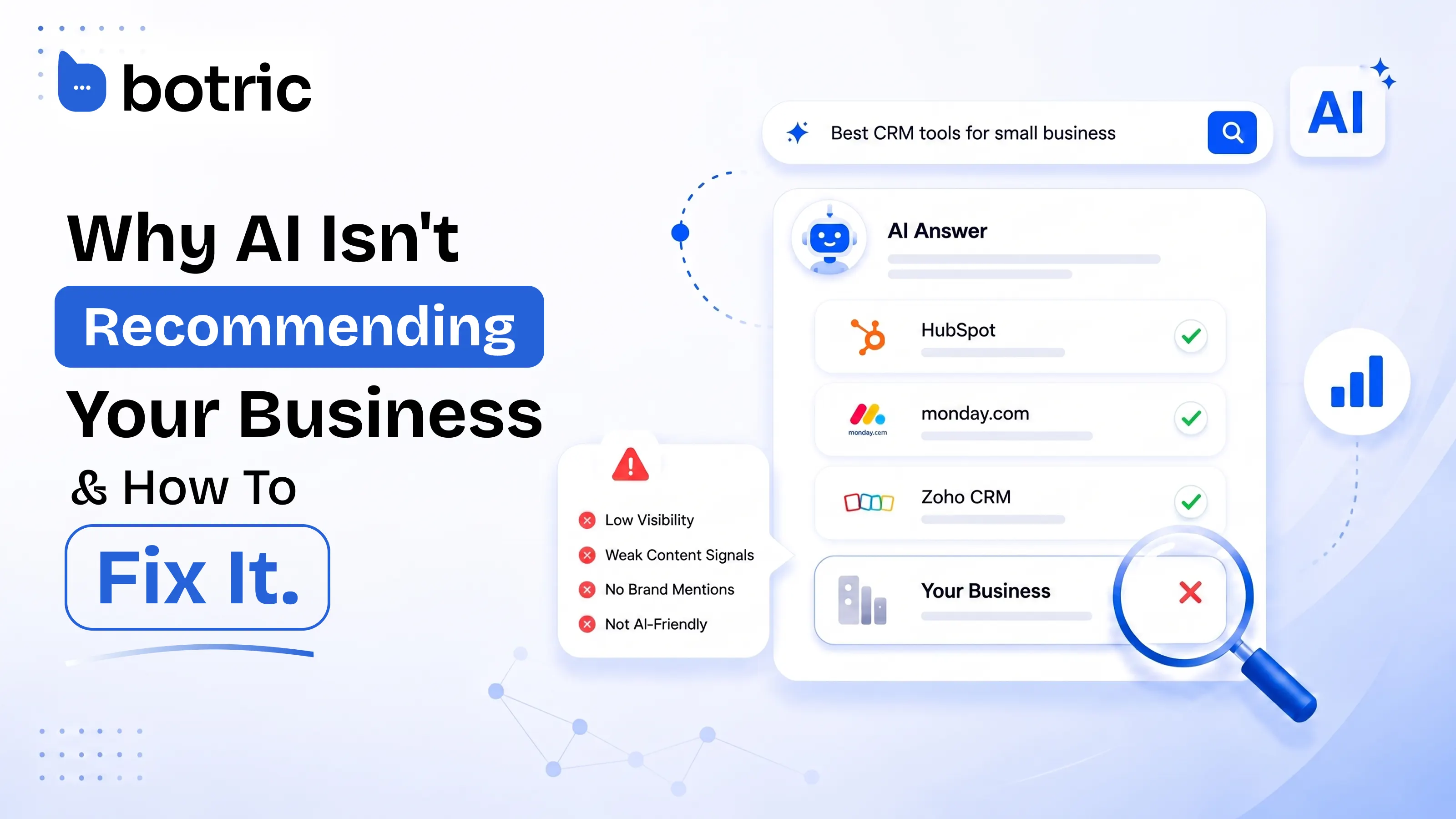
Your business may rank on page one of Google and still be completely invisible to ChatGPT, Gemini, Claude, and other AI engines.
AI engines don't recommend businesses based on keyword position; they recommend brands they can verify, trust, and extract cleanly from multiple independent sources. At Botric, this gap between traditional rankings and AI visibility is the most common problem we see founders and marketers walk in with.
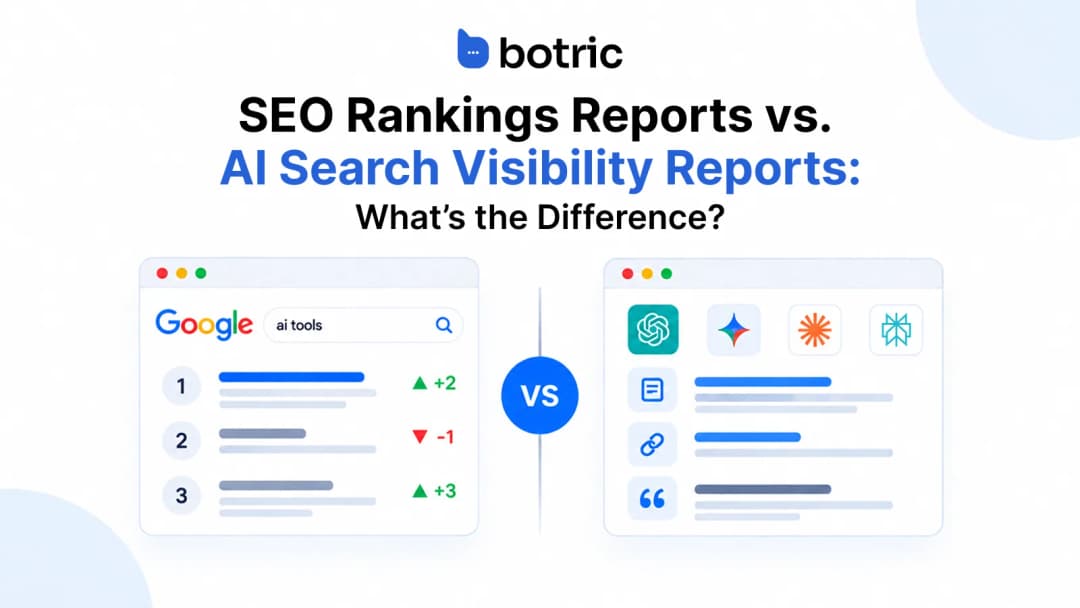
Your business may not appear in AI recommendations because AI models evaluate more than Google rankings. ChatGPT, Gemini, Claude, and Perplexity look for signals that prove your brand is trustworthy, relevant, and easy to understand.
- Build stronger off-site authority: Earn mentions, reviews, and references from trusted third-party sources.
- Improve entity consistency: Keep your brand information, positioning, and business details aligned across your website and external platforms.
- Fix technical AI readiness issues: Use structured data, maintain crawlable content, and ensure AI systems can understand your site.
- Create deeper topical coverage: Publish helpful, well-supported content that establishes your expertise in your category.
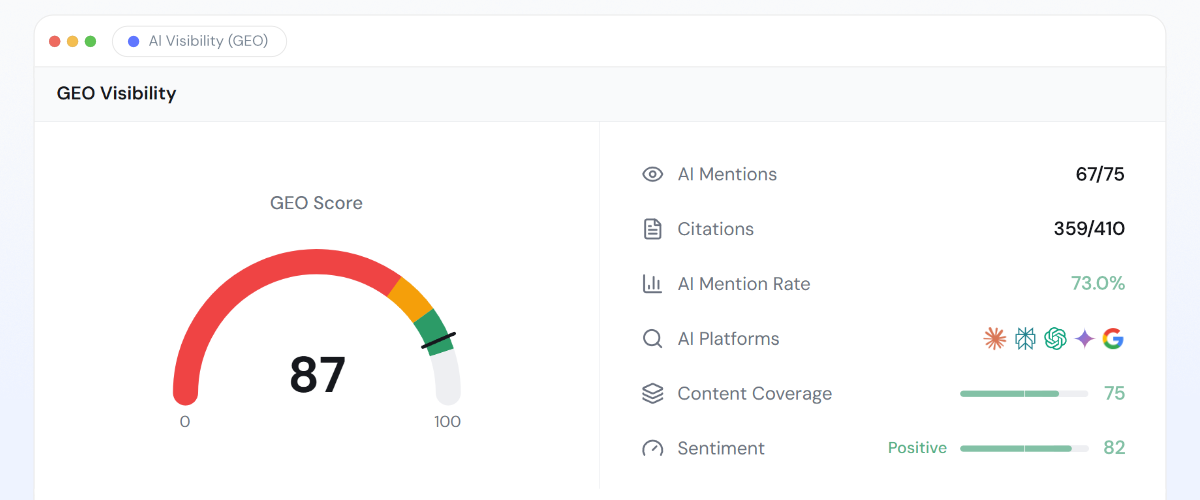
- Track your AI visibility regularly: Use Botric to monitor brand mentions, citations, competitor recommendations, and visibility gaps across major AI platforms.
AI visibility is no longer only about ranking pages. It is about becoming a trusted source that AI systems can confidently reference and recommend.
Why AI Search Engines Ignore Traditional Rankings and What They Look For Instead
Only 38% of cited sources rank in Google's top 10, and 88% of Google AI Mode citations come from sources outside the organic top 10. This shows that traditional ranking signals alone are no longer enough to win visibility in AI-generated answers. It means a decade of SEO logic built around ranking signals is now only a partial answer.
AI engines don't retrieve pages and rank them. When a user asks a question, the system interprets intent, may break the prompt into sub-questions, retrieves information from different sources, and then synthesizes an answer that can include definitions, comparisons, recommendations, citations, and next steps. Your brand is competing to be part of that synthesis, not just a click.
What AI Actually Weighs
AI search engines choose which brands to mention and cite based on trust signals. Brands with strong technical health, verified organizational identities, and consistent cross-platform profiles appear more often in AI-generated answers.
The signals that matter most are off-site. Ahrefs analyzed 75,000 brands and found that brand presence across the web matters roughly 3x more than link counts for AI citation selection, which means the backlink-heavy playbook many teams still run is doing less work than they think.
The Platform-By-Platform Difference
Each AI platform uses different retrieval and ranking systems. Gemini benefits from strong Google ecosystem signals and structured content. ChatGPT relies on relevant, authoritative sources available through its search and knowledge systems. Perplexity emphasizes cited, current web sources, including authoritative websites, documentation, and industry resources.
A brand well-positioned for one can be invisible in the others, which is why winning across all four requires a deliberate, platform-aware strategy.
GEO, or Generative Engine Optimization, is the practice of building the trust, entity clarity, and structured presence that makes a brand citable by AI engines, as distinct from traditional keyword-ranking SEO.
How to Audit Your Brand's Visibility Across ChatGPT and Other AI Models
Run the audit before you optimize anything. Most teams skip this and start publishing content before they know which prompts they're already winning or losing, which means they're guessing at the gaps.
The 30-minute Manual Audit
Open each platform and run 10–15 prompts that mirror real buyer intent in your category. Use formats like:
- What are the best [category] tools for [use case]?
- Compare the top [industry] solutions for [company size/use case].
- Which [service providers] do experts recommend for [specific outcome]?
Run 20–30 real buyer prompts across ChatGPT, Perplexity, Gemini and other AI models. Note which brands get named, in what order, and how accurately your own brand is described, if at all. For each prompt, record:
- Does your brand appear at all?
- Is the description accurate and current?
- Which competitors are named instead?
- Is your brand cited with a source link, or just mentioned?
What the Results Tell You
Absence from one platform but presence in another often points to platform-specific retrieval and ranking differences. ChatGPT tends to rely on authoritative web sources and consistent entity signals. Gemini draws heavily from Google's search ecosystem and benefits from well-structured, crawlable content.
Claude prioritizes high-quality, well-supported information when retrieving web content. Perplexity searches the live web extensively and frequently cites authoritative websites, documentation, review platforms, forums like Reddit, and industry-specific directories.
If you're missing from Perplexity specifically, check your presence on review platforms like G2 and Capterra. User-generated reviews on those platforms feed directly into Perplexity's trust layer. Missing visibility in Claude may indicate gaps in content quality, authority signals, source availability, or how clearly your brand information is represented online.
One pattern we see often: a SaaS team comes in with top-3 Google rankings but zero Perplexity citations. The root cause is usually a combination of no reviews and missing schema on their homepage. Fixing both, adding a handful of authentic reviews and implementing Organization and FAQ schema, has moved brands into Perplexity answers within roughly six weeks. The Google rankings were never the problem; the absence of third-party validation was.
How Botric Automates Prompt Tracking
Manually running prompts across ChatGPT, Perplexity, Gemini, and other AI platforms to see how a brand shows up is slow, inconsistent, and hard to keep current.
We built Botric to automate this audit continuously, tracking the exact prompts where your brand appears (or doesn't) across major AI platforms, showing which competitors AI recommends instead, and identifying the visibility gaps behind each missed recommendation.
Botric replaces this manual process with an automated prompt tracking system built around the following core features.
- Continuous Prompt Monitoring: Prompts are tracked on an ongoing schedule instead of a one-time check, so results reflect how AI platforms respond today, not what was true when a query was last checked by hand.
- Multi-Platform Coverage: Prompts are tracked across major AI platforms rather than a single tool, giving a consolidated view of how a brand is represented across the different assistants customers actually use.
- Brand Mention Detection: For every tracked prompt, Botric identifies whether and where a brand is mentioned, including the surrounding context, showing not just that a brand appeared but how it was framed in the response.
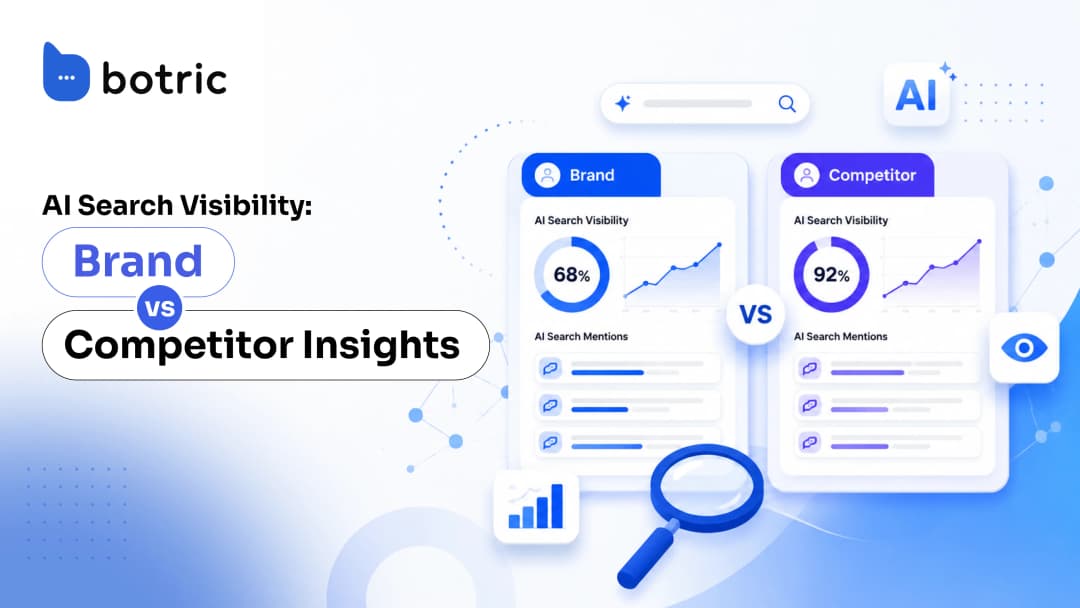
- Competitor Visibility Comparison: Botric surfaces which competitors appear for the same prompts, making it possible to see which brands are being recommended instead, for which specific queries.
- Gap Identification and Change Tracking: Botric flags prompt where a brand is absent or underrepresented, and because monitoring is continuous, it also shows how visibility shifts over time after a content update or a competitor's move.
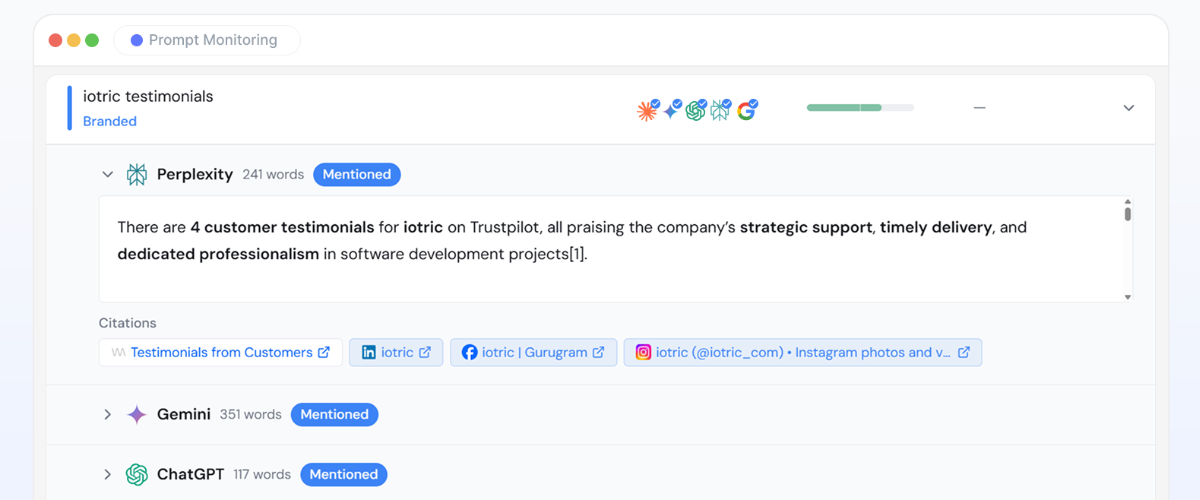
Because this monitoring runs continuously rather than as a one-time check, teams get something manual tracking cannot offer: a clear view of change over time. You can see whether visibility is improving or declining after a content update, spot new prompts and topics emerging in your category before competitors catch up, and understand how your brand's presence across AI platforms evolves week over week.
The result is a system that turns AI visibility from a guessing game into a measurable, ongoing part of how a business understands its market presence.
What's Breaking Your AI Discoverability, And How to Fix Each Gap?
Most businesses have more than one gap. The five below account for the majority of cases we see, and they compound: fixing one without the others rarely moves the needle.
1. Thin Off-Site Brand Presence
AI models do not rely only on your website when deciding which brands to mention. Third-party validation, industry mentions, reviews, and consistent brand information across the web help establish credibility and make your business easier for AI systems to recognize.
Your own product pages explain what you do, but independent sources often provide stronger trust signals. Build authority by earning mentions in relevant industry publications, contributing expert insights to journalist requests, participating in communities where your audience already seeks advice, and maintaining complete profiles on trusted review platforms.
For software businesses, platforms like G2 and Capterra can strengthen your brand presence by providing additional third-party information that AI systems may use when generating recommendations.
2. Missing or Broken Schema
Sequential headings and rich schema correlate with 2.8x higher citation rates. That's a structural advantage you can implement this week.
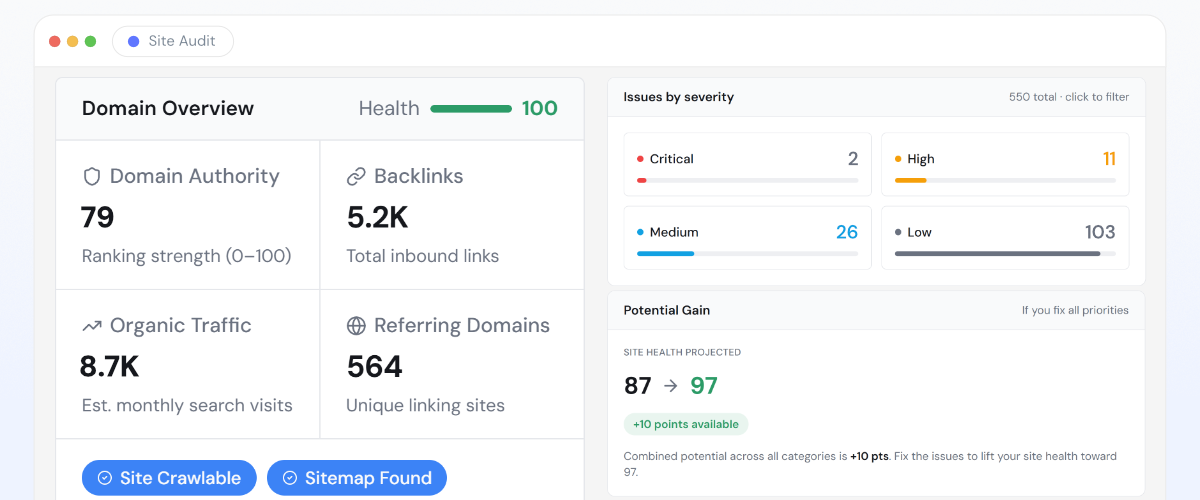
Audit your schema using Google's Rich Results Test, then add FAQ schema to your top pages and Organization schema to your homepage. Botric tracks AI search visibility and identifies GEO gaps, including technical issues that affect your site's AI readiness. By improving these foundational elements, businesses can increase their chances of being understood, cited, and recommended by AI platforms.
3. Stale Content
AI systems need accurate, up-to-date information to generate reliable recommendations. When your content becomes outdated, especially pages containing statistics, pricing, product comparisons, features, or industry insights, AI models may be less likely to rely on it.
Start by refreshing your highest-value pages first. Update outdated claims, replace old examples, verify product details, and add new insights that reflect current market conditions. A consistent content refresh process helps maintain your brand's relevance and improves your chances of being referenced in AI-generated answers.
4. Inconsistent Entity Signals
If your "what we do" language varies across channels, AI can't build a coherent picture of your brand. Keep your business name, category, positioning, and key information consistent across your website, LinkedIn, Google Business Profile, and relevant directories. Inconsistency reads as unreliable to the model.
5. No Topical Depth on Core Keywords
AI engines favor brands that own a topic cluster. If your brand consistently contributes insights on the same topic across multiple platforms, AI starts to associate your brand with that subject. One-off mentions in unrelated areas don't carry the same weight, and a single strong page won't substitute for sustained, consistent coverage.
Prioritizing the Gaps: Effort vs. Impact
| Gap | Effort to fix | Time to AI visibility impact | Primary platform affected |
|---|---|---|---|
| Missing or broken schema | Low | Days to weeks | All platforms (especially Gemini and Google AI Mode) |
| Inconsistent entity signals | Low | Weeks | All platforms |
| Stale content | Low to Medium | Weeks | All platforms |
| No topical depth | Medium | Months | All platforms |
| Thin off-site brand presence | High | Weeks to months | All platforms (especially Perplexity, Claude) |
For a deeper look at which tools help you track these signals, the best GEO tools guide covers the current landscape, including platforms for monitoring AI visibility, tracking brand mentions, analyzing citations, and identifying opportunities to improve your presence across AI search engines.
Key Takeaways
- Off-site trust signals, entity consistency, and topical authority drive AI citation selection far more than keyword rankings or domain authority alone.
- A manual prompt audit across major AI platforms can reveal where your brand appears, where competitors are recommended instead, and which visibility gaps need attention. Botric automates this process by continuously tracking AI prompts, mentions, and citations across leading AI platforms.
- Missing schema and inconsistent business descriptions are among the fastest problems to fix, with direct impact on AI discoverability.
- User-generated reviews on G2 and Capterra carry direct weight with Perplexity and Claude; leaving those profiles thin is a concrete visibility loss.
- Earned media presence and a quarterly content refresh cycle compound over time: teams that build these habits now will hold a growing citation advantage as AI search absorbs more of the discovery journey.
Want to know where your brand stands in AI search? Try Botric's free plan to track your visibility, monitor citations, and identify the gaps affecting how AI platforms discover and recommend your business.
Frequently Asked Questions
Does ranking #1 on Google mean I'll show up in AI search results?
No. Ranking highly on Google can help, but it does not guarantee visibility in AI-generated answers. AI platforms evaluate many signals beyond search rankings, including content quality, brand authority, entity consistency, third-party mentions, freshness, and citation availability. While Google rankings may support visibility in Google AI experiences and Gemini, platforms like ChatGPT, Claude, and Perplexity also rely on broader web signals when generating recommendations.
How long does it take to improve AI visibility after making changes?
It depends on the platform and the gap you're fixing. Say you land a mention in a high-authority outlet: Perplexity and Google AI Overviews may reflect it within days, while Claude and base ChatGPT draw from training data, so the effect takes weeks or months, and some changes only register at the next model update cycle.
Can I use Botric to track AI visibility automatically?
Yes. Botric monitors your brand's citation frequency across six platforms, ChatGPT, Gemini, Perplexity, Claude, Google AI Overviews, and Google AI Mode, surfaces the exact prompts where you appear or don't, identifies which competitors AI recommends instead, and delivers actionable recommendations to close each gap. It's a visibility tracking platform. You can see the plan options at Botric's pricing page.
Should I optimize differently for AI than for Google?
Yes, though the foundations overlap. Technical SEO, clean crawlability, and structured data remain necessary for both. GEO adds a separate layer: earned media, review volume on platforms like G2 and Capterra, entity consistency, and answer-first content structure. Paying for more keyword-optimized pages without addressing off-site authority rarely improves AI visibility.
Why does my competitor show up in AI answers even though I outrank them on Google?
Almost certainly because they have stronger off-site signals: more editorial mentions, more user-generated reviews, more consistent entity data across directories. The brand that has invested in being clearly, consistently, and independently described across the web gets recommended. The one that has only invested in its own website copy often doesn't.
Do reviews on G2 and Capterra actually influence AI recommendations?
Directly, yes. Perplexity leans heavily on industry-specific directories and review platforms, and Claude weights user-generated content at a significantly higher rate than other models. A volume of authentic, sentiment-positive reviews on G2 and Capterra is one of the fastest ways to improve citation probability on those two engines specifically.
Is there a minimum domain authority needed before AI engines will cite my brand?
There's no published threshold, but the pattern we see consistently is this: brands with thin external footprints are skipped, while brands that exist clearly and repeatedly across multiple high-credibility sources are the ones models recognize as entities. Build the external presence first; the citations follow.